Walk Through The Web Wednesday – 5/3

The Pain is Real!

Hello there furiends! The Tribe has been settling into our new routine with The Human working in her home office and not leaving all day, every day. She still has meetings and places to go but she is home quite a bit. This new situation has it’s benefits and drawbacks as we felines are forced to adjust to this new routine. Some things are good, some not so much but I’ll let Oliver and Lily weigh in too and you can decide.

There are several nice sun puddle spots in the office, now if only the clumsy Human would be careful not to trip over me!
Yes, sun puddles are meowvelous!

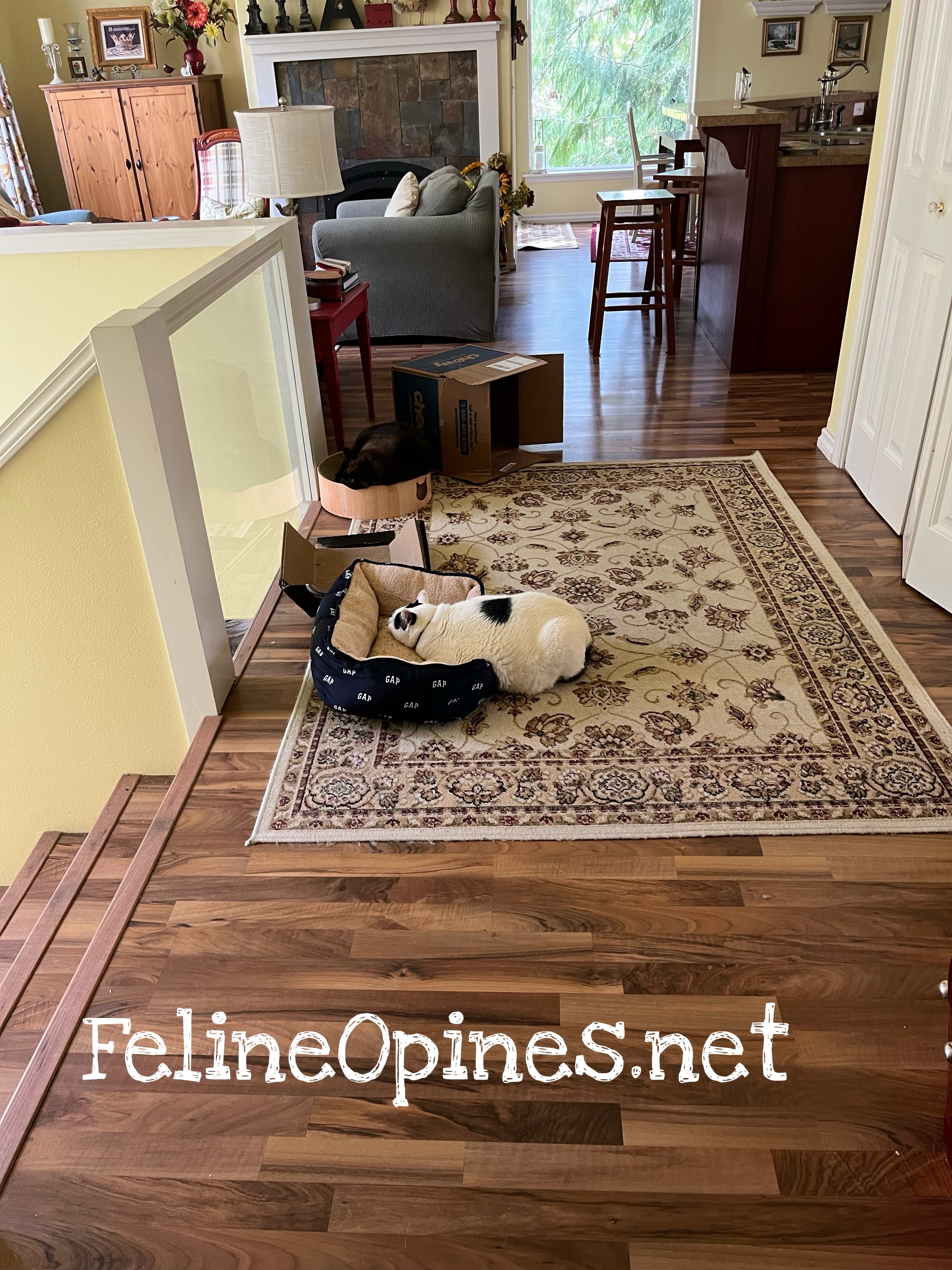
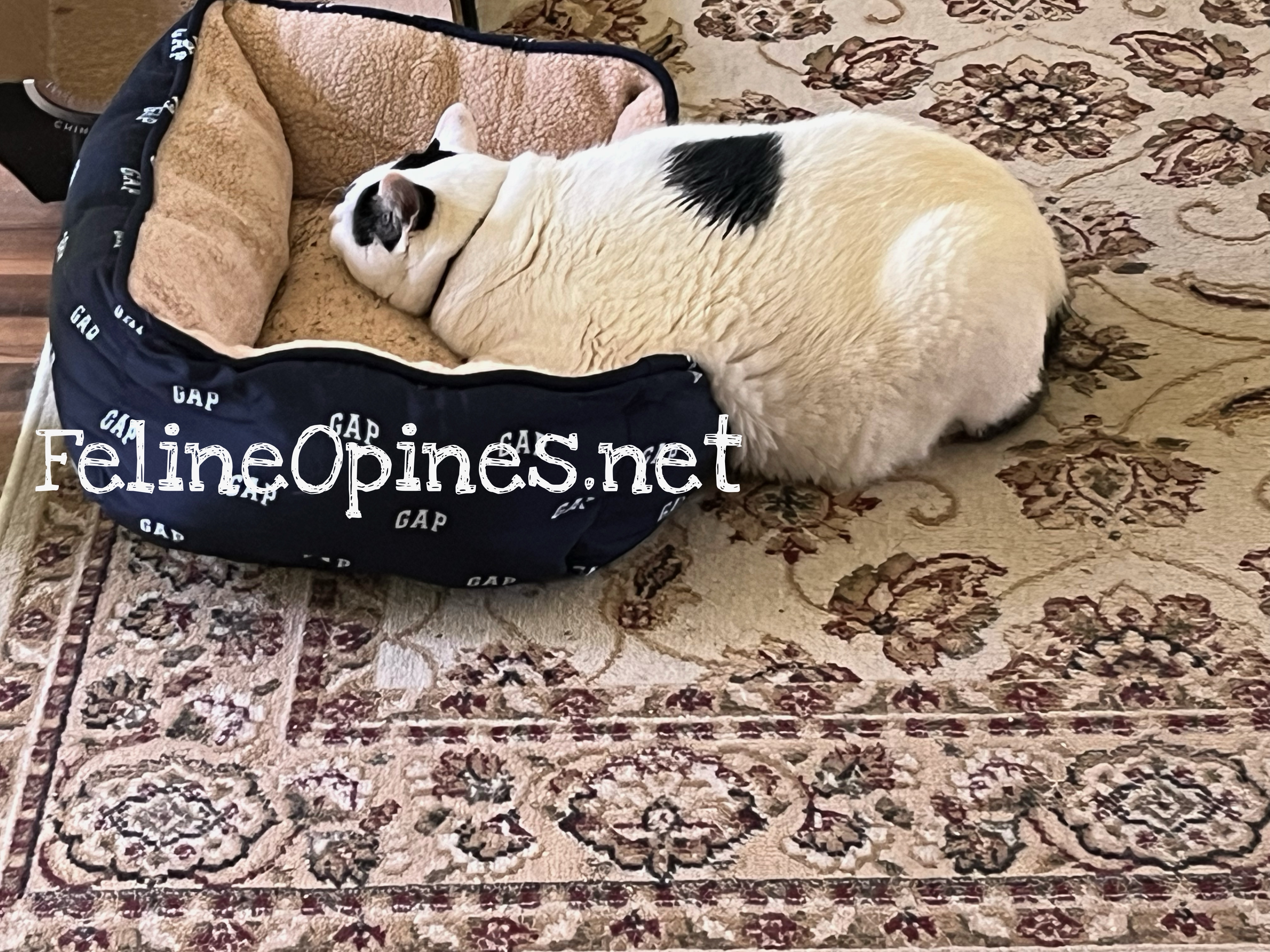
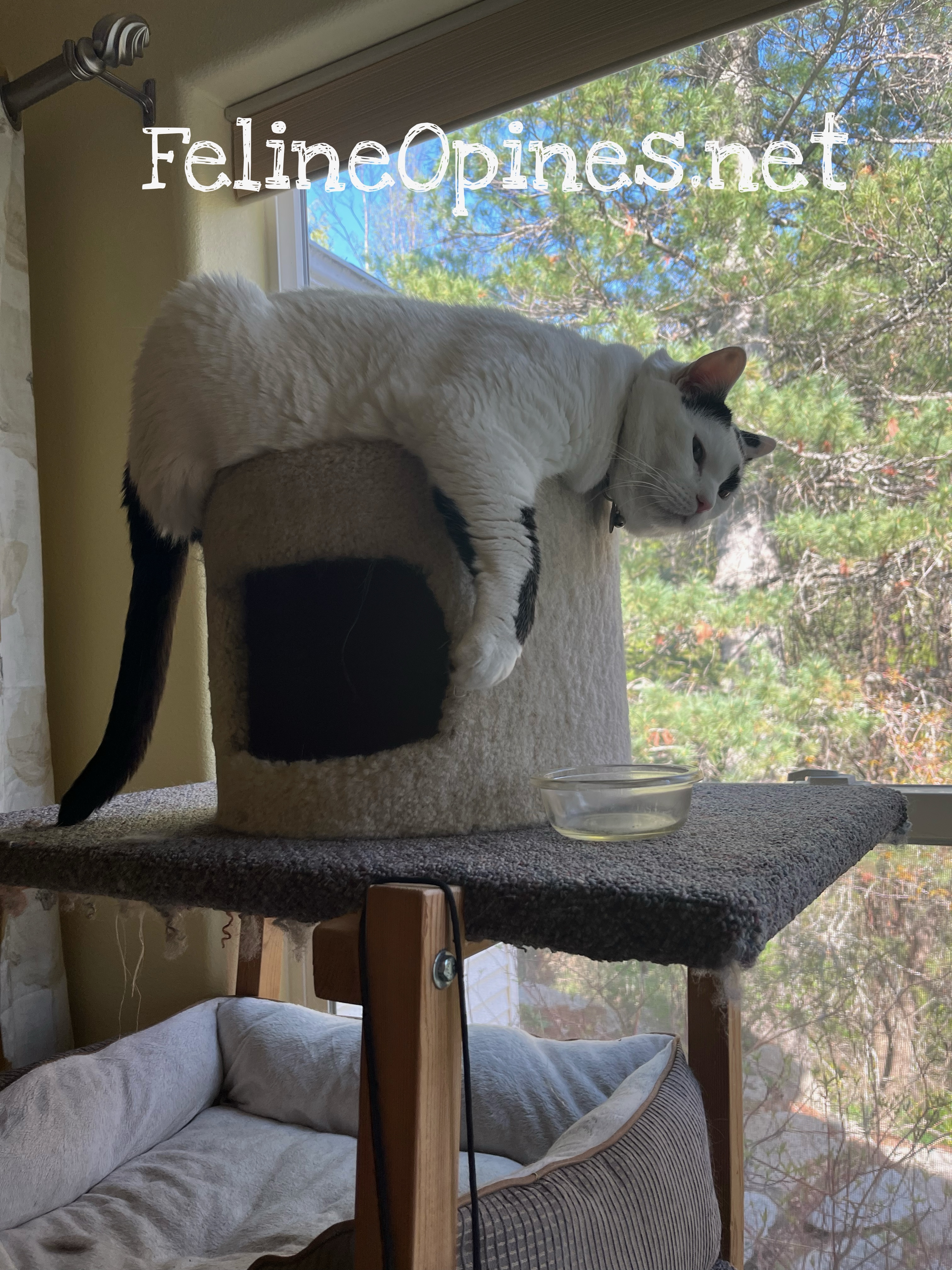
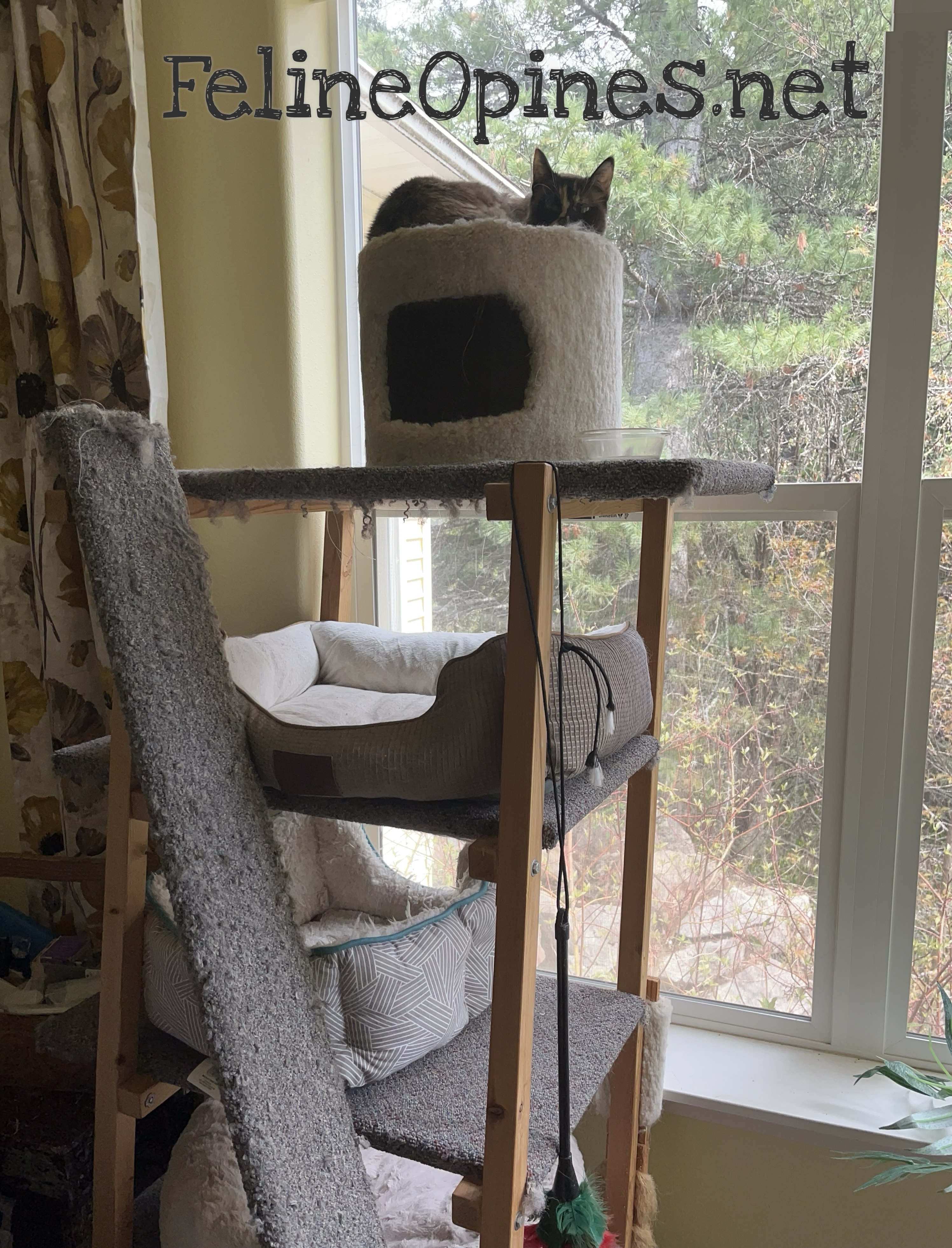
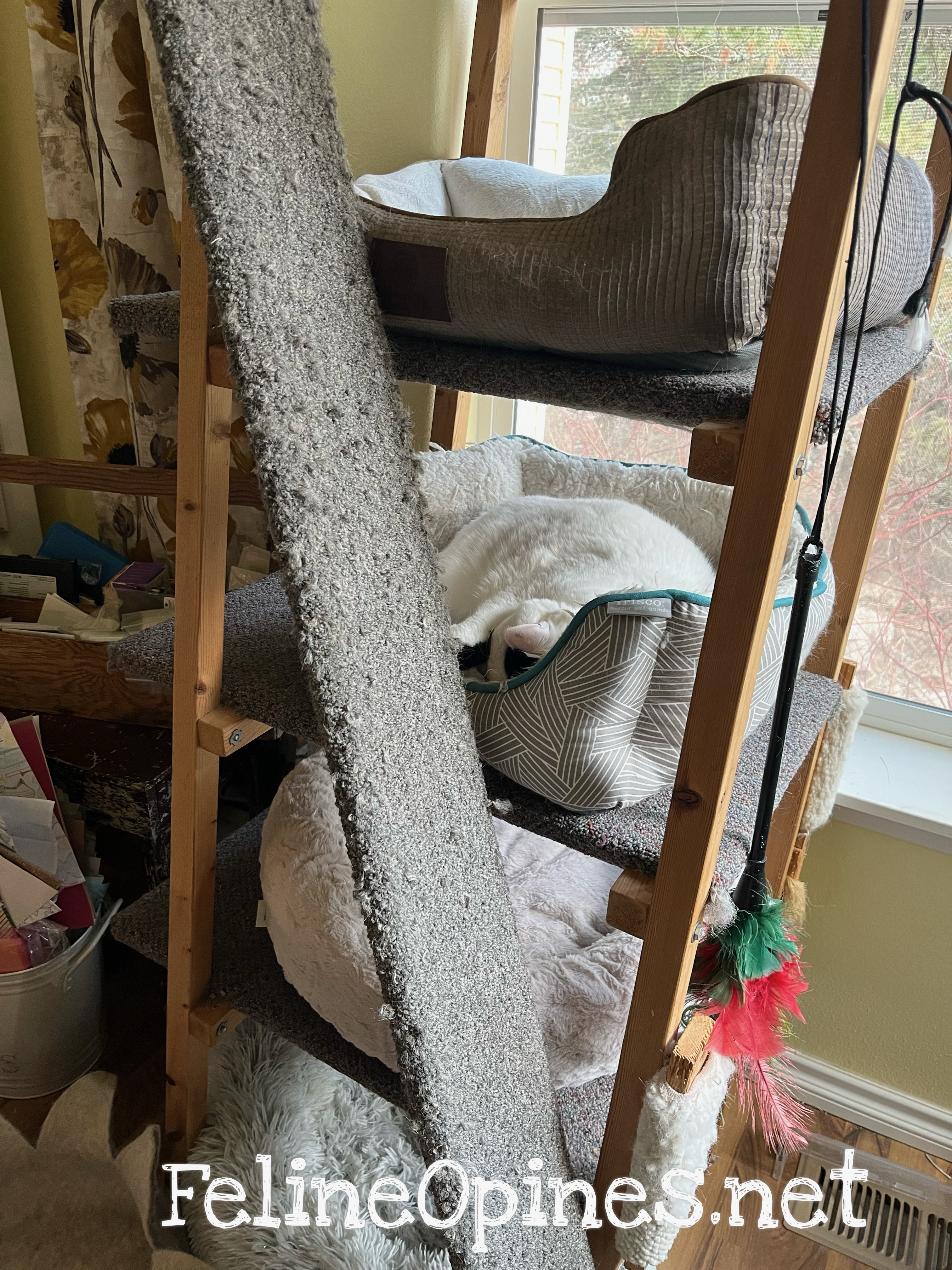
There has been a bit of a contest as to who will permanently occupy the penthouse office condo. Each of us has laid claim during the week although I can’t imagine why Oliver would want to take up residency there he’s a bit stocky, but I’ll let you come to your own conclusions.

Oliver is not dealing well with The Human’s incessant interruptions of his daily naps.

What is it now Human??

All in all we are adjusting and do not require The Human to make too many changes to her work day but we do need to have her develop an appropriate snack schedule.

Hello, Human! When it’s lunch time that means give us treats!

So there you have it. The new challenges and benefits to having The Human work at home! And now it’s time for this week’s feline news.

Pet owner apologizes after cat steals £300 hoard from neighbors

A very embarrassed human is returning hundreds of pounds worth of items that were stolen by cat.

Now I’ve reported on klepto kitties but Harry, a real life cat burglar is quite adept at his dubious profession.

Over the past four years, the naughty feline has brought home a hoard of stolen goods through the cat flap including a purse, sausages and M&S sports bras.

Owner Donna Hibbert, from Darley Abbey in Derby, said he has even managed to steal items off washing lines.

Harry’s brother Luna, another cat burgler, brings home objects that tend to be far less problematic, such as empty cigarette boxes and crisp packets, Ms Hibbert told the BBC.

Harry’s human, estimates he’s stolen around £300 (a little over $377.00 USD) worth of goods, with an apparent taste for luxury.

Hibbert makes regular Facebook posts about Harry’s ill gotten gains in hopes that they will be returned to their owners.

Harry is not the first cat to be called out for his tendency to steal from neighbours.

Charlie the “Klepto Cat” also left his owner in an unusual predicament with the items he brought to their door in Bristol.

The black and white cat has taken home everything from plastic dinosaurs to rubber ducks and even skateboards.

Owner Alice Bigge took a different approach when trying to return Charlie’s stolen goods.

In an attempt to discipline the kitten, she lined up the items on the wall in front of their house with a sign which read: “Our cat Charlie likes taking things, do any of these things belong to you? If they do, please help yourself.”

Ah, the life of a cat burglar!

 FDA Conditionally Approves First Drug for Anemia in Cats with Chronic Kidney Disease

Our beloved Angel Jasmine.

As I have written previously, our Angel Jasmine had CKD and The Human cared for her for several years with special foods, medication, daily SubQ fluids and other natural treatments. Although it was hyperthyroidism (a stroke) that took Jasmine from us, there are a number of complications from CKD. This article may be a bit “sciency” for some of you but if you have a fur kid that has CKD, the “sciency” stuff is important to you.

The U.S. Food and Drug Administration conditionally approved Varenzin-CA1 (molidustat oral suspension), the first drug for the control of nonregenerative anemia associated with chronic kidney disease (CKD) in cats. Nonregenerative anemia can be a fatal condition because the cat’s bone marrow is not able to produce enough red blood cells to replace the older or damaged red blood cells that are naturally removed from the blood, resulting in the inability for oxygen to be carried from the lungs throughout the body.

CKD is a disease that requires day-to-day management in cats, and nonregenerative anemia is a complication that often contributes to death or euthanasia of affected cats due to poor quality of life. Cats can develop CKD at any age, but it is frequently diagnosed in older cats. It can be triggered by other diseases or malformation of the kidneys, bacterial or viral infections, kidney inflammation and associated damage (glomerulonephritis), cancers, or a build-up of protein in the kidney (amyloidosis). Cats with CKD develop nonregenerative anemia when their kidneys produce less of a hormone called erythropoietin, which helps the bone marrow produce red blood cells. 

The current treatments available for nonregenerative anemia in cats with CKD include blood transfusion, supplemental iron therapy and erythropoietin replacement. However, there are no erythropoietin treatments approved for use in cats. Varenzin-CA1 works by helping to increase production of erythropoietin in the kidney, which in turn stimulates the bone marrow to produce more red blood cells.

“Varenzin-CA1 is the first drug to receive conditional approval for use in cats, providing access to a novel medicine for our feline companions suffering from nonregenerative anemia due to CKD,” said Tracey Forfa, director of the FDA’s Center for Veterinary Medicine. “Additionally, this is the first drug for cats under expanded conditional approval, a pathway to the marketplace that encourages development of innovative treatments and increases the options for treating animals with uncommon conditions, serious or life-threatening diseases, or diseases without existing or adequate therapies.”

Under conditional approval, the FDA has concluded that the drug is safe for its intended purpose and has a reasonable expectation of being effective. This allows cats suffering from the disease to receive the treatment while full effectiveness data is being collected. The initial conditional approval is valid for one year with the potential for four annual renewals. During this time, the animal drug sponsor must demonstrate active progress toward proving substantial evidence of effectiveness for full approval. If a sponsor does not meet the requirements for substantial evidence of effectiveness at the five-years mark, the product can no longer be marketed. 

Expanded conditional approval authority was granted to the FDA in the Animal Drug User Fee Act of 2018 and is intended for drugs that address a serious or life-threatening disease or condition, or an unmet animal or human health need, and for which demonstrating effectiveness would require a complex or particularly difficult study or studies. The expanded conditional approval program will sunset in 2028.

The reasonable expectation of effectiveness of Varenzin-CA1 was evaluated in a study conducted in two phases. The first phase involved a multi-center, double-masked, randomized, placebo-controlled field effectiveness and safety study. The second phase was an unmasked, optional continuation of the field study. The study enrolled 23 cats from 4 to 17 years of age from various breeds or breed mixes diagnosed with nonregenerative anemia associated with CKD.

Varenzin-CA1 is a liquid given by mouth to the cat once daily for up to 28 days. The treatment may be repeated as needed after a minimum seven-day pause. Varenzin-CA1 is available only by prescription from a licensed veterinarian given that professional expertise is required to properly diagnose CKD and nonregenerative anemia in cats. 

Before prescribing the drug, veterinarians should advise cat owners about possible side effects, which include vomiting, increases in systolic blood pressure and thromboembolism (blood clots). The FDA encourages cat owners to work with veterinarians to report adverse events or side effects potentially related to the use of any drug, including Varenzin-CA1. 

The FDA granted conditional approval of Varenzin-CA1 to Elanco US Inc.

Cat saves diabetic owner’s life

Please send a purramedic!

When 51-year-old Amanda Jameson lost consciousness and nearly slipped into a diabetic coma, her cat Willow sprung into action; biting Amanda’s partner who had fallen asleep watching TV, then leading him upstairs to her. “I can’t thank her enough,” Jameson said. “She is the world to me.”

Realtor Terrified by Pair of Hairless Cats Leaves Internet in Stitches

A realtor has left the internet in stitches after a clip of her reaction to seeing a pair of hairless cats for the first time received 2.1 million views in a few days.

The video was shared on TikTok  by the owner of the house the realtor was selling, under the username @browneyedscgirl. It shows the realtor running out of the house terrified after seeing the owner’s two sphynx cats, locking the door behind her.

According to Hill’s Pet Nutrition, sphynx cats are a friendly, loving and energetic breed that craves human attention. Even though they always look serious, they are very playful and love to entertain their owners and follow them around the house like puppies. Dear human realtor, get over yourself!

Hilarious Cat Tweets Featuring Hard Working Felines On The 9-5 Grind (15 Cats With Jobs)

Let’s hear it for working cats!

with coffee but we will start with a yawn and stretch.. It ain’t easy, but somebody’s gotta do it. And when that clock strikes 5, oh baby, we are outta there like a cat chasing a laser pointer.

My regular readers know how much I love a working cat story and this Twitter account is a gold mine of working feline info.  Meet 15 successful kitties who are slaying it in their careers.  So to all you working felines out there, two paws up!

Walk Through The Web Wednesday – 4/26

Hello there furiends,
Happy Wednesday! Finally, things are getting organized in our neck of the woods and the home office is working for our Purrsonal Assistant so that we can actually get some decent work out of her. There are still a few things to organize and rearrange but we are making progress.

The Human likes old stuff and purrticularily likes to collect old tool boxes, especially the painted ones. She brought one home from her business and I’m trying to decide if this is something I need.

“Human, what is this, is it for me and how should I use it?”

And since The Human is spending most days working in the home office, we like to hang out with her too. In this photo, I tried a new sleeping spot and position. Methinks I won’t be using that one too much.

Good view but not so comfy.”

We’re just happy to be getting back to our work schedule so, without further ado, here’s this week’s newsworthy feline stories from around the web.

An Engineer’s Guide to Cat Technology of the Future

Professional engineers Paul and TJ have done some of the most hilarious cat videos from an engineer’s point of view. This is there latest video which is a summary of cat technology and they discuss what cat technology will look like in the future. This video took them ten years to make! If you haven’t watched their previous videos, I highly recommend them!

Tile’s selling a tracker for your cat

I don’t know about your humans but The Human at our house isn’t happy until she locates all three of us when she gets home. Even though she tells herself that we have a lot of hiding places and chances are, if one of us doesn’t come out when she shakes the treat can, it doesn’t mean we’re not in the house. If your humans act the same way then tell them to get you a Tile -tracking bundle that includes one of the company’s Sticker trackers and a new collar attachment to truly secure it to the feline.

This tracker is more comfortable for us to wear and can be detected from 250 feet away which is why it’s a better in-house tracker than an outside tracker. It also has a battery that lasts for three years.

You can get the tracker in either black or white and it’s affordable at $40.00. And some of us, if we do make an escape, hang out very close to home. When Lily did a Houdini on us this winter, she was hiding under the wicker furniture on the front porch (and meowing like crazy!)

Cats Get the Point of Pointing

Now here’s something new and different, some scientists have gotten together and studied how we cats respond to you humans when you point. This kind of study has been done with dogs but, as usual, we cats were left out of the scientific loop.

So Claudia Wascher at Anglia Ruskin University took up the question in a new study in the Journal of Comparative Psychology.

“This study came about because a student, Margaret Mäses, approached me and said she would like to test cats,” says Wascher. “I was absolutely up for it because cats are an interesting and understudied species.”

Wascher and Mäses set out to replicate and expand on a study from nearly 20 years ago showing that cats may be able to follow human pointing gestures.

To find subjects, Mäses meticulously evaluated the suitability of approximately 200 rescue cats housed together in a shelter in Lithuania. Out of these cats, she worked to identify those who were open to being isolated in the testing room with a stranger.

“I do have to credit Margaret, who was absolutely brilliant in being able to identify individuals who were not fearful or anxious and were interested in taking part in the study,” says Wascher.

Out of the 200 cats at the shelter, Wascher and Mäses ended up with a sample of nine cats who completed testing. Now you might be wondering, why so few? She explained, “One of the problems was that so many of the cats were not interested in the test or in being isolated in the room or in whatever this strange human wanted from them,” says Wascher. “In cognitive tests like these, it is important that the subject know what question is being asked of them and they are motivated to take part in the experiment.”

Mäses presented the cats with two cups, each containing a small amount of food. She tested the cats in two conditions: one in which she pointed directly at one of the cups and one in which she pointed across her body at one of the cups.

Overall, the results showed that cats are able to follow human pointing gestures. As a group, the cats’ success rate was about 75 percent, and they performed significantly above chance whether the pointing gesture was direct or across the body.

While this replicates and expands on the previous study, Wascher said further research is needed to understand this behavior’s underlying mechanisms.

Wascher said this study also adds to the growing body of literature suggesting that species not typically thought of as highly social may still be able to master social-cognitive tasks. Even though cats usually do not live in huge, socially sophisticated groups, socialization with humans may give them a chance to exhibit their social-cognitive abilities.

Finally, Wascher hopes research like this will help cat owners better understand the behavior and cognition of the animals in their care.

“For a long time in science, the cognitive abilities of other species were underestimated,” she says. “I think a better understanding of how other animals think and feel creates an environment where humans tend to be more careful with them.”

Your cat could be paid to be in a commercial; here’s how

“Now don’t forget your lines and please, meow as though you mean it.”

I think all cats should be famous and, if you’re a Boston feline, you may have a chance to be in a commercial, and get paid $1200.00 (that’s a lot of kibble and catnip my furiends!)

The cats, according to the casting call by Boston casting need to be comfortable being outside and in a harness. The cats and their owners also need to be available to film the commercial either the week of May 8 or May 15.

To be considered, email a photo of your cat, their comfort level with a harness, a photo of the cat’s owner, where you’re based and contact information to pets@bostoncasting.com. The subject line should be “CAT CASTING // [your name].”              

The Human is bummed that we don’t have an opportunity to contribute to our lavish lifestyle so she’s on the computer looking for cat casting companies in our area.

Cat Who Lost Tips Of Both Ears To Sun Damage Finds Forever Home

 Furiends, we kitties can suffer from terrible sun damage and the story of Dora the cat is a cautionary tale. Dora was an outdoor kitty who lived in an industrial area with her kittens.    When wharehouse workers saw the state she was in they took her to the local shelter and were shocked to find that the problem with her ears could be cancer.

After a thorough vet check, the decision was made to operate and remove the tips of her ears in the hopes that the damage wouldn’t spread.

It isn’t just the ears of pale colored cats that can be sun damaged but also our noses (if they are unpigmented and white or pink). Sun damage and skin cancer will often appear as a pink, thickened or scabbed area on the ears or nose and also may cause hair loss and itching. As it progresses it can become ulcerated and bleed or cause black crusts to form.

Dora made a full recovery and has been adopted into a loving home. Her new human said, “I spotted Dora on the website and she looked so sad and frightened that I instantly knew I wanted to give her a forever home,”  Dora was timid when she got to her new home but within a week she was moving through the house (which is how she got her name because she’s always exploring).

There are some great tips for caring for cats in summer at www.cats.org.uk/cats-and-warm-weather.

International Cat Lady Day 4/19

Hello there furiends,
As we sent our purrsonal assistant around the web to find some uplifting feline news items she came back to us saying it was a bad news week for felines. As we, the Board of Feline Opines, decided long ago, we will only present news that is educational, informative, amusing, heartwarming and downright silly we are going to forgo our Wednesday news feature and instead, celebrate all those pawsome Cat Ladies out there.

Most of us don’t live with your old school, stereotypical cat lady and some of us live with cat daddies to so on this #International Cat Lady Day, celebrate the human who lives in your house and give them some purr therapy or a few extra head bonks.

Here’s to our Cat Lady, we love her, even when she embarrasses us on Halloween!

“Seriously Human, you’re going to answer the door like that!”

And here’s to all the wonderful Cat Ladies and Cat Daddies out there. We’d love to hear about the humans you share your house so meow about it in the comments!

Walk Through The Web Wednesday – 4/12

Hello There Furiends,
Great news from our neck of the woods – The Human is now working from her home office, although she still takes off for things she calls “meetings” too frequently for our taste. Of course the most important part of this change is how The Tribe has adjusted. As you can see from the photos below, she has made sure there is accommodation for the three of us so that we can snoopervise in comfort.

I purrfur to move around the office so that I can snoopervise from various positions and, of course, there are my nap times that have to be accomodated.

Scheduled nap times are critical and we have instructed The Human to be especially respectful of that schedule.

Hey, when’s lunch?”

All in all, if you ask The Human, I’m sure she would say that it’s much easier to work from her home office, much more comfortable and there are fewer interruptions.

“Umm, yeah, things are going well, making my deadlines even though there are a few…adjustments.”

So that’s the news here, hope your humans are working as efficiently and comfortably as ours is!

Mom Cat Has Very Relatable Reaction As Kitten’s Dad Appears—’Child Support’

This Instagram video seems to show a mamma cat confronting her “baby daddy”. It’s entertained the web so much that it’s gotten 15.5 million views!

In the video shared by @milasbabies, a black and white tom arrives and paws at the window. It looks like he wants in. Purrhaps that’s because the cute little feline kitten, Mario is the mirror image of the male cat outside.  

“I’m pretty sure this is the talking tom that got my cat pregnant,” @milasbabies wrote in the video’s captions.

Mamma cat seems to want nothing to do with him as she greets him with a hiss. The mother’s hostility seems to have no effect on Daddy until Momma runs at the window and he runs away.

You humans talk about “baby daddy drama” and now it seems we felines are experiencing it too.

The story of 12 mythological cats

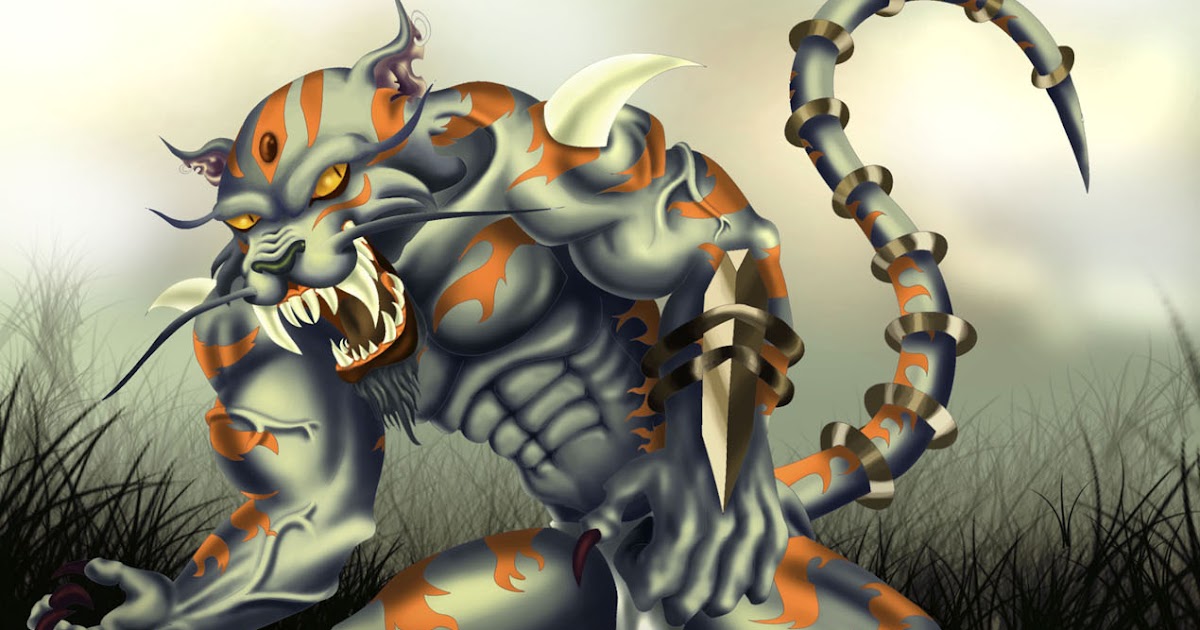
We felines have been written, sung and spoken about throughout history and I find mythical cats fascinating. The article names 12 cats noted in folklore and mythology.

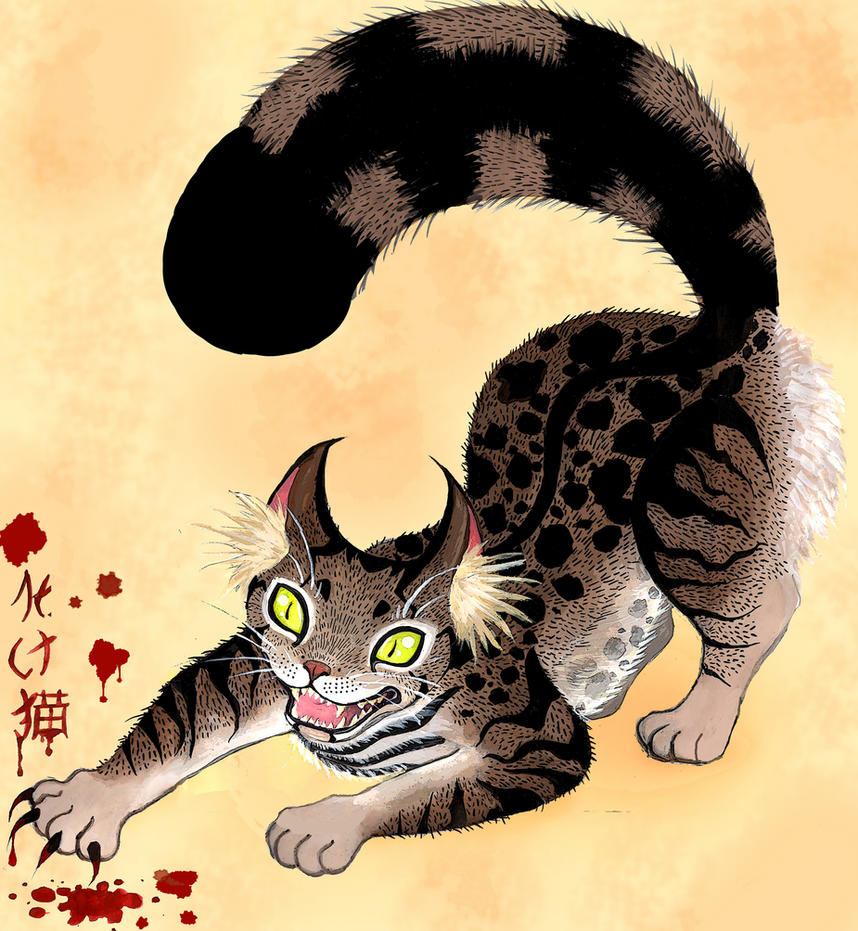
1.Bakeneko

Bakeneko is a monster cat from a Japanese legend that became a  yokai (a class of supernatural entities in Japan) and gained supernatural powers. It is said that when cats live to a ripe, old age they will begin developing supernatural powers too and will and fully transform into yokai.

Bakenekos start off resembling regular house cats but then evolve to walking on only their hind legs. As they age, they grow much larger and their powers intensify. They are described as reaching the size of full-grown adult humans. Another myth, Nekomata, is very similar to the Bakeneko but has two tails and is said to live in the mountains.

2. Bastet

Bastet is a feline deity and the Egyptian goddess of the home, women’s secrets, cats, fertility, and childbirth. She was thought to be a bringer of good health and protected the home from evil spirits and disease, especially those affecting women and children.

3. Cactus Cat

The Cactus Cat is a mythical creature from the American Southwest. Cactus cat is described as resembling a bobcat with thorn-like fur, a branched tail, and sharp bones protruding from its front legs. This mythological cat is said to have been sighted in the Southwestern desert areas of the United States including states like California, Nevada, and New Mexico. Some sightings have even been reported in Colorado.

4.Cat-sith

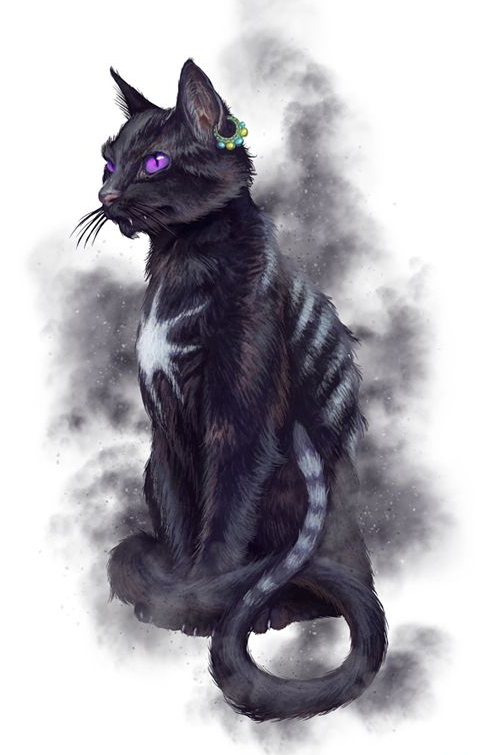
Cat-siths are legendary felines from Celtic mythology that are said to be the size of dogs with black fur and a white spot on their chests. It is said these creatures walk on four legs and act like animals when in the presence of humans but then they shift to bipedal walking when humans aren’t around. Some are even described as wearing clothes.

In most of the myths surrounding cat-siths, they are indistinguishable from regular cats until they are caught standing upright.

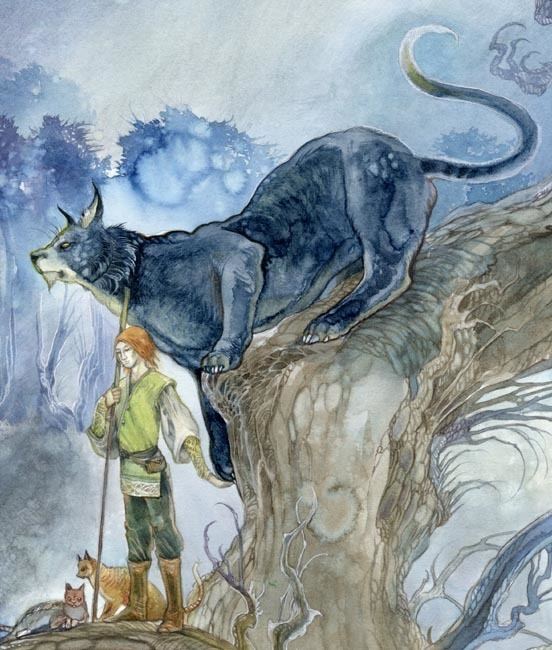
5.Cath Palug

Cath Palug was a monstrous cat from both French and Welsh mythology. This cat was said to inhabit the Isle of Anglesey where it ate a number of humans who attempted to slay it. Cath Palug was said to have been slain by King Arthur after wreaking havoc across the land.

6.Cha Kla

Cha Kla is a legend from Thailand, described as a cat with blood-red eyes and completely black fur that runs from back to front. Cha Kla is described as nocturnal and so fearful of humans that it will immediately hide in its hole in the ground if it encounters a human. It is said that if a person were to see it or touch it, they would die. Sorcerers were said to use Cha Kla to defeat their enemies.

7.Dawon

Dawon is from Hindu mythology and is also known as Gdon. Dawon is a fierce tigress given to the goddess Durga for combat. Durga would ride Dawon into battle yielding 10 weapons in each of her 10 arms. Dawon would also take part in battle using her teeth and claws. Those two would be formidable combatants!

8.Hombre Gato

The Hombre Gato, also referred to as Catman, is a legendary creature from Argentina that has the features of both cat and human.

Hombre Gato was thought to only come out at night to prey on humans and animals and became such a widespread legend that it has been captured in Hispanic literature through short stories.

9.Mafdet

Mafdet is a deity from the First Dynasty of Egypt. She was known as the Goddess of judgment, justice, and execution. She is said to be the protector of Ra, the Egyptian sun god.

Mafdet’s depiction in ancient paintings is much like a Savannah Cat or Cheetah. It was said she was able to protect against the bites of scorpions and snakes.

10. Matagot or mandagot

A matagot, also known as mandagot, is a legend from southern France. Matagots are said to be spirits that take an animal form, mostly presenting as a black cat. Matagots have also been described as taking on the appearance of rats, foxes, dogs, and even cows. Matagots are generally seen as evil spirits, but some are believed to bring wealth into a household if it remains well fed.

11.Sekhmet

Sekhmet is the Egyptian Goddess of war and destruction. She is said to have been born from the fire of the Sun God Ra’s eyes. The ancient Egyptians built at least 700 monuments to worship Sekhmet. In some tales, she is considered an alternate form of Bastet, and in others, she is referred to as Bastet’s sister.

12.Wampus Cat/ Cherokee Death Cat

Death Cat. In some regions, the Wampus Cat is a frightening and evil feline, while in others it’s viewed as more comical. In Cherokee mythology, this monster cat is the embodiment of a female cursed by the tribe’s elders that were punished for hiding under the pelt of a wild cat and bearing witness to a sacred ceremony she had no business attending. Some southeastern Native American tribes believed the Wampus Cat to be a shapeshifter. It was said that Wampus Cat went on a livestock killing spree during the 1920s and 1930s, and reports of the creature stretched across the southeastern states into the 1960s.

Karl Lagerfeld’s cat Choupette scores an invite to the 2023 Met Gala

I have reported on Choupette, the late Karl Lagerfeld’s beloved cat, and now  Choupette, has been formally invited to the Met Gala. Lah di dah!

Lucas Berullier, Choupette’s agent and owner of My Pet Agency, which specializes in pet influencers, announced the invite from Paris. (This cat has an agent?? Meowza, what am I doing wrong!!) 

“It’s an event in honor of the legacy of Karl, and Choupette is obviously a central part of the legacy,” Berullier addd.

The theme of this year’s Costume Institute exhibition is Karl Lagerfeld: A Line of Beauty. It will celebrate the iconic German designer, who worked for Chanel, Fendi, Balmain and myriad other fashion houses before his death in 2019.

Born a Leo on August 15, 2011, the blue-cream tortie Birman was originally owned by French model Baptiste Giabiconi. He received the kitten on his birthday from friends and named her for the “common nickname in French for cute girls,” according to the New York Times.

That year, Giabiconi asked Lagerfeld to cat-sit around the holidays. The designer was initially reluctant but quickly fell in love.

“It became clear to me that Choupette brought Karl great joy,” Giabiconi told the Times. So he decided to let Lagerfeld keep the kitten.

The rest is fashion history.

The pretty kitty went viral in early 2012 after V Magazine’s editor-in-chief, Stephen Gan, tweeted out a photo of Choupette, introducing her as Lagerfeld’s “new kitty.”

In 2014, Choupette secured her own makeup line by Shu Uemura, and the fancy feline went on to rake in over $2 million doing a campaign for a German car.

News outlets called the cat “the most famous feline in the world.”  She was always by Lagerfeld’s side in a custom $3,000 Louis Vuitton handbag.

 “Choupette was a phenomenon. Karl Lagerfeld wasn’t really perceived as a warm and fuzzy person, so it made it incredibly ironic that he basically fell in love with Choupette and she did become his furry muse which kind of humanized him which was sort of lovely,” Kathlin Argiro, a fashion designer professor at the Fashion Institute of Technology, told The Post. 

In 2018, Lagerfeld told French magazine Numero that he had named the cat as one of the heirs to his estate. Lagerfeld died in February 2019 at age 85, it was rumored that he left his fortune to Choupette. The exact details of Lagerfeld’s estate as it related to the cat are not known.

In the years since Lagerfeld’s death, Choupette has been ably looked after by his former housekeeper, Françoise Caçote. The cat continues to work on occasion, doing campaigns for the Karl Lagerfeld brand, luxury pet line LucyBalu and L’Oréal.

She also has a philanthropic side and gives back through her new charity organization the Choupette Fund, which aids stray cats.

It seems that although Choupette lost her loving human, she’s still living mener la grande vie.

Can you spot the cat? One sneaky feline found the perfect place to hide within the walls of this New York City apartment

Evidently there is a Twitter group called #findthecat and Journalist Kate Hinds, of New York City, made Twitter followers go crazy trying to find her elusive feline.

Her cat blends into the apartment scenery very well. After you’ve stared a while and still can’t find the elusive feline, here are some hints.

Hint #1: Someone has a green thumb! 

Still need another hint? 

Hint #2: Cats can always be found basking in sunlight. 

Cats are biologically programmed to always find the warms spots in their home and as winter breaks its cold curse, many felines are jumping at any chance to lay in the sunshine. 

Still haven’t found it? 

Hint #3: If your cat isn’t messing with your plants, do you even have a cat? 

Eating plants actually aids digestion in felines and help move fur balls through the tract. 

However not all plants are safe for cats to consume, some to avoid are tulips, daffodils, and lilies. 

Given up yet? We don’t blame you! Okay, here is the map to find the cat.

If you take a real close look toward the windowsill on the right, hidden among the dense collection of plants, you can see the gray fur on the cats back.  

The forgotten history of cats in the navy

Naval cats have had the names Tom the Terror, Wockle, Bounce, and Dirty Face. They traveled thousands of miles on warships with some of the saltiest sailors. They were valued members of the crew, and were often issued custom miniature uniforms and their own tiny hammocks. Many never set a paw on dry land during their entire lives. They were the cats that served in the world’s navies.

Cats have been on ships for almost as long as humans have been going to sea, and sailors have been largely responsible for spreading cats across the globe. Ancient Egyptian tomb paintings depict cats hunting from boats sailing down the Nile, while Phoenicians recognized the value of controlling the rodent population on their ships as they traded throughout the Mediterranean.

Rats and mice were a major problem on ships because they ruined the crew’s food, chewed through equipment, and spread disease. Cats were a cheap and effective solution to any vermin infestation. The U.S. government, in an effort to protect documents from nesting rats, began to purchase clowders of cats in the 19th century, eventually supplying them to the U.S. Navy. In the United Kingdom, one of the earliest and largest cat rescue programs occurred during the First World War, when thousands of strays were rounded up in cities and given to the military. The cats supplied to the Royal Navy even received a weekly “victualing allowance” of 1 shilling and 6 pence to pay for treats from the ship’s canteen.

Early sailors believed that cats could control the weather with their tails. When feline tails twitched in a certain manner they thought it meant the cats were angry and preparing to unleash a violent storm that would soon fall over the ship. Later sailors realized that cats twitched their tales when they were agitated by a sudden drop in air pressure, indicating that the ship was heading into unfavorable weather. Crews began to monitor all the mannerism of their ship’s cats and viewed any unusual behavior as a storm warning. The felines were, in a sense, little furry barometers.

Cats were also a source of superstitions: Seamen preparing to sail considered it good luck when a cat chose to board their vessel. However, they feared disaster if they had a longtime ratter that decided to jump ship just prior to setting sail. Even worse, sailors thought their fate was sealed if they saw two cats fighting on the pier: It meant that an angel and devil had already started to battle for the souls of the crew.

Though cats are known for their aversion to water, they acclimated quite well to life on the sea. Unlike the “limeys” of the Royal Navy, who famously had to drink citrus juice to prevent scurvy, cats make their own vitamin C and can survive on a diet consisting of fish and mammals without needing to eat fruits and vegetables. And when rodents were in short supply, cats had different methods for catching fish for themselves. The easiest prey were the ones that simply washed up on the deck. Some cats overcame their dislike of water to become skilled divers that could snatch fish from the ocean. The cats that never got comfortable with swimming still managed to hunt by deftly knocking down fish leaping over the ship’s bow. Because cats got most of the moisture they needed from eating the fish, they did not require a lot of potable water like human sailors. In addition, cats have an excellent internal filtration system that allows them to drink a bit of sea water if necessary.

Feline companions were also important for boosting morale among homesick sailors on long voyages, providing the crew with much-needed affection.  Since cats were considered mascots to be shared by all the sailors, they also helped to create bonds among the crew.

Some sailors claimed they learned to “speak cat” and were able to get their mascots to perform feats such as standing at attention, saluting, walking tight ropes, and ringing bells. This especially contributed to the U.S. Navy’s goodwill efforts in foreign ports when locals were invited for ship tours that included a brief show featuring performing cats.

Larger navy ships could have as many as two dozen cats that established their own territories. The one that was smart enough to claim a ship’s galley usually became the fattest (that would be our Oliver if he ever decides to go to sea).  Other mousers stayed in the bowels of the ship where they would not be as bothered by all the activity on the deck and the sounds of the guns. The friendliest felines were happy to stay in the berthing area where they received plenty of attention from sailors and could sleep in hammocks that reduced the swaying of the ship.

Following the end of the Second World War, the special position that cats held on navy ships began a rapid decline. Due to improvements in fumigation and pest control, cats became outmoded in their primary job to rid ships of vermin. Ship captains who were not cat lovers started to categorize felines as an unnecessary distraction. How rude!!

A bigger problem for cats in the U.S. Navy was that they became a political and legal liability in the immediate post-WWII era. The defense budget was slashed and the Navy was downsized dramatically, alarming admirals who believed that they were being cut to the bone and left without a fleet sufficient enough to protect the nation’s interests against the rising threat of communism. Members of Congress who were advocating deep defense cuts ridiculed the admirals by revealing that one ship had used resources for a three-man committee to plan a funeral for their mascot cat. It was cheap shot because the costs of keeping cats to maintain morale was nominal (and often paid by the crews themselves), but it embarrassed the admirals by giving the public the impression that the Navy was spending money frivolously.

More than anything, it was new and stricter international quarantine laws that ended the tradition of the ship’s cat. Prior to the 1950s, many nations gave ship’s cats special status that made them exempt from quarantine laws, allowing them to roam free in foreign ports where perhaps the worst consequence was a scrap with a local tom. The laws enacted by most countries after the war forbade cats from leaving a ship before going through a lengthy quarantine period. If local officials caught a cat sneaking off a ship, the captain could be heavily fined or even placed under arrest.

Current U.S. Navy policy does not explicitly ban cats on ships, but the special permission that sailors now need to bring a feline friend on board is almost never granted. Most navies of the world have adopted a similar policy—except for Russia.

Walk Through The Web Wednesday – 4/5

Happy Wednesday Furiends – we’re back!

The Human made it through the 9 days of moving nightmare. To be honest, the garage is still a bit discombobulated and the home office isn’t quite organized yet but things have progressed so the important work can commence again!

We do enjoy snoopervising while The Human is working as you can see below (Lily was buried under the covers in the bedroom so we couldn’t get a photo of her).

The most important piece of furniture in the office.
Oliver is not pleased that he was disturbed, the NERVE!
Yes, I know there are four fuzzy soft cat beds on the cat condo but I purrfer snoopervising here.
Oliver is pleased with the new set up as the Chewy box is opened sooner and he can inspect the contents.

Well, that’s our news for the week. We’re glad we’re back on schedule and hope that you enjoy this week’s news items.

Elderly cats live in retirement village: See their little cottages!

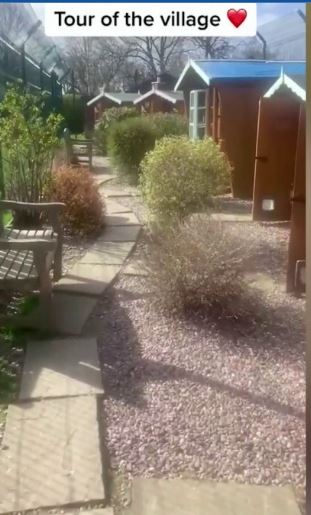
This moggies Retirement Village in Shrewsbury, Shropshire, England, is picture purrfect and is a place for  homeless, stray and abandoned cats. The Shropshire Cat Rescue currently houses 17 cats there. Don’t forget to watch the video of this wonderful place.

These Cats Don’t Just Do Their Own Stunts. They Film Them, Too.

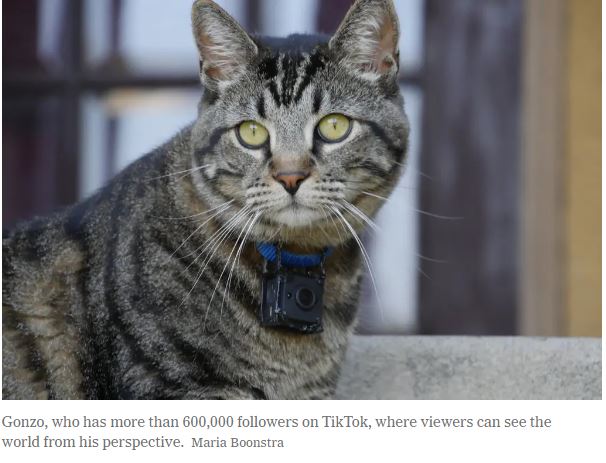
I had to report on this story, after all our tag line at FelineOpines.net is “the world from a feline point of view” and these videos give you exactly that. Cats with cameras on their collars give insight into their day to day life.

In one video, the cat  pauses, assesses the height and leaps. He tries to free-climb up the side of a building, before jumping back to the ground. In another, he leaps across a roof, his shadow stretching out long in front of him.

The film and the antics are by  Gonzo of @gonzoisacat. He has more than 607,000 followers on TikTok and 178,000 on Instagram.

Gonzo is the star — and the director — of his own shorts. Rather than his humans filming his stunts, Gonzo films them himself with the help of a tiny camera that attaches to his collar.

Gonzo isn’t the only cat producer. In Norway, a GoPro-wearing cat roams across snowy meadows or climbs on a roof. One in China also recorded under-the-chin videos. Mr. Kitters has 1.5 million followers on TikTok and nearly one million on Instagram, where viewers can watch him meow at a bird or chase a squirrel.Gonzo’s humans,  Derek Boonstra, and  his wife, Maria, live in Los Angeles.

They wondered what Gonzo was doing when no one was watching — and wanted to make sure he was safe when he was exploring outside. After experimenting with a D.I.Y. camera, Mr. Boonstra bought one from the brand Insta360 and this is Gonzo’s filming equipment.

The first day they filmed included about “90 minutes of him sleeping in a bush but then Gonzo ran into some baby opossums. “That was immediately like, this is really fascinating,” Boonstra, a documentary filmaker said.

The rise of wearable camera technology, though more often used by surfers or snowboarders than pets, has led to a niche style of cat content. Like viewers of extreme sports videos, cat video fans regularly note the thrill they feel when their feline stars leap or scamper.

I’m not sure if this feline would like The Human spying on me all day and would purrfur to keep my daily routine a mystery.

Pet cats and dogs may help protect infants from food allergies, study suggests

Now here’s some good news. Children who live with cats or dogs during fetal development and early infancy may be less likely than other kids to develop food allergies, according to a new study.

The study, published in the journal PLOS One, analyzed data from over 65,000 children from Japan. It found that children exposed to cats or indoor dogs had a 13% to 16% lower risk of all food allergies compared with babies in pet-free homes.

“Our findings suggest that exposure to dogs and cats might be beneficial against the development of certain food allergies, thereby alleviating concerns about pet keeping and reducing the burden of food allergies,” the authors wrote.

The study found that children exposed to cats were less likely to develop egg, wheat and soybean allergies, while those exposed to dogs were less likely to have egg, milk and nut allergies.

The exact mechanism remains unclear, but experts say pet exposure may strengthen an infant’s gut microbiome, either directly or indirectly though changes in the parent’s or home microbiome.

“We know from a lot of studies that the microbiome – which are the bacteria that live within us, thousands and millions of them inside everybody’s gut – affect our immune responses and our immune system, particularly whether we develop allergies or not,” said Dr. Amal Assa’ad, director of the Food Allergy Program at Cincinnati Children’s Hospital, who was not involved with the new research.

Dr. Jonathan Bernstein, president of the American Academy of Allergy, Asthma, and Immunology, says dirt and other materials secreted by pets could be a good thing.

“It is critical to have these exposures early on as the immune system is developing, as the gut is developing, because it does seem to be an important route for sensitization,” said Bernstein, who was not involved with the study.

Previous research has had mixed results. Some have linked pet exposure to decreased risk of food allergy, but others have found no association.

“The data is all over the place,” Assa’ad said.

So in other words, after all that research the humans aren’t sure if this is correct. Sigh. You humans complicate everything.

How a one-eyed rescue cat from Idaho became 2023’s Cadbury Bunny

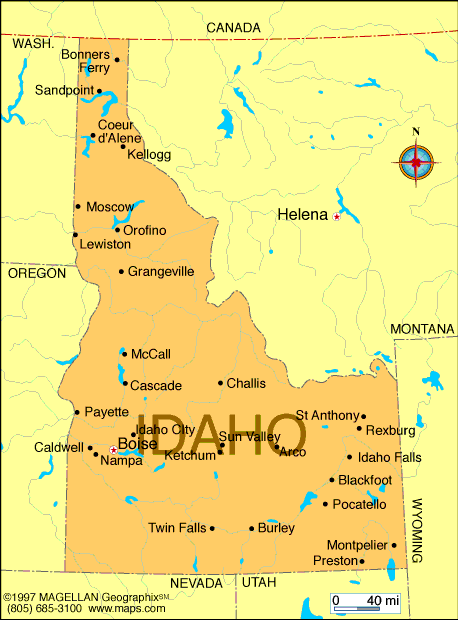
Well of course, as an Idaho cat, I had to include this story although this cat is from Boise which is a 497 mile drive south east of us (we’re in Sandpoint in the Panhandle). Still, Crash the cat is a true Idahoan and his success must be celebrated.

We live all the way at the top in Sandpoint

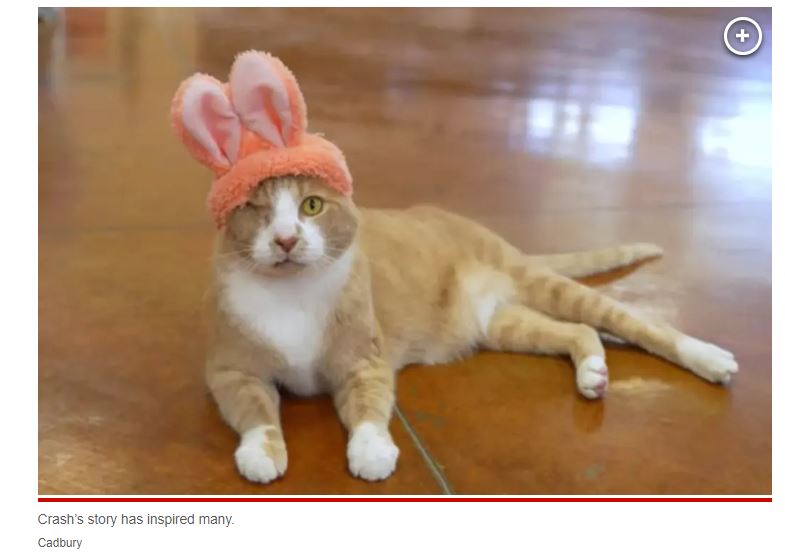
Crash is an 8-year-old, one-eyed feline who was rescued in Boise and has been named 2023’s Cadbury Bunny, just in time for Easter Sunday.

Besides appearing in a Cadbury commercial, Crash will be inducted to the Creme Egg maker’s hall of fame, and will take home $5,000 for himself — and another $5,000 for a charity of his choice.

Crash’s began quite by accident, literally — he was struck by a car where he lost not only his eye but broke one leg and his jaw.

“As he began to heal at a Simply Cats Shelter, his quirky, outgoing personality made everyone quickly fall head over heels for him, leading Crash to become their resident shelter cat,” according to a release from the company. “Crash charms and impresses people as they visit the shelter, performing tricks like high five.”

He was picked out of finalists including Ping the duck; Ande the chinchilla; and a sheep called Timmy. This is the fifth time Cadbury has celebrated the season with its Bunny Tryouts, where any animal can be a contender. This year, the company specifically sought out rescue pets.

Now, Crash’s owner, Maddie Corey is scratching with anticipation for her beloved pet.

“We are jumping with joy to hear Crash is the next Cadbury Bunny but not surprised as he is always the center of attention in any room. He’s been through so much over the past few years and we appreciate the love his friends, family and cat enthusiasts across the country have shown,” she said.

In a way of continuing to support animals, Cadbury has also donated $20,000 to the ASPCA this Spring to continue “raising awareness for pets in need and supporting the ASPCA’s mission of providing effective means for the prevention of cruelty to animals.”

And in the brand’s own words, Crash is living proof why such actions are worthwhile.

“He reminds our community that every cat is worth saving.” And to that this feline says AMEN!

National Siamese Cat Day – April 06

Before you think, “Alberto, you’re not a pure Siamese why look at your brofur Oliver!” I would ask you to take a look at my baby blue eyes, my coloring and, if you could hear me you’d know there is Siamese in my family. And it is for this reason that I am celebrating Siamese Cat Day tomorrow. So here’s some info on the wonderful Siamese cat and, if you are purebred Siamese or Siamese combined with something else, I hope you’ll be celebrating too!

The Origin of Siamese Cats

Siamese cats have a long and fascinating history that dates back to ancient Siam, which is now modern-day Thailand. These felines were considered sacred animals and were often kept in temples and palaces by royalty. Siamese cats were even given as gifts to dignitaries and important people as a symbol of honor.

The Unique Characteristics of Siamese Cats

Siamese cats are known for their striking blue eyes, pointed ears, and sleek, muscular bodies. They are also very vocal and affectionate and love to interact with their owners. Siamese cats come in different colors and patterns, including seal point, chocolate point, blue point, and lilac point.

The Personality of Siamese Cats

Siamese cats are intelligent, curious, and playful. (Well that describes me to a “T”). They are also very loyal to their owners and enjoy being the center of attention. Siamese cats are known for their vocalizations, which include meows, chirps, and even yowls. (Oh you should hear me singing the song of my people at midnight).

The Significance of National Siamese Cat Day

National Siamese Cat Day is a day to celebrate and honor the Siamese breed. It is a time to appreciate our unique characteristics and personality of these felines, as well as our contribution to the cat world. This day also provides an opportunity for Siamese cat owners and lovers to come together and share their experiences and love for these beautiful creatures.

One of the best ways to celebrate National Siamese Cat Day is to spend quality time with your furry friend. And don’t forget to give your furry friend to some special treats.

And don’t forget to have your humans take some photos of you and share them on social media and use the hashtag #NationalSiameseCatDay

It’s not a good week for The Human

Hello Furiends,

Oliver here. The Human has been busy this week clearing out 12 years of stuff from her business in preparation to work at home (and devote more time to writing).

She’s been moaning and groaning about all the trips up and down the stairs but frankly, she can use the exercise. She has two days left to clear everything out and frankly, I’m wondering if she’ll make it! Just take a look at all this stuff!

It’s all been very inconvenient for us but I have to admit, having our Purrsonal Assistant working in OUR office will have distinct advantages (and extra treat opportunities, I hope). It will be so much easier to snoopervise her!

She asked that I send her apologies for her dereliction of duty and the lack of our regular Wednesday feature but we will have a pawsome surprise for you tomorrow from our furiend Mollie Hunt’s blog, Crazy Cat Lady Mysteries and More

If you haven’t read any of Mollie’s books, you’re missing some great reading!

That’s it for now…see you tomorrow!

Walk Through The Web Wednesday – 3/22

Hello Furiends!
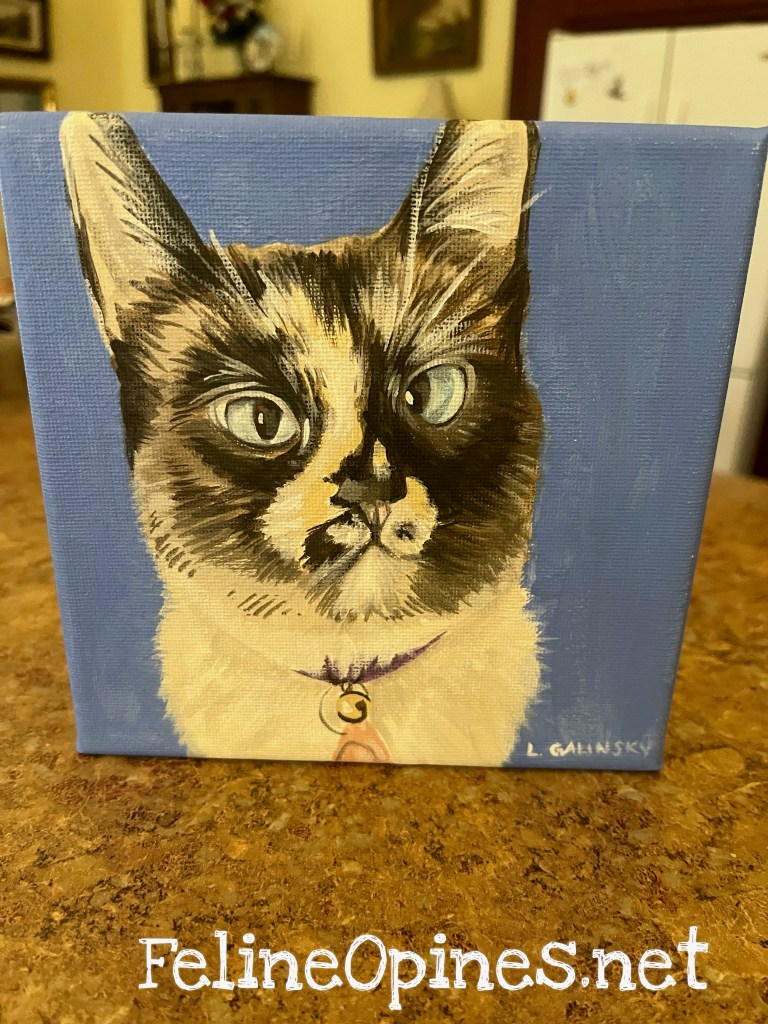
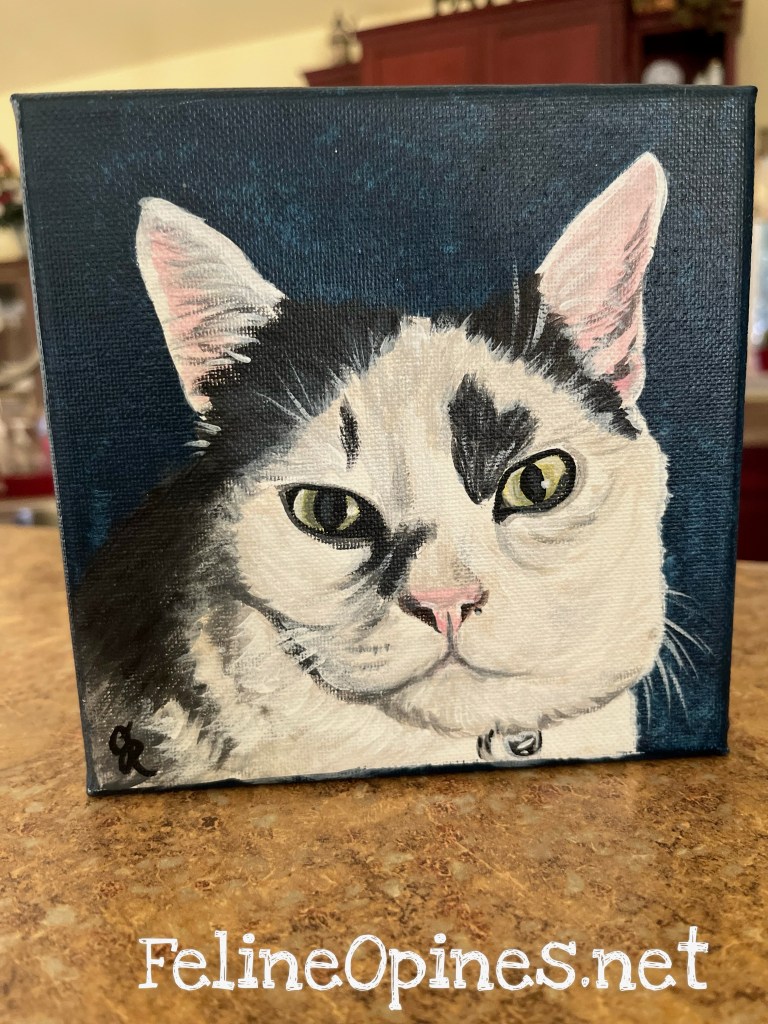
I hope your week went well. It’s been nice here in our neck of the woods. The snow is finally starting to melt and we are enjoying finding sun puddles in the house to “recharge”. The Human did have an exciting surprise this week. She came home to find a package from Chewy and lo and behold, there was a painting of Lily, from one of Chewy’s talented artists.

“I think this painting captures me beautifully.”

Now I say “one of the Chewy artists” because The Human did receive a lovely portrait of my brother Oliver and the signature on the painting is different than the one on Lily’s portrait but also beautiful!

“I am a handsome fellow!”

Now it’s not that I begrudge Lily and Oliver their fame but I am wondering when it will be my turn, I think I’m a pretty handsome man cat.

“Dear Chewy, when will I be immortalized in a painting?”

Oh, and if you’re wondering how being captured for posterity in oil has affected Lily……….

“You may now approach me peasants.”

As I mentioned, we’ve been having sun!! While The Human mumbles about how the sun shows how dirty the living room windows are, Ollie and Lily took advantage of the soft sofa and the sun puddles.

Oh well, purrhaps it’s time for me to stop sulking about the painting …but then again….

“Here’s the deal Human, get a painting done of me and I’ll get off your paperwork, capiche?

Well, enough about us, let’s see what’s new in the feline news world.

Cat Survives After Six Days in Gas Explosion Rubble

Photo courtesy of the NY Post

A cat named Teddy was found in a pile of rubble six days after a gas explosion in a house in south Wales. The March 13 blast killed one person. Teddy’s human and her son were taken to the hospital and both recovered from their injuries. Another family feline and their puppy had been rescued but for a week there was no sign of Teddy. Thank goodness rescue workers never gave up and, when Teddy’’s human showed up after she was released from the hospital and whistled for him, Teddy the Ragdoll emerged from the wreckage. I love stories with happy endings!

Cat in Taiwan does vocals & busks with singer during love song inspired by cats

Photo courtesy of TikTok account of @0110maojian

A street performing cat in Taiwan has won over the internet and the locals with his vocal purrformances. The song he and his humans sing is a love song that has a hook that plays on the onomatopoeia of the sound a cat makes. Onomatopoeia is a word that imitates a sound like “buzz” or “sizzle”.

Roughly translated, the first line is, “We can learn to meow like cats, we go meow meow meow meow meow.” Needless to say, this is a purrfect line for a cat to sing. As he’s brought to the microphone to sing the cat delights the crowd and his fellow human singers. You can watch the wonderful purrformance in a clip posted to TikTok.

I quite fancy a singing career however The Human can’t sing at all so I’d have to find my own human band. Anyone out there want to go on the road?

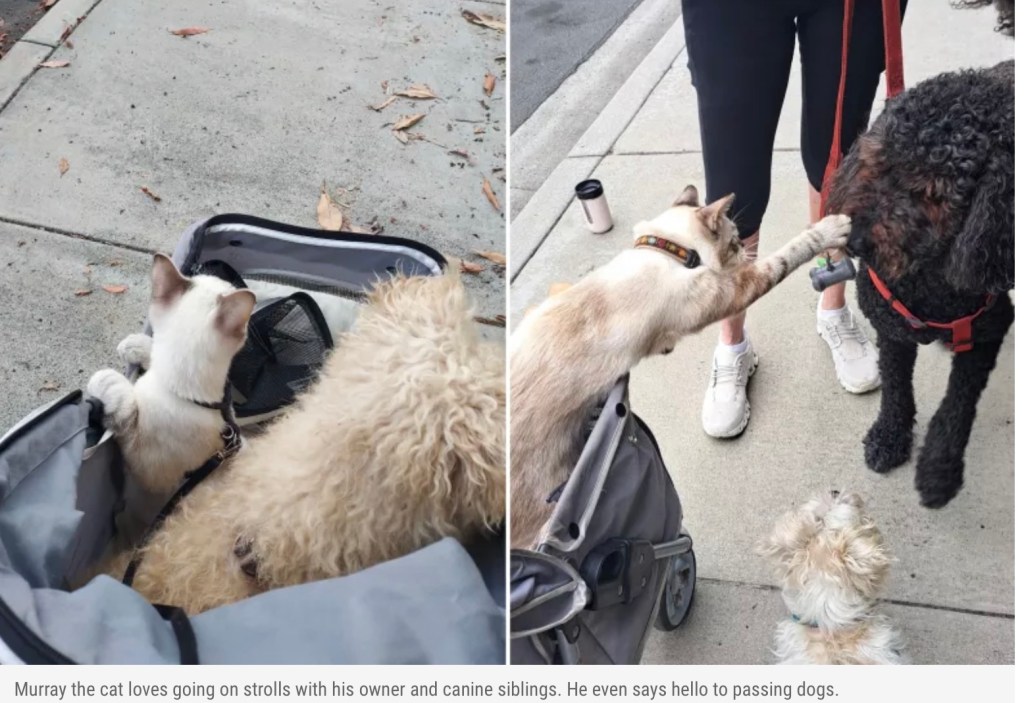
Cat Pets the Dogs He Meets on His Walks

Newsweek has a weekly pet winner and this week’s winner is Murray, adopted by Lisa Russel in 2021. Lisa, like The Human, took Murray to foster and of course, became a foster failure (a badge of honor).

Murray, was adopted in the fall of 2021, his owner told Newsweek: “I was just supposed to foster him for a week or two…but we all know how that can go.”

Murray had been living in downtown San Diego until his owner was no longer able to care for him. A call for help with fostering was sent out to the community and Russell answered the call. As soon as she she saw Murray he was her forever cat.

Murray loves to travel in the stroller in the big park near his house. Russel says, “He hangs his little arm over the edge of the stroller like he’s driving a sorts car. On nippy days, he dons a scarf made by a neighbor-it’s blue to match his eyes, of course.”

“When Murray hears me tell the dogs that it’s time to go to the park, he runs to the bottom of the stairs along with them. He’s rarin’ to go,” said Russell. “I do put a collar and leash on him so that he is secure in the stroller. He is a very good boy, but I want to be safe and not worry about his reflexively hopping out to chase a lizard or bird.”

I’m thinking about all those lucky folks in the San Diego park who meet Murray when he’s out and about and get a “Murray paw shake”.

Adorable Duet Ensues as Dad Sings Cat to Sleep and Feline Joins In

From then Instagram account of Anthony Klein and Sammy

Anthony Klein and his ginger feline companion Sammy are best buds. They do a lot together including singing duets. Klein shared a video on Instagram showing his drowsy cat as he serenades him with the song “Twinkle, Twinkle Little Star”. In the video, Sammy joins in the singing. 

As you may have guessed, the video has gone viral. These two are a purrfect match, in life and in singing. Don’t forget to check out their Instagram account.

Walk Through The Web Wednesday – 3/15

Happy Wednesday Furiends!
We hope things in your neck of the woods are going well, although we know some of you are really suffering through a crazy winter. Still, it’s all about your purrspective. We are getting spring fever with these high temperatures and The Human even ran out of the house without a coat this morning. Weather Kitty understands our purrspective here in the Inland Northwest as evidence by the photo today. You may call it chilly, we call it spring!

What a difference a week makes. This video was taken last Friday. It was, in the words of Winnie the Pooh, a rather blustery day.

And when the weather’s like that, this is how you’ll find us.

We found some great holidays to celebrate this week, we invite you to enjoy them too!

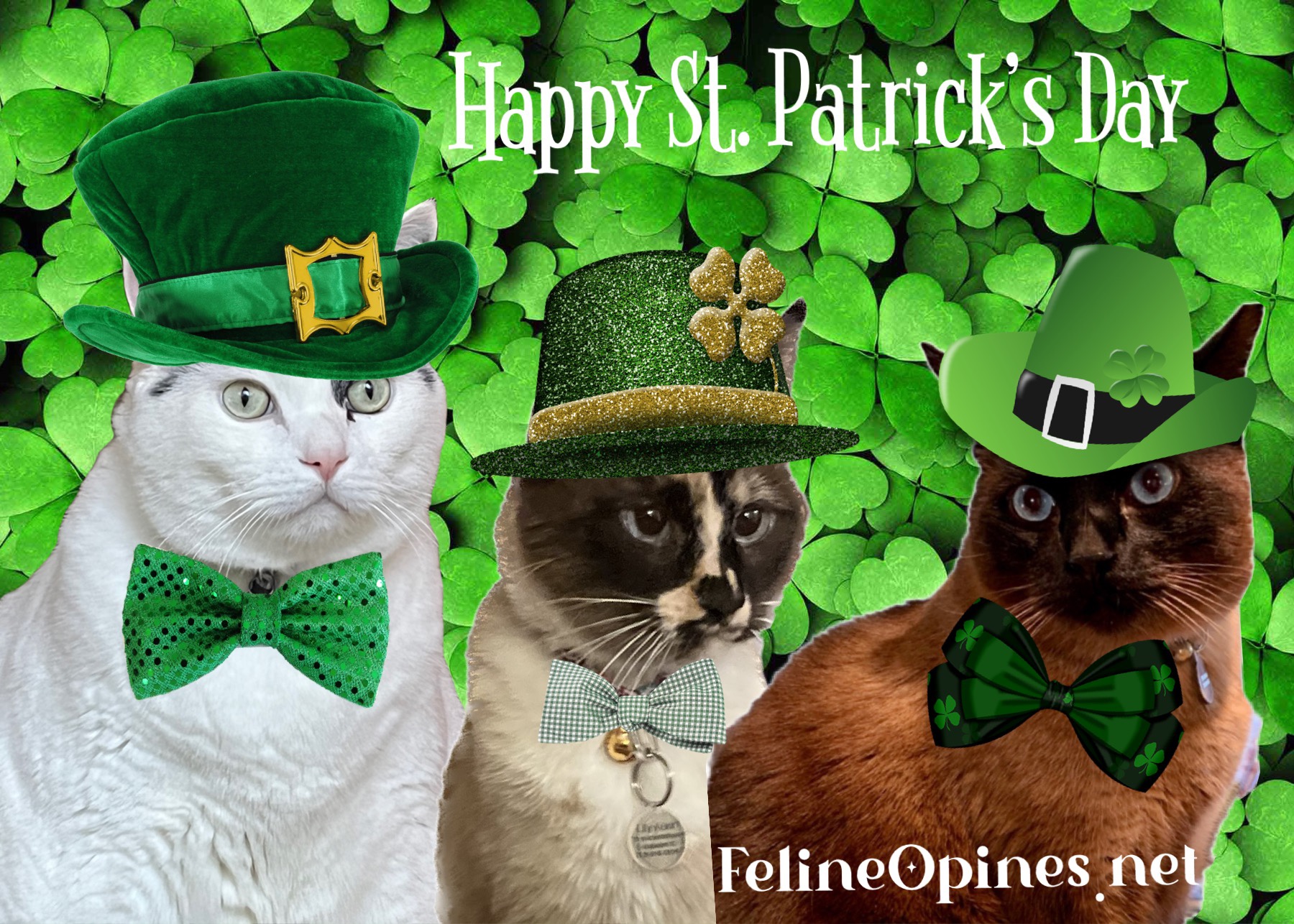
On March 17th we’re all Irish!
Oliver invites you to join him for one of his favorite holidays on March 17.
This may not be Lily’s favorite holiday on March 18th but she bets you can all relate?

Well, that’s it for our neck of the woods. We hope you enjoy your week and whatever holiday you wish to celebrate (except maybe Awkward Moments Day!)

Consenting Cats Are Happier Cats

“I’d rather go to the vet in my harness than a carrier.” – Oliver

The heading of this article made The Human but after we read it, it made a lot of sense.  The sense of self control in situations is strong in humans and dogs and MUCH stronger in cats because, to put it bluntly, we felines like to have control

We felines, this shouldn’t be viewed as a negative trait; control gives us a sense of safety.   With cats, the idea is to reward and reinforce good behavior and that constitutes allowing the cat to give consent or to participate.

In the example of carrier training, if the only time a cat sees or is shoved into a carrier is to go to the vet; the cat will be less than enthusiastic about the carrier.

The following cat carrier trips are from Marc Bekoff, Ph.D., and Steve Dale:

Leave the carrier out 24/7. If the cat was previously afraid of a carrier because of the negative association made with the veterinary visit, purchase a new carrier that looks different.

Randomly drop treats into the carrier so it becomes an automatic treat dispenser.

Once comfortable inside the carrier, begin to feed the cat in the carrier. Most cats may now hop inside, expecting a treat for doing so. Cats do train people—and now you comply.

Now, ask your cat to hop into the carrier on cue—and always offer high-value award for doing so.

Ask your cat to leap into the carrier, close it, and walk to another part of the house. Once there, open the carrier and feed. Good things happen after being inside the carrier.

Finally, teach the cat that car rides aren’t bad—before going to the vet, just drive around the block, and when returning home give them a meal. And when you do go to the veterinarian, go for a happy visit—no exam, only treats.

These steps are much better than force and working with your feline to make him see the carrier as something other than an item of fear will be beneficial.

Marc Bekoff, Ph.D., and Steve Dale address the issue of petting and over-stimulation as well, saying that “petting is okay as long as the cat consents.”

They say, “For cats who typically allow only a minute or two of petting, stop petting after around 30 seconds. Quit while you’re ahead, leaving the cat to decide, “I want more.” If so the cat asks to be petted more, offer only a few seconds, continuing to leave the cat wanting still more. At some point, the cat will likely say, “Okay, that’s enough.” You can increase the time you spend petting your cat while still allowing the cat to maintain control.

Likewise, if you want to play with your cat, be sure your cat tells you it’s okay. Cats, dogs, and other animals clearly express their intentions and have to consent for fair play to continue; it’s best to be sure they want to play with you.

The article notes that “giving cats control by granting them agency and asking for their consent supports their need for safety, security, and trust, makes them happier, and enhances the social bonds you form with each other.” This feline agrees wholeheartedly.

A cat lover tried to leave a fortune to her town’s strays. It almost didn’t work out

When Barbara Thorpe passed away in 2002 she put most of her money in a charitable trust. A trust is a legal arrangement where the money set aside must be spent according to the wishes of the person who sets up the trust.

Barbara wanted her fortune to benefit the cats of Dixfield, Maine but for many years her money sat in the trust, unused which was contrary to the law. Eventually, Brenda Jarvis along with four other cat ladies in town joined together to sue to liberate the money on behalf of the cats of Dixfield. The cat ladies lost their lawsuit but their efforts attracted the attention of Christina Moylan, who is an attorney working for the Attorney General of Maine. Christina’s job is to ensure trusts are handled properly.

In the matter of trusts, Christina says that the law must follow the instructions of the dead forever, even if the world changes, even if the instructions seem vague.

It took a few years but Christina did find a way to honor Barbara’s wishes and she found an animal shelter that was willing to manage the money and now, the shelter is taking in stray cats from Dixfield. 

We say two paws up for Christina Moylan and for following the law and finding a way to honor Barbara Thorpe’s wishes to care for the feral cats of Dixfield, Maine.

Toiletries? Yes. Cats? No. TSA agents find cat in passenger’s carry-on at X-ray checkpoint.

People, people, people…how many times will I have to report on a cat going through an airport scanner before this madness stops?!

A cat was discovered inside a passenger’s carry-on baggage when it went through the security checkpoint in a Virginia airport.

Good grief, if you remember to take your computer out of your bag before it goes through the scanner how can you forget your cat in his travel case?????

This feline can’t wrap his mind around this and all I can do is reiterate, TAKE YOUR CAT OUT OF THE CARRY-ON BEFORE IT GOES THROUGH THE SCANNER!!!

On its website, TSA provides travelers information about guidelines on traveling with pets stating they should never be put through an airport’s X-ray tunnel.

Dogs and cats, for example, can either be screened privately in a separate room or walk with a traveler through the metal detector on a leash and then the empty carrier can be sent through the X-ray machine.

50 Cats In Random Circumstances That Have Accepted That This Is Their Life Meow

He likes to be carried around in a paper bag in the house so I thought I’d try it outside. He didn’t try to jump out and just relaxed.

We love the folks at Bored Panda because they find some of the funniest cat photos. They found some of these on the Reddit community thread called “This Is My Life Meow” and when you’re done checking the Bored Panda photos you can always find new ones on the Reddit thread.

This one was the Tribe’s favorite. Let us know which one is your favorite.

My cats own me! Pet lover treats felines like her kids with their own room, full-sized bed and £100 of treats per month

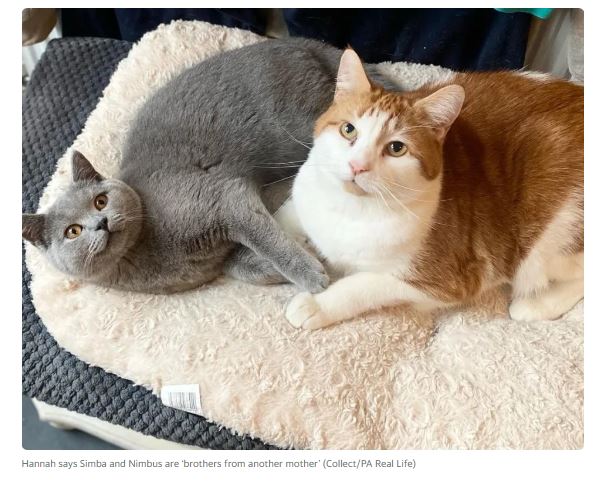
The felines in residence at the home of two  Redditch, England humans are living La Vida Loca. They have  their own bedroom (that cost over 300 UKL ($361.00) to furnish) with a full sized double bed, crown shaped cat beds, lots of toys and a budget up to 100 UKL ($120.32 at today’s rate of exchange) a month for treats.

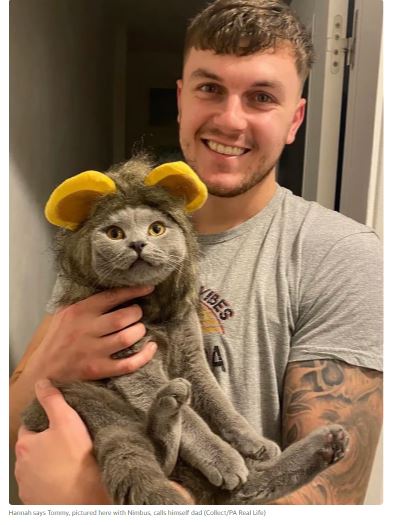
Hannah Whitmore, 24, a service adviser for a car dealership, loves cats, so when she moved in with her boyfriend, 25-year-old bricklayer Tommy Taylor, the couple adopted two felines – Simba, 10, and Nimbus, one. Kudos to them for adopting an older cat!

Tommy refers to himself as a “cat dad” and always speaks to the cats when he gets home.  Hannah changes the cats’ bedsheets in their room every week.

“I would say the cats own us rather than the other way around!” Hannah laughed.

She continued, “They are here for a short time, and they should be our priority. They very much come first in our house, but I think that’s the way it should be. I definitely spoil them in a materialistic way. But Tommy is very affectionate with them. When he gets home, he’ll talk to the cat before he talks to me!

Tommy, the self-proclaimed cat dad had to be convinced to adopt the cats but during COVID when he and Hanna stayed with is grandparents and their cat, the cat won him over.  When the couple moved into their three-story townhouse they went to Cats Protection in Birmingham and adopted Simba.

Nimbus joined the family about a year later.

The casts are inseparable, sleeping together, washing each other and loving each other.

And what if the couple has children and move into a bigger house? According to Hannah, the cat’s new bedroom will have to be twice as big.

These cats are living the high life and I’m thinking The Human needs to step up her game.

A note from Oliver

Hello furiends,

The Human is in the midst of making some big changes and her week got away from her so this Wednesday’s feature will be delayed.

She is going to be able to have more time for writing and blogging and expanding her job as our Purrsonal Assistant and this is good! We are assuming that when she starts working out of her office at home, there will be more snack opportunities as well.

I have been asked to share this good news as well as a relaxing moment with a glimpse into the my daily routine of keeping my Snow White fur shiny and looking it’s best