And who better to celebrate independence than felines?

And who better to celebrate independence than felines?

Well, it took us a little more time than we expected to get The Human up and running after her surgery but things are getting back to normal now, thank goodness!
She hasn’t been a complete slacker because while she was recuperating she worked on her manuscript for the first book in her cozy mystery series called “Meowntain Murders” The name of book #1 is “Owl Be Seeing You” and my brofur Oliver and I are two of the main characters. There are some humans in the book too but let’s face it, it wouldn’t be nearly as good without us.


And, she’s already started her second book in the series called “Felony at the Furbulous Feline Spa”. There is an interesting connection with the spa that inspired the location of the second book and our own Tribe.
As you may or may not know, the neck of the woods we live in is mountainous and fairly rural. And where you have independent folks you usually have more dog people than cat people but that is (thankfully) changing . It’s changing so much that we actually have a feline only grooming salon and the Human and Oliver made an appointment there to review it. Oliver is a super shedder. His fur even ends up on the dashboard of the car when he hasn’t been in the car for ages. The Human was delighted to find a place that might help her reduce the copious amounts of fur in our house, the car, the clothing and any guests who are brave enough to enter the “fur palace”.
The experience was great for Oliver and The Human and you can read the review here. And to add to good things that came out of this visit, the review received a Certificate of Excellence from the Cat Writer’s Association this year .
And now, the salon is the inspiration for book #2 in our cozy mystery series.
There is a short book trailer in the works for book #1 and I’ll share it as soon as it’s ready. In the meantime, here is one of the cover ideas. Let me know what you think.

If you’re a fan of cozy mysteries and would like to be a part of The Meowntain Mystery Group, send us an email.
It’s good to be back on the web and we’ll be posting more soon.


My Dear Furiends,
As our loyal readers have already surmised, we have been derelict in our blogging duties for the last few months. It has been a rough few months for our Purrsonal Assistant who (despite our outward lack of appreciation) is key to getting our blog posts done and published. She has dealt with a health issue, recently had surgery and I am pleased to announce that she is bouncing back purrfectly.
We realize that there are many comments and messages to respond to and much news (good news I might add) to impart and we are anxious to have our PA working to address all these things and we are so excited to be getting back to posting!
There is much exciting news that we will be sharing soon and we want to thank all our furiends for hanging in there with us.
The Human (our PA) refused to allow us to share any photos of her but I will share a few of the tireless work The Tribe provided to get her back to health.
We’ll be posting more soon,
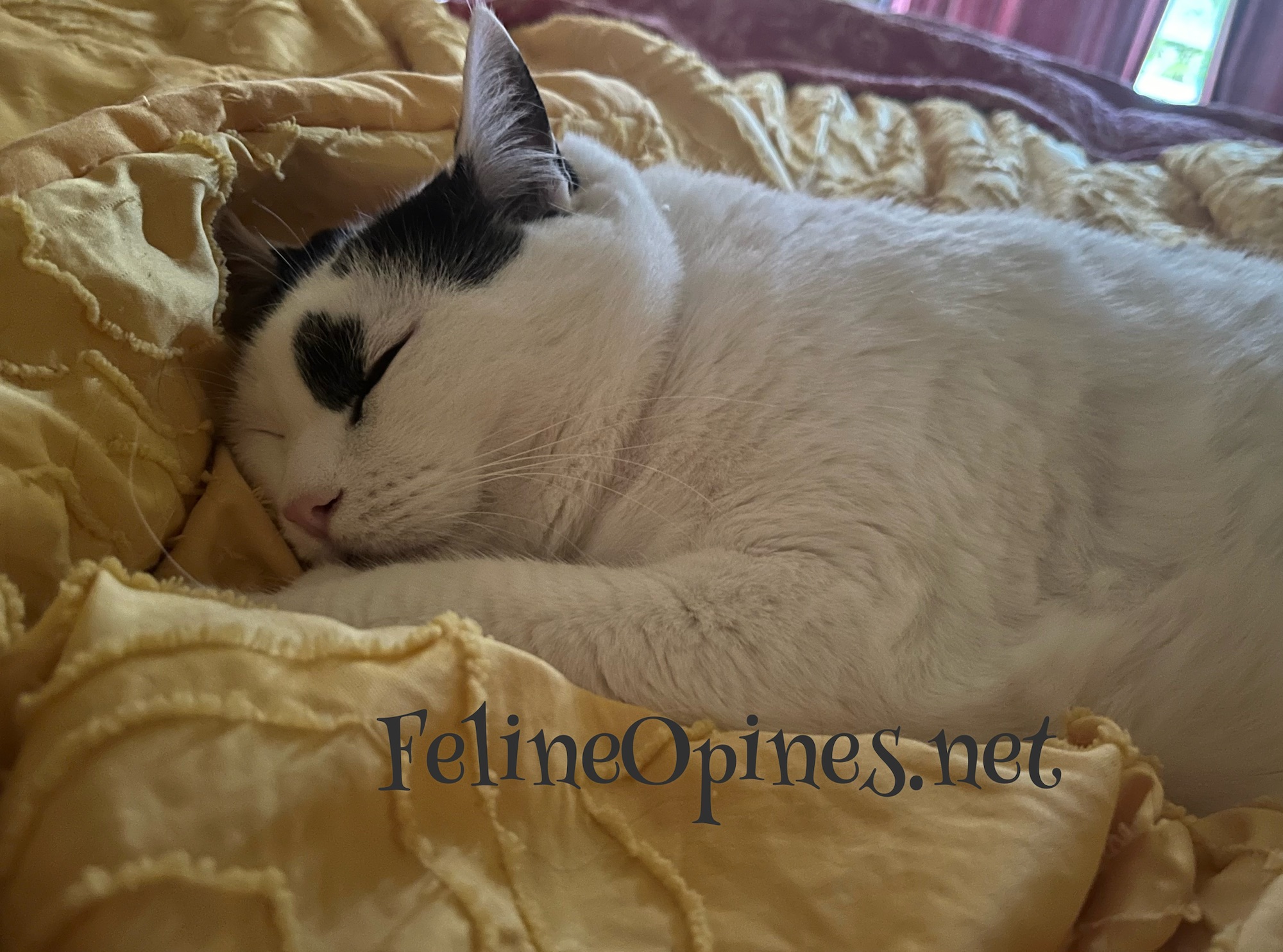
Here you see Lily and Oliver applying purr therapy to The Human to the point where they were exhausted. What a pair of selfless felines!


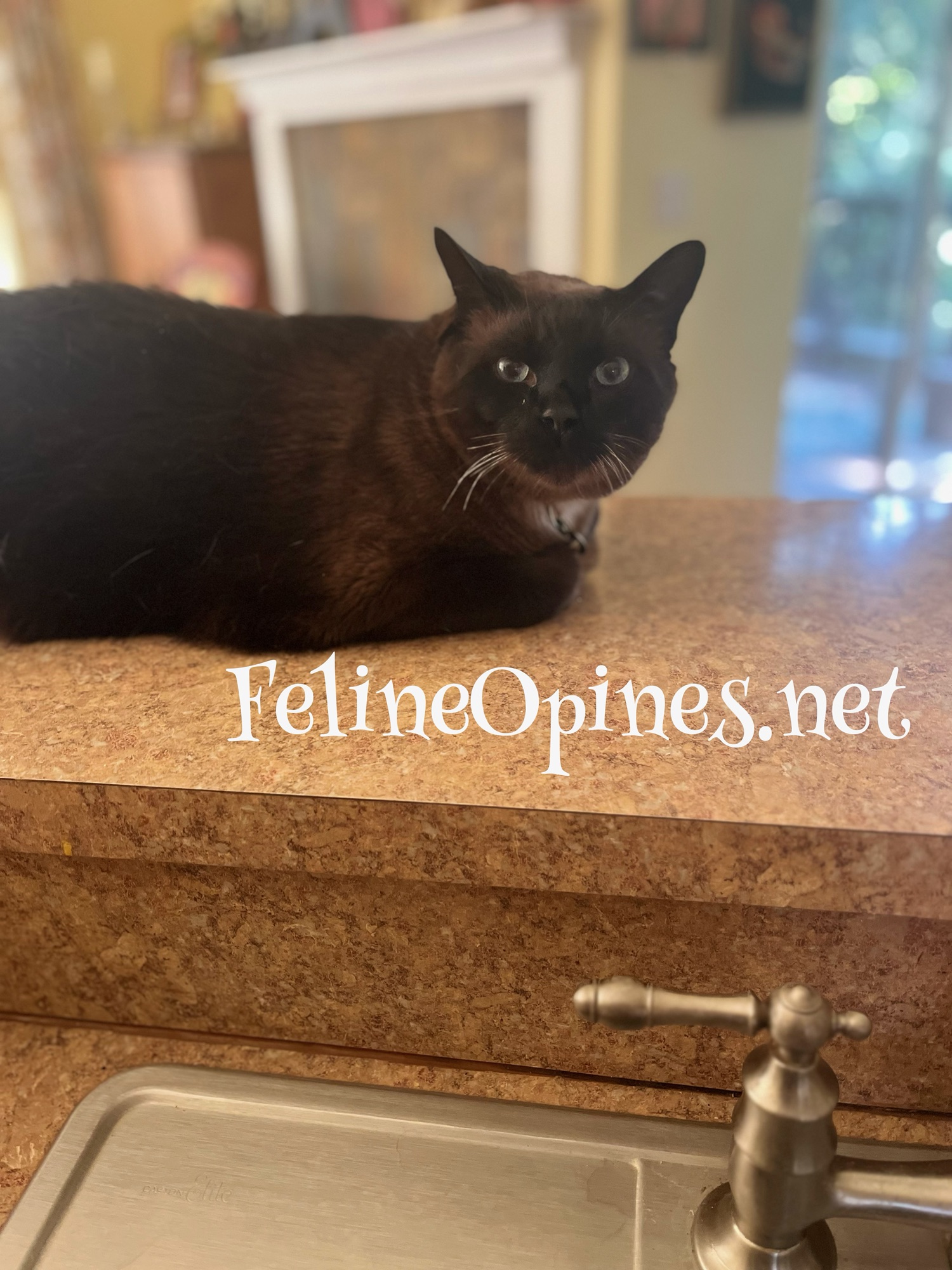
I chose a more pragmatic path in my care for the recovering Human.
Hello there furiends!
We realize we are publishing this on Thursday and not Wednesday. I could tell you why this happened but better that I just continue on with the post.
We live in a place that isn’t known for it’s heat but we do have a week or two in the summer when it’s in the high 90s or low 100s. This was the week. Meowza was it hot! but we muddled through and managed to have a good week anyway. I know many of my furiends are experiencing heat so remind your humans to keep your water bowls filled and for heaven sake, find a cool spot in front of a fan or an air conditioning vent (we don’t have air conditioning in our neck of the woods) and keep a low profile until it gets cooler!
Here’s a glimpse of our week.


I know many of you humans know the sheer panic felt when one of your feline friends escapes from the house. This story posted by tag24 documents which came from TIkTok user @sayhitomylittlefriends documents the feline “rescue” event.
The video shows two cats, one that is outside and another at an open window who seems to be getting ready to escape too. The TikTok user approaches the first cat, attempting to get it back inside it’s house, saying, “Oh my God, get inside. Get in your house.”
While neither of the cats pay attention to the distraught woman, a third cat appears on the scene, and the chaos seems to escalate but then disaster is avoided. This cat is the woman’s feline named Jerry.
Jerry’s timely intervention proves to be what was needed as he helps to lure the curious escapee back to safety.

If your humans are meowing about you scratching their furniture, you may want to tell them to read this article I found in Eurekalert.org. This international team of reseachers studied what the factors are that cause us to use your furniture as scratching posts and pubished those findings in Frontiers in Veterinary Science.
The researchers asked more than 1,200 cat owners in France about the daily lives and characteristics of their felines and any undesired scratching behaviors. The study’s funder, Ceva Santé Animale, helped with collecting this data.
The researchers’ results indicated that there are several factors that influence cats’ scratching behavior. “We see a clear link between certain environmental and behavioral factors and increased scratching behavior in cats,” Salgirli Demirbas explained. “Specifically, the presence of children in the home as well as high levels of play and nocturnal activity significantly contribute to increased scratching. Cats described as aggressive or disruptive also exhibited higher levels of scratching.”
While some factors that favor scratching – such as the cat’s personality or the presence of children – cannot be changed, there are ways to stop or mitigate the scratching. Placing scratching posts in areas the cat frequently passes or near to their preferred resting spot helps as does the use of pheromones. The Human uses Feliway for multicat homes to keep us calm.
“Providing safe hiding places, elevated observation spots, and ample play opportunities can also help alleviate stress and engage the cat in more constructive activities,” Salgirli Demirbas pointed out. The key is to establish multiple short play sessions that mimic successful hunting scenarios. These play sessions are more likely to sustain cats’ interest and reduce stress, which ultimately can reduce excessive scratching on furniture. They can also foster the bond between cats and their caretakers, the researchers said.
“Understanding the underlying emotional motivations of scratching behavior, such as frustration, which seem to be linked to personality traits and environmental factors, allows caregivers to address these issues directly,” said Salgirli Demirbas. There will be future research on this issue with the goal to develop more effective strategies to manage this behavior, ultimately enhancing the bond and harmony between cats and their caregivers.

GameFi, the combination of gaming and decentralized finance, has soared in popularity, particularly for its play-to-earn (P2E) model, which enables players to gain real-world value. Now mind you, this feline has absolutely no knowledge about this, nor does The Human.
What we did find interesting is a gaming bot called Catizen. It’s on the cloud-based messaging app Telegram (we do know what that is), According to the company, “Catizen provides players with a virtual environment where they can experience relaxation and comfort away from the fast-paced and stressful crypto and gaming world. While players have a pleasant time with the easy-to-play and quickly-learned game structure, they also benefit from P2E game dynamics.” (And I only understood about half of that)
Within the whimsical Meowverse, players start with a digital cat, which not only serves as their companion but also unlocks further game features and opportunities for rewards. Users can merge and enhance their cats, climb the leaderboards, and reap greater benefits as they progress.
The platform also hosts a cute artificial intelligence game called Al Kitty. Users can feed kitties, take care of them, raise kittens and help cats make friends. Younger players can especially accompany the cats’ growth and learn from them.
Catizen, generates revenue through in-game purchases. What we found interesting is that Catizen has community-driven initiatives that appear to be making a tangible difference in the non-profit sphere. With over 1.7 million players, nearly 1.25 million onchain users and over $10 million in-game purchase revenue generated in ten weeks, Catizen pledges 1% of in-game purchase revenue to nonprofits, letting the community vote on the beneficiaries. Catizen plans to continue this journey with its community by launching charity campaigns.
Catizen also encourages users to share stories of saving stray cats which creates a sense of unity and purpose. Participants can post images, videos or text on Twitter or Telegram using their Catizen UID. Community members shared over 10,000 posts about their stories and past experiences with stray cats in just one week, highlighting their active participation. Catizen plans to launch voting for nonprofit institutions, where the community will choose which organizations to support.
I think this is a great idea. If you’re going to play a game that offers in-app purchases why not one that donates money to save cats?

This story, written by Mike Hohnen for the Guardian, who is the human who lives with Bootsy the cat is heartwarming. The author says that Bootsy had a problem with minding other people’s boundaries, sometimes helping himself to whatever was on the table in someone else’s house for instance. This is why he assumed the worst when he received a call from someone who phoned him about Bootsy.
This was no complaint though. The caller wanted to let Mike know Bootsy was sleeping on a chair in her back yard and just wanted him to know where the feline was. He went to meet the neighbor and there began a friendship that transformed a neighborhood in Sydney, Australia.
This story in it’s entirety is a delightful read and today, four years after that phone call, Bootsy wanders off to the 87 year old neighbor Enid’s house when Mike goes to work, returning to his home in the afternoon. Bootsy’s visits have become an important part of Enid’s daily routine.
And Enid isn’t the only human who knows and loves Bootsy. Bootsy can be seen accompanying Enid down the neighborhood streets neighbors stop to greet them both. And through Bootsy’s friendship with Enid, friendships grew between humans in the neighborhood as well.
This is a happy tale of how one feline brought an entire neighborhood together. His human says that Bootsy has shown them the way towards community – and there’s no going back for any of them. Be sure and click on the link and read the whole heart-warming story.
This cat HATES optical illusions.
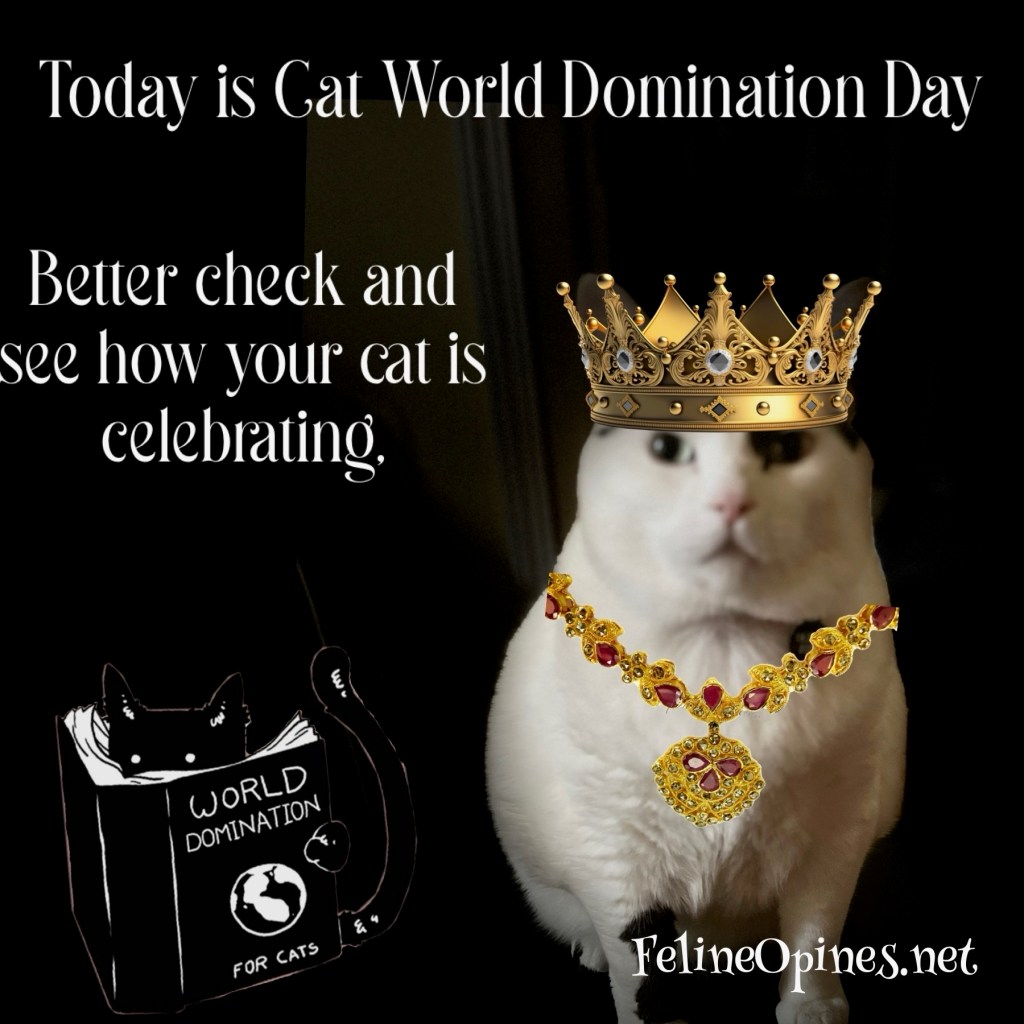
Today is cat world domination day.. how are your kitties celebrating?
Hello Furiends,
It looks like it might be summer here, finally. I know some of you are suffering from the heat already and I hope your humans have air conditioning, fans or other cooling means available to you.

Did you know this is one of the best months of the year for kitties? June is National Adopt a Cat Month! Needless to say, the three shelter kitties in this home are thankful that The Human adopted us from our local shelter.

Oliver and I were foster “failures” and The Human says it’s a failure she’s thankful for. She was at an event at the shelter when one of the shelter board members introduced her to Lily and it was love at first sight. There are so many kitties waiting in shelters around the world for forever homes. Please consider bringing one home to your house!
I think all my feline furiends will agree that it’s nicer when our humans stay home with us. This kitty, caught in a TikTok video, foils his human’s attempt to leave the house in a hilarious way.
I would note that this is an orange cat (I recently shared an article about orange cats and how energetic they are). The cat takes possession of the human’s keys and hisses whenever she tries to take them off the table.
For all of you who don’t believe we felines are smart, BondVet recently declared that we have brains that allow us to problem solve, remember things in the past.
The humorous scene highlights cats’ intelligence and the attachment they can have toward their owners. According to BondVet, we felines have brains that allow us to solve problems, remember past events, and understand our human’s emotions. It’s said we have the intelligence of a human two year old.
In other words, this kitty who is guarding the keys knows exactly what he’s doing!

Amy Glover at the Huff Post UK filed this interesting report about cats and our ability to taste sweet things. Have you ever wondered why your cat tries to steal a bite of your pizza but refuses to eat the expensive canned food you just bought him? What flavors motivate us? Well the Scientific American says that we felines are missing a vital protein that is necessary to taste sweets. The article says that the sweet receptor consists of two coupled proteins generated by two separate genes: known as Tas1r2 and Tas1r3,” We felines “lack 247 base pairs of the amino acids that make up the DNA of the Tas1r2 gene.”
What does that mean? We probably taste something when we eat sweets but we don’t taste what you humans do.
PetMD writes that cats are “seemingly alone among the mammal groups” with this evolutionary quirk regarding tasting sweets.
Despite this physical reality some of my feline friends seem to love sweets but experts say it’s probably the fat in the sweets, not the sugar that attracts them.
What tastes do we like? The article says we “also have interest in anything with animal protein in it (such as milk, cream, or ice cream), foods with strong smells, or warm food (the temperature of freshly killed prey),” they add ― and anything with a new mouth feel is likely to pique their curiosity.
And if you’re feeling bad that we can’t taste sweets, we do taste some flavors that you humans have, like adenosine triphosphate (ATP), a compound that provides energy for living cells.
We lost our dear Jasmine due to complications from kidney disease. The human gave her subQ fluids every other day, fed her special food and supplements but the disease took her away from us. For years kidney disease has just been a fact of life for older kitties but things are changing. This article by Marlene Cimons from The Washington Post brings news about kidney transplants for cats.
When the feline “Despy” suddenly developed a congenital form of advanced kidney disease at age 2 the veterinarian gave him only months to live. His human vowed to do whatever he could to save the cat. “He took care of me when I was sick,” says Segal, a software developer who lives in San Jose. “It was my turn to take care of him. It’s that’s simple.”
Segal, then living in the Boston area, drove his cat to the University of Pennsylvania School of Veterinary Medicine in Philadelphia where Despy underwent a kidney transplant in 2018. Today, Despy is thriving. So is Stevie, the kidney donor cat from a local shelter that Segal agreed to adopt as part of the renal transplant. He adores them both. “They play together, they groom each other, they roughhouse,” Segal says. “We’ve become a comfortable, loving family.”
Chronic kidney disease is one of the most common conditions in aging cats and a leading cause of death. It can also be inherited, which is what happened in Despy’s case, and can result from toxin exposure, such as eating lilies. (A cat who eats even a small amount from any part of a lily plant can suffer fatal kidney failure within days.)
Kidney transplants in cats began more than 25 years ago, although they still are rare, and only three facilities perform them: Penn Vet, the University of Wisconsin School of Veterinary Medicine and the University of Georgia College of Veterinary Medicine.
Penn Vet has performed 185 transplants since 1998, the Georgia school more than 40 since 2009, and Wisconsin 87 since 1996.
Not all cats are candidates for the procedure, and for those who are, it can be expensive, up to $25,000 for the surgeries to retrieve the donor kidney and transplant it into the recipient cat. Yet the surgeons who do them say they find it personally gratifying to give people more time with their cherished companions. Also, they add, the surgeries and long-term follow-up in cats can provide knowledge that potentially can benefit human health.
Most cats gain an average of two to three years, although there are exceptions. Despy, for example, is six years post-transplant. “Our longest survivor was nearly 13 years,” says Chad Schmiedt, the Alison Bradbury chair in feline health at the Georgia veterinary school. “Shilo was 3 when we did the transplant in June 2009 and lived until April 2022.”
About 40 percent “go out three years post-transplant,” says Robert J. Hardie, clinical professor of small-animal soft-tissue surgery at the Wisconsin veterinary school, adding that survival often depends on whether postsurgical complications occur. “Some live longer. We’ve had some out 10 years.” At Penn Vet, up to 70 percent are alive and doing well one year after transplant, and two recipients lived 13 years after the surgery.
“It is a life-expanding procedure with the possibility of relatively good outcomes — sometimes dramatic outcomes — in terms of longevity that is of great value to many pet parents,” Hardie says. Moreover, scientists could learn more about immunosuppression in cats that could be applicable to humans, he says.
The cats getting new kidneys typically are between the ages of 8 and 12, although younger cats without other potentially serious medical conditions often do better and live longer, experts say. Schmiedt usually won’t perform a transplant on a cat older than 16. Hardie says the oldest cat transplanted at Wisconsin was 18. Aronson once did one on a nearly 18-year-old who had no other health problems and was youthful in behavior and who lived for another two years with the new kidney.
Cats with moderate kidney disease are better candidates than those with mild or advanced disease, because of the balance between surgery risks and benefits, although age provides an advantage for young cats who may have advanced kidney disease. The cats also can’t have chronic infections or cancer because they must take the immunosuppressive drug cyclosporine for life, which can worsen both conditions. Severe heart disease also rules them out. “You want a recipient who has the best chance of making it” through surgery and beyond, Schmiedt says.
Matching is easier for cats than it is for humans needing a transplant because there are only two blood types among all cats.
Although this transplant is expensive it is still good news for kitties like Despy. His human says he’s full of energy and living his best life.
Kidney transplants for dogs is more challenging as dogs often suffer problems with immunosuppression.

Anne-Sophie Mielke and Steffi Feldman from TAG24 provided this amusing story.
A Reddit user (username u/trixy_treat), shared a picture on the platform that has Reddit users talking. The lady who lives in Britain found herself snuggling in bed one morning with four cute felines who were nestled into her blankets and pillows. This woman sleeps with her cats so the sight was not unusual as she lives with three cats named, Pancake, the Tortie; Oreo, and Quinn. The fourth cat was not a member of her household but a visiting neighbor feline.
The visitor named Bluey, lives next door and is a buddy of her cat Quinn. The woman supposes that Bluely enjoys sleeping at her house because he lives with a large dog and a toddler.
If Bluey doesn’t sleep over he will appear at her window and meow loudly for her cats to come and play. Now it seems he’s graduated from morning play time to sleep overs.

The House of Black Cat Magic in Asheville, N.C. hosts parties, community events and more in its Black Cat Lounge, giving people a chance to meet a variety of cats that are up for adoptions.
Joel SeymourSun from ABC13 News reported about their anniversary celebration, their first anniversary “purrty, “magical market” and a silent auction and cat food drive to benefit Binx’s Home for Black Cats food pantry.
Sterling “TrapKing” Davis, who runs TNR Humane Cat Solutions, was there to offer informative sessions about the importance of TNR programs — Trap, Neuter, Return — which help stabilize feral or community cat colonies by trapping them, then spaying or neutering them, and finally, returning the cats back to their community so they can live out their days without continuing to reproduce. We love Sterling, he is a rock star among his feline fans.
Sterling said about TNR, “”A lot of areas, they get a lot of cats so they overpopulate, they start fighting over resources, they end up getting sick, injured, harmful to one another,” Davis said. “So, it’s good to control the population in a good way… that’s what TNR is — you’ve got to spay and neuter your pets!”
I love humans who go above and beyond to help ferals and work to find forever homes for cats.
The Human does not support allowing us to go outside as there are all kinds of predators in our neck of the woods but she does provide the opportunity for us to sit on the upstairs patio in our own pop-up catio.
This guy custom builds cations and they are amazing. We definitely think this is a home renovation The Human should consider.
How many of my feline furiends out there can rock a skateboard like this guy?
Happy Wednesday Furiends!
How are things in your neck of the woods? We’re hanging in there, our weather however, can’t decide if it’s late winter or spring. Still, since we’re indoor felines, the weather has little effect on us. Things are getting greener and The Human is opening the windows more so that’s good.
Oliver and I do a lot of play fighting and my whiskers are the constant casualty. Now, although it’s not unusual for felines to scuffle and for whiskers to be lost. Our whiskers help us navigate through our environment and are our most important sensory organs. As long as the follicles aren’t damaged, my whiskers do grow back but it takes time. Do any of my furiends out there have a feline sibling that shortens your whiskers?

Oliver likes to celebrate holidays and his visual contribution this week is his celebration of Hot Air Balloon Day (which is today)

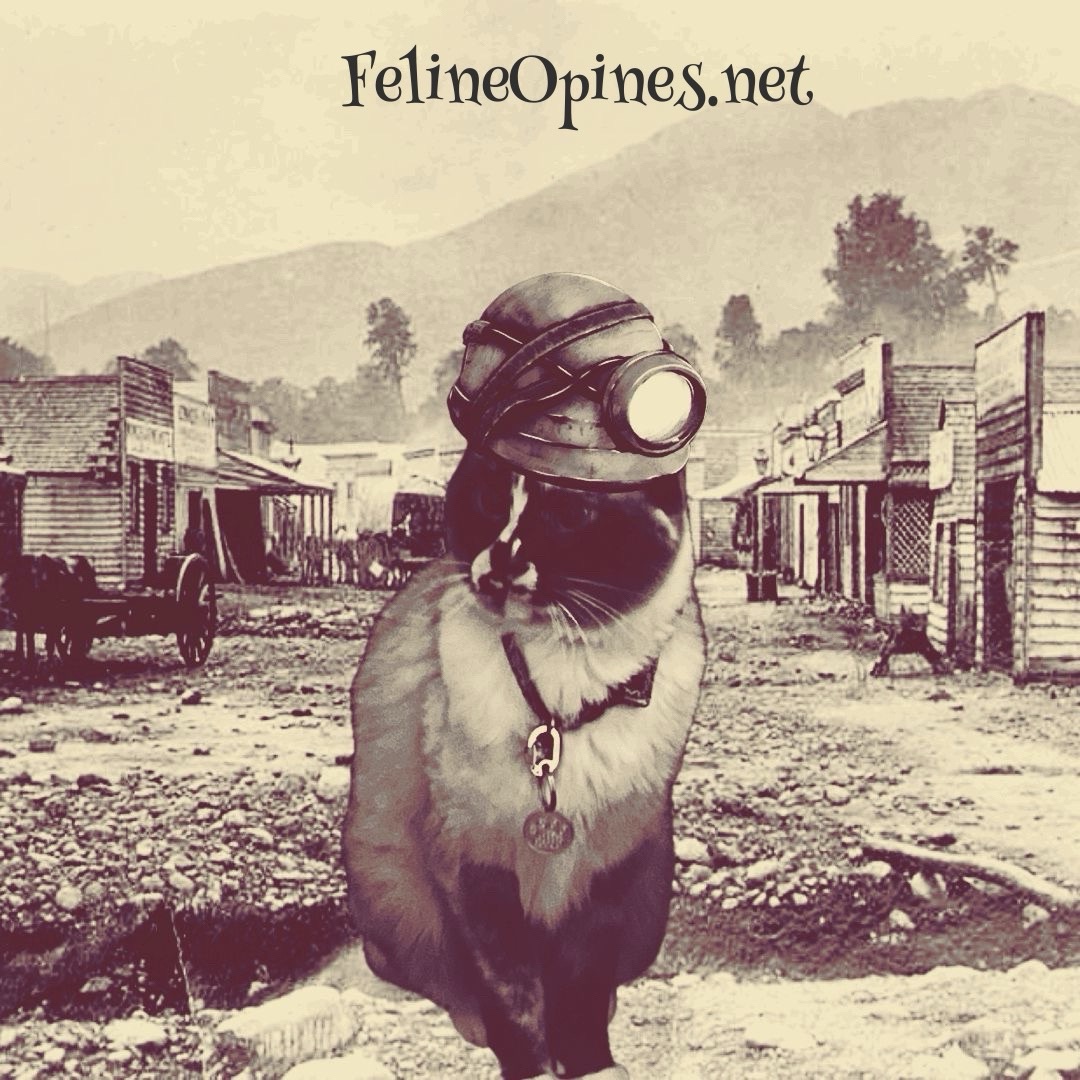
And finally, Miss Lily loved the story of cats in mining towns so much she asked our Purrsonal Assistant to make an image placing her in the past in the days of the cats in mines.
Here are this week’s stories and our video of the week, we hope you enjoy!

A group of scientists at the University of Helsinki in Finland discovered a genetic mutation that creates the recently discovered “salty licorice” coloring found in some cats.
According to the scientists’ study of these felines, published in the Journal of Animal Genetics in May. This coat pattern is similar to tuxedo coats, but the “salty licorice” felines differ with dark markings on their faces and dots and an increasing amount of white towards the back portion of the body. Their tails tend to be primarily white. The pattern was first observed among the Finnish domestic cat population in 2007.
The researchers found that the pattern is linked to a variant of the KIT proto-oncogene (KIT) gene, which is “associated with an absence of melanocytes in the skin and hair follicles” and commonly causes the white coat appearance in various domestic animal species.
If any of my furiends are from Finland, I’d love to know if you’ve met one of these unusual felines.

Well of course this article caught my eye as we are Idaho felines. In this article from the Idaho Press on Rick Just’s History Corner, I learned that in the 1860s, in Placerville and other mining camps in Idaho, cats were prized for their ability to keep rodents at bay. The article’s author found a 1934 edition of the Idaho that talked about miners’ cabins being often overrun with field mice and chipmunks.
An entrepreneurial fellow from Oregon named Mooney sold pest control cats in the mining camps. Most of them were gray tabbies with no claim fancy pedigree, yet despite that fact, each sold for $10 which would be more than $300 today.
Mr. Mooney stayed overnight with the Moores of Placerville and gave a pair of kittens to their daughter Lizzie. In later years, Lizzie (then Mrs. Sisk) told of litter after litter of kittens that came along, fetching $2.50 for each tiny cat. For many years after, Placerville was known as the home of large gray cats who kept themselves healthy and large due to an endless supply of mice.

I was so intrigued by the mining kitties story, I sent our Purrsonal Assistant off to find out more about cats in mining villages. She came across an article by Nick Kembel on a website called “Taiwan Obsessed” about his visit to Houtong Cat Village. The photos her are all Nick’s.
Houtong was once a thriving coal mining town and today is home to hundreds of cats. The history of the mining in Houtong is preserved in a park. It’s interesting that the word “Houtong” means monkey as there used to be a cave with monkeys nearby. At its peak, the town had more than 6,000 residents. After the coal mining industry declined in the 1990s most left, and only a few hundred people still live there today.
Your first introduction to the town will probably when you walk through the Cat Bridge. It was built in 2012 and its design pays homage to the old mining tunnels. Since the bridge is covered, it offers shelter to the local felines and you will probably encounter felines napping there.
Several hours in town can be spent checking out the ruins of the coal plant, browse the souvenir shops, drink a cat foam latte and meet a bunch of new feline furiends.
The cat connection began in 2008 when a local resident and cat lover started encouraging locals to take in stray cats. The idea really took off, putting Houtong back on the map as Taiwan’s premier cat village.
The 200+ cats that live in Houtong today are mostly strays that have been sterilized and those cats are identified with the standard TNR procedure of a clipped ear. The cats mostly seem to co-exist, with each claiming its own territory and snoozing spots within the three-lane village built on a hill looking over the train station.
You can’t make your way through the village without stopping to pet the cats sleeping and relaxing along the way.

The local shops offer a plethora of cat themed souvenirs and food items.

And the search for cats in history continued and our Purrsonal assistant found this article by Joy Powers of NPR in Milwaukee. It doesn’t deal with cats in mining towns but it is about the history of cats in the U.S. She interviewed cat historian Paul Koudounaris (who knew there were cat historians?) who said (about cats), “They were domesticated, they were raised to the highest of the highs and they were plunged down to the lowest of the lows and then very, very slowly by the end of the 19th century, they finally built themselves up to be companions again,”
Koudounaris said that many cats came to the Americas by ship with early colonists. They were known as ship cats, they were used to get rid of rodents and protect the boat’s food supply. These cats were one-way passengers and got off the boats at the same time the humans did.
Although cats continued to face persecution in Europe at the time, some early colonists recognized the benefit of the feline’s hunting skills to handle pest controls. In fact, cats were some of the first animals employed by the U.S. Army.
“The United States Army had hired cats long before they had hired dogs,” he explains. “The United States Army had hired cats in the 19th century, again, to protect the commissaries.”
Even though cats played an important role in early U.S. history, it took a few centuries for them to be considered companion animals instead of working animals. Koudounaris says the transition happened slowly, spurred by their popularity in the West (particularly among cowboys who would use cats to watch their rations). Creative folks, like Mark Twain, started bringing cats indoors and their popularity as house pets grew.
Koudounaris is currently writing a book profiling some of America’s most famous cats, including some of the more well-known ship cats like Kiddo, a cat onboard the airship America, the first dirigible aircraft that tried to cross the Atlantic. Unfortunately the dirigible crashed but thankfully Kiddo survived and he went on a national tour in 1911, making $2,000 a week. Our Human wants to know what we could do to make $2,000.00 a week!
This one will make you say “Awwwwwww”
Happy Wednesday Furiends!
We’re humming along here in our neck of the woods. The Human is working on editing her first book in her cozy series and Ollie and I are looking forward to her getting that book out so we can be famous. I am looking forward to signing pawtographs.
We have a nice litter box at Feline Opines International Headquarters and Oliver decided he’d like to do a “jungly” photo shoot. He wants to know what you think.


Neither Lily nor I had the desire to pose for any pictures this week so I’ll move on along to this week’s feline internet news.
Would you trust a robot to look after your cat?
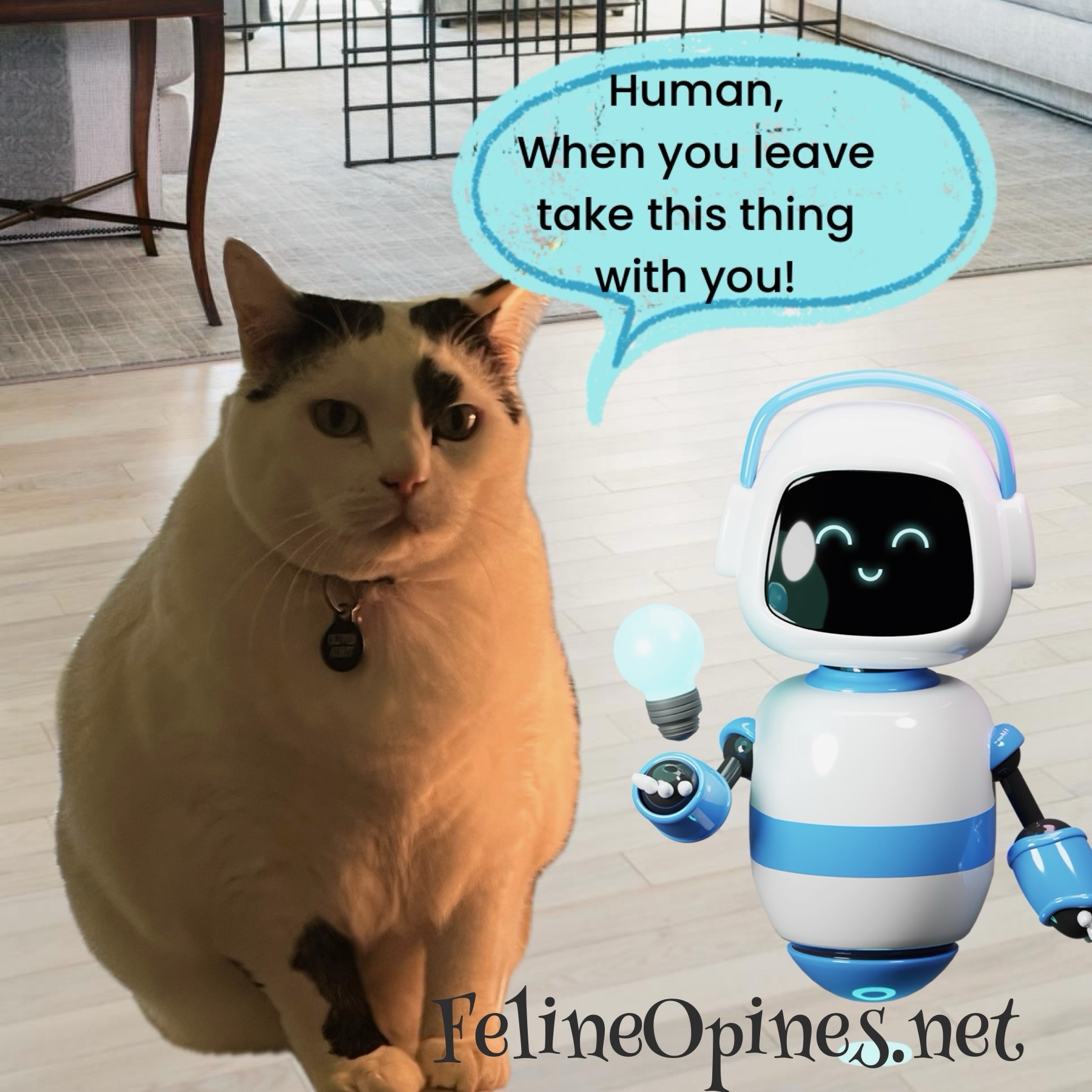
Sanjana Gajbhive from Earth.com wrote an article about robots as cat sitters. Noted was a recent research project called Cat Royale which talked about building trust between cats and robots. Now this feline is no fan of machine, I mean the vacuum monster alone is enough to give a feline a nervous breakdown!
Cat Royale, an award-winning research project, resulted from collaboration between University of Nottingham scientists and Blast Theory artists. This project crafted a “multispecies world.” In it, three cats lived with a robotic arm. They coexisted for six hours each day across twelve days. Good grief humans, coexistence is not what we cat’s want, we need pets, headbutts and skritches.
The researchers of this project wanted to find out what influenced feline-robot trust.
Some findings have been that the environment and the role of the humans in that environment were all factors in the cat’s trust of the robot. Well DUH!
“At first glance, the project is about designing a robot to enrich the lives of a family of cats by playing with them,” said Professor Steve Benford, who led the research. “Under the surface, however, it explores the question of what it takes to trust a robot to look after our loved ones and potentially ourselves.”
The robotic arm at the heart of Cat Royale engaged the feline participants through a variety of playful interactions, including dragging a toy mouse, dangling a feather “bird,” and dispensing treats. An integrated AI system observed the cats’ reactions, learning their preferences and tailoring play sessions accordingly. They designed an environment that was pleasing to the cats.
The researcher’s goal is to create a multi’species system but this cat would ask, what about the human/animal bond? Our Human spent quite a bit of time studying this and she too is a bit skeptical about this.
At least the researcher’s did acknowledge the importance of human involvement in areas like breakdown recovery, animal welfare, and audience engagement. In other words, even in a world of advanced robots, the human touch remains essential. Well, there you go!
Their conclusion is that if you humans want robots to take care of your felines, you’d have to give your home a robot friendly makeover and that you humans have to understand that even the most advanced robot can’t replace the warmth and understanding of a human caregiver. I have three words for all the humans out there-HUMAN-CAT-SITTER.
A recent report from a German pet trade and industry association, revealed that Germans love their pets. Well, our Human is German and she can attest to that! In 2023, 34.3 million dogs, cats, small animals and pet birds lived in German households. There were also numerous animals in terrariums and ornamental fish in aquariums and garden ponds.
According to a market research survey from Skopos done for the Pet Supplies Industry Association 45% of German households have pets.
Felines are still Germany’s number one pet: a total of 15.7 million of them lived in 25% of German households in 2023. In 42% of all cat-owning households there were two or more cats at home.
The head of the market research team said,” We are all the more pleased that the total number of pets kept in households in Germany has remained stable at a high level over the past few years.” I would say they should be pleased that the vast majority of German households are cat lovers!

Sophie Roberts, Lifestyle and Travel Editor for Mirror UK reported on the lack of enthusiasm one cat had regarding the Northern Lights as one man’s cat was photographed with the colorful sky as a background and looking completely unimpressed.
I don’t know what the sky was like in your neck of the woods but it was pretty amazing here. Still, not amazing enough for the Tribe to remove ourselves from the bed and do any sky gazing.
This is how one guy described his cat’s reaction on X: “My cat just experienced the aurora borealis – one of the world’s most radiant natural phenomena – and she doesn’t care.”
His post went viral getting got more than 1.7 million views.

In a Newsweek article this week, a couple who thought they had a broken Roomba discovered their cats were the culprits.
Their cat Winnie became a media star when her human shared a video of her on TikTok. The video shows clearly that the Roomba wasn’t broken, only “detained” by Winnie’s actions.
Some people think Winnie was playing with the Roomba. This feline believes that Winnie was protecting the other cats in the household by keeping the dreaded vacuum monster away from them. Go Winnie!
Homeowner Sends Neighbor a Note — and Asks Them to Not Let Cats Look Out the Window

Reddit users have weighed in on the letter, which asks the homeowner to “please keep your cats out of the window”. Oh my whiskers, the hubris!
A Reddit user shared a letter sent by a neighbor requesting the poster keep their cats “out of the window,” as the cats are causing the neighbor’s dog to bark.Seriously??!!
In a post shared to Reddit, the cat owner wrote, “I own my own home, and I have three cats (plus two new babies I found outside). Two of them love to sit in the window when it’s nice out. They do nothing but sleep. We keep the windows open as we don’t have AC yet.”
But evidently the cats’ habit of sunning in the window inflamed the neighbor who sent a letter reading: “Hey neighbor! Can you please keep your cats out of the window? They are causing my dog to sit in the window and bark all day long. I work from home, so this is very difficult. Thanks.”
What would say to a neighbor who asked your human to keep you out of the window?
There are so many human social media influencers. This feline influencer, Uno the Orange cat, is teaching cats how to live the Vida Loca. It should be a must watch for every feline.
Hello Furiends!
Spring is here in our neck of the woods and we’re very happy about that. In our r staff meeting this week I was reminded by Lily and Oliver that we have been negligent in celebrating some of the unusual and wonderful holidays that many observe. We decided we’d share a few of them with you this week.
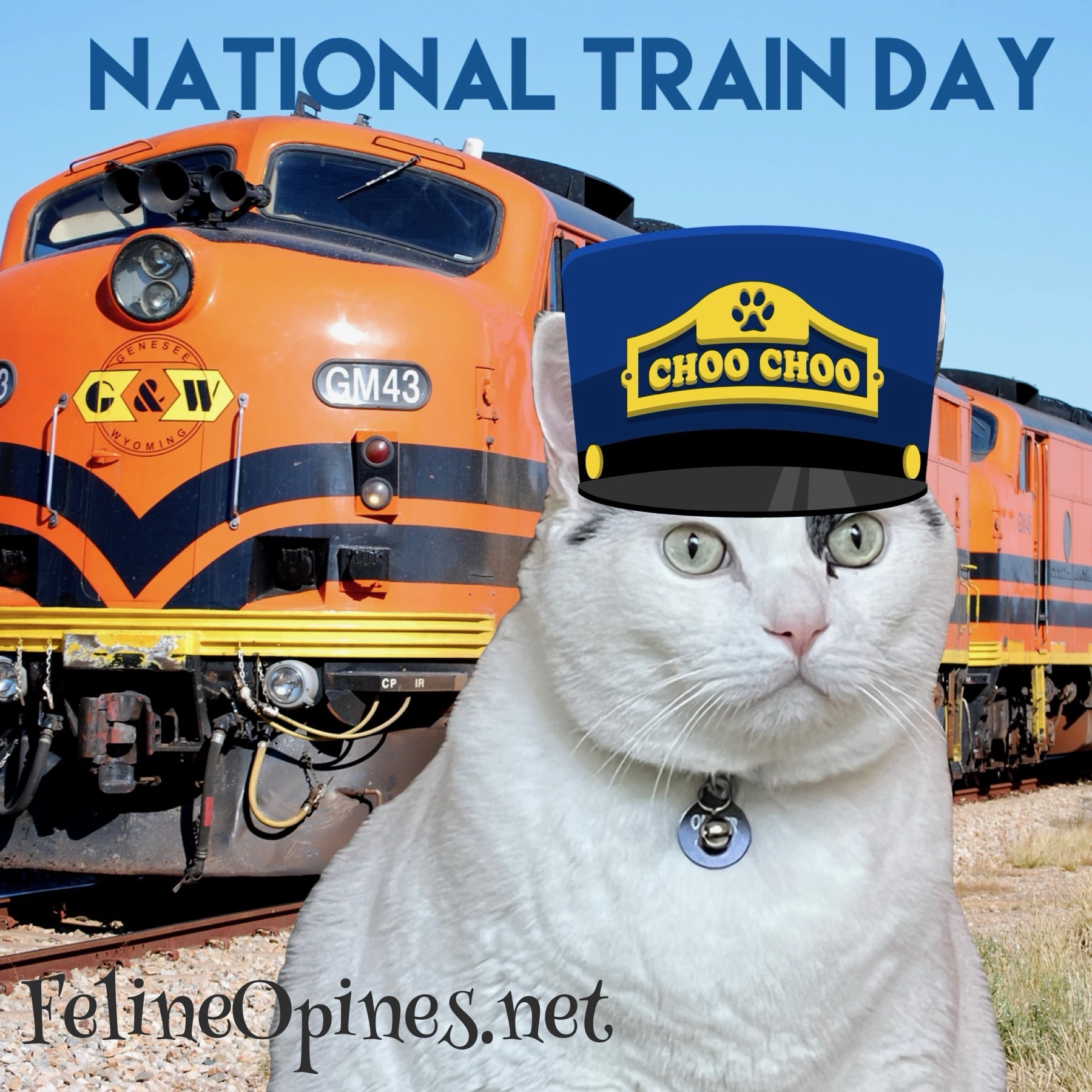
National Train Day is celebrated on May 11 of this year. If you are a train aficionado learn more by clicking here.

Lily (and the hamster) were a bit confused by National Hamster Day, which began in 2012, by hamster loving folks who wanted to give these pint sized pets their own day.


Better sleep month is one of Oliver’s favorite holidays (next to Eat What You Want Day). Yes, it is a holiday and there’s a Better Sleep Council that can provide information about how you and your humans can get more Z’s. Oliver and Alberto each have their own take on this holiday.
We’ve got lots more interesting and unusual holidays to share with you in the future. In the meantime we invite you to enjoy this week’s feline related news items.
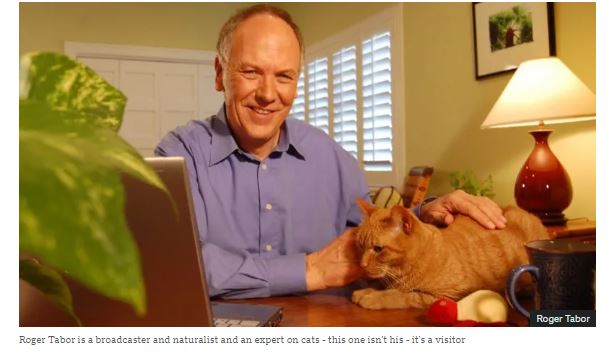
The Human says she’s never lived with a ginger cat and thought I should feature this article by BBC news since she sees lots of ginger cat memes across her social media feed. After she assured me that this was not a set up for bringing another cat into the house, I agreed to include this article.
Roger Tabor, an English biologist and cat behavior expert says “”archetypal ‘big old ginger tom’ is the classic cat next door” and their behaviour could be down to the Vikings.”
He said that “the scientific consensus has been there are some breed temperament differences, such as lively Burmese or placid Persians, but not differences on colour,” he said.
“However, studies of owners’ perceptions tell a different story, with calico and grey cats being ‘aloof’ and the ginger cat being seen as ‘friendlier and more affectionate’.”
“Measurements have also shown that generally male ginger toms are heavier than most cats of other colours.”
The article then featured some ginger cats to give the reader some insight into their purrsonalities.
Henry the hospital worker

Ginger tom Henry works with staff and patients at Addenbrooke’s Hospital in Cambridge.
Although he has a home near the hospital, he likes to wander the corridors and food hall, receiving pets and attention . His presence is credited with calming staff and patients and he has won the acceptance of the hospital staff over the years.
Nala the stationmaster
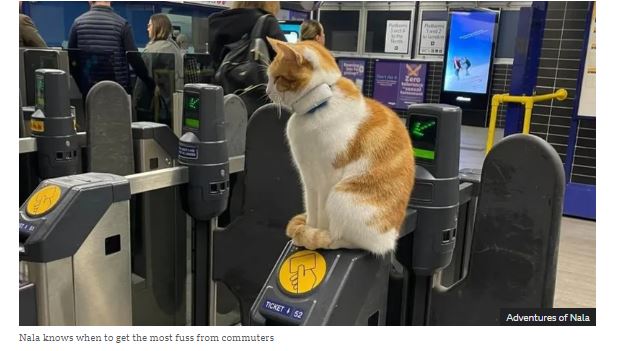
Nala likes the business of the Stevenage railway station in Hertfordshire where he greets commuters. Like Henry, Nala seems more than happy spending his days with the public, perched on top of ticket machines.
Ernie the artful burglar
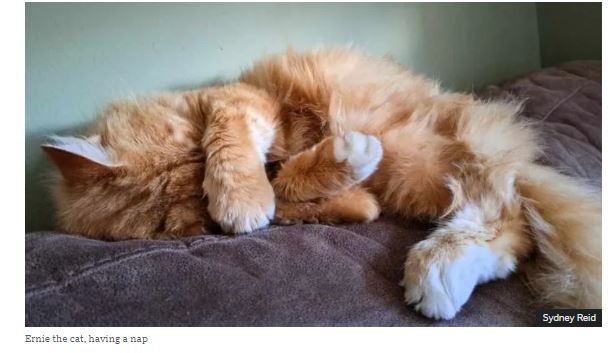
Sydney Reid, owner of ginger Ernie, in Cambridgeshire, England describes Ernie this way, “Ernie is a total menace, we’ve had a pure white, a pure black, a tabby, a tuxedo – and Ernie – and he’s the only one to cause such problems within the neighborhood – what is it about ginger cats?” she said. Ernie has put on quite a bit of weight due to his “breaking and entering” of neighbor’s homes to steal food. Ernie’s human said, “We once had a neighbor knock on our door to let us know he’d taken an entire resting roast chicken off her kitchen side and out her kitchen window.”
The trolley tomcats

Gingers seem to be adept at finding places where they can find food and company. These gingers like to hang out at supermarkets. Pumpkin ignored staff who tried to “ban” him from his local Tesco branch near Norwich. In Ely, Cambridgeshire, Garfield became so popular with Sainsbury’s shoppers that after his death a eulogy was held at the city’s cathedral and a brass monument erected in his memory.
The busy bookworms

Three-legged ginger tom Jasper rose to fame in 2017 after his owner started taking him to work at the University of Cambridge’s Marshall Library of Economics.
“Tea with Jasper” events were popular with students who credited meeting the cat as helping reduce exam stress. They are still holding “Meet Jaspar” events.
The the University of East Anglia in Norwich has its own ginger bookworm, Sylvester.
Sylvester tours the campus grounds and buildings and attends lectures or takes a nap on the library information desk. He has his own Facebook group where students and staff proudly post photographs of their encounters with him.
‘A Viking disposition’

Cat expert Mr. Tabor says that the friendliness and confidence of gingers could be one of the reasons cats were so popular with the Vikings.
Neil B Todd mapped the presence of the feline ginger gene in places where Viking settlements were located in the Scientific American almost 50 years ago. His belief was that the Vikings carried ginger cats from Turkey and around the Black Sea to Scandanavia and Britain. He found that the city of York, once a Viking community, still has a higher population of gingers than London. He thought it might have been the cat’s distinctive fur or the friendly, less fearful demeanor of the ginger that attracted them. “Ginger cats themselves could be said to have a Viking disposition, friendly to people they get on with, but fierce with opponent tom cats.”

Although I feel we felines get a bad rap as regards our affection for our humans, I decided to include this article by Scott Travers so you more insecure humans could have some reassurance that we do love you. Here are some ways we show you our love.
1. We ‘Slow Blink’ At You
Some people call this the cat kiss. Slow blinks begin with some half blinks and then usually followed with more4 prolonged blinks or even closing of the eyes. Scientific research has shown that these are not random blinks, but are an intentional way we felines communicate. When we slow blink we are showing contentment and comfort. Research has also shown the cats will often slow blink in response to a slow blink from their humans and they will also be more likely to approach someone who slow blinks at them. Try this out. Sit with your feline and tell them what a good cat they are, slow blink a little and see how your feline responds.
2. Their Tail Is Up Around You
Cats use many forms of body language to communicate with each other. The tail up display is a signal of friendliness when cats are interacting with each other. Kittens will often raise their tails when greeting their mother.
There is a hierarchy in tail-up communication; lower-ranking cats are more likely to use this posture, while high-ranking individuals receive it more frequently. This insinuates that the tail-up display can be a sign of acknowledging the higher social status of the other cat.
When the tail up behavior is used with humans it indicates they feel the human is important and may indicate that they see the human as a parent or friend. It means the cat is comfortable around you and trusts you.
3. They ‘Talk’ To You
Research has suggested that meowing is a more neutral or negative communication. Cats are believed to have the most extensive vocal repertoires of all carnivores. Outside of meowing, the researchers found other forms of feline vocalization to be more strongly indicative of affection or happiness such as trilling which sounds like a meow and purr combined. Cats will trill to greet or to get attention. They will often trill see a human they are bonded with or when they are excited (like when the human opens the pantry and reaches for the treats)
Chatter is another feline verbalization. It’s created by rapid movements of the jaw and a series of quick staccato sounds. Cats chatter when they watch birds or other prey animals through a window or screen. Chatter indicates the cat is highly engaged and excited to interact with you or something in their environment.
Then there is the purr which is probably the most recognized sign of a happy feline. And although it is recognized as a sign that the cat feeling comfort, safety and happiness. It can also be a sign that cats are nervous (I have been known to purr at the vet’s office). But when we felines purr around you, we are saying, “I love you human.”
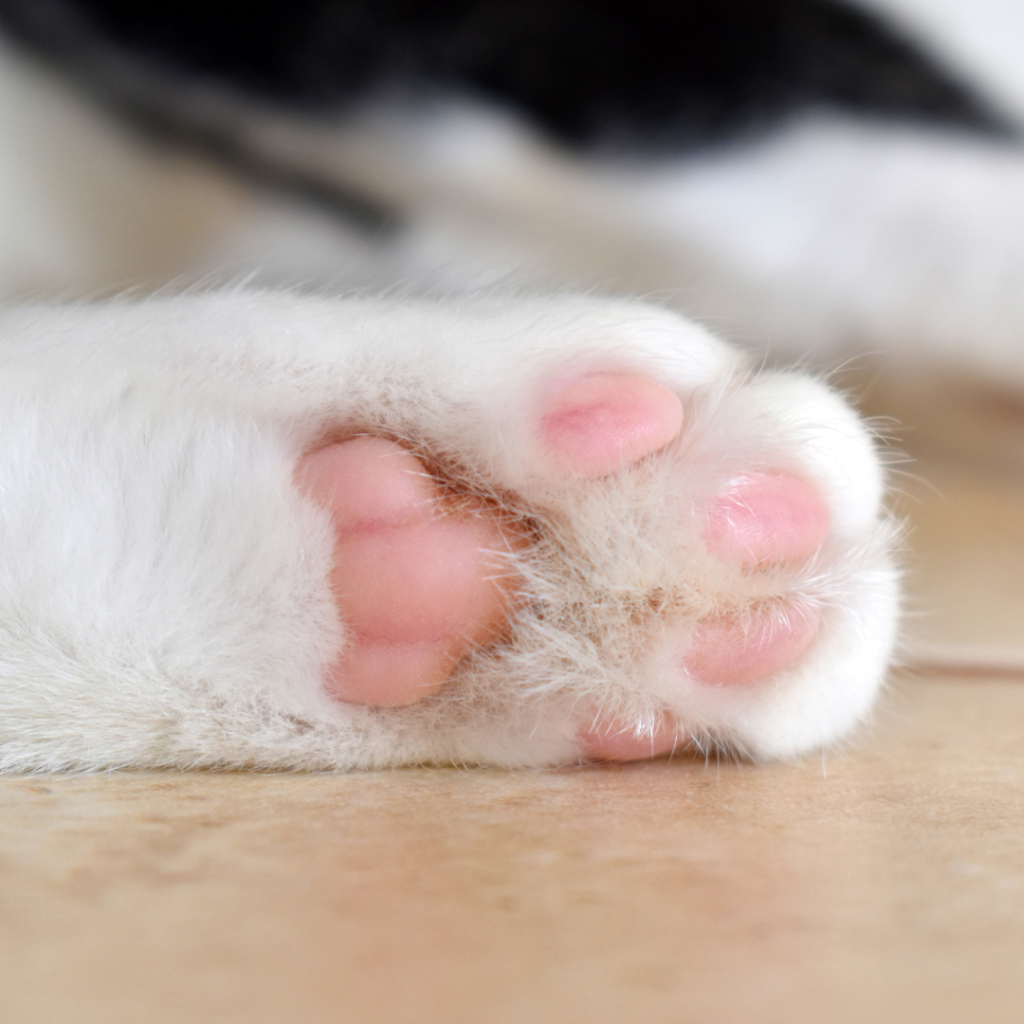
I am not a feline that believes in star charts, tarot cards or other mystical things but I did find this article by Angela Vuckovic about cat paw reading interesting.
She writes that this paw reading phenomenon had it’s origin in Japan and as my regular readers know, I have featured many cat focused articles from the feline-loving folks in Japan. And the newest feline frenzy in Japan is paw reading.
It’s called “Nekteso”, which essentially means the art of reading cat paws. It began with a cat loving fortune teller named Mr. Akatsuki, presented his observations about the link between paw shapes and personalities in cats. Nothing in the article said this was reliable but it’s an interesting concept. Mr. Akatsuki is so enthused about his paw reading work that he wrote a book with paw reading instructions. He says there are five main types of cat personalities, with 13 sub-types, all determined by the slight differences in their toe beans.
Type A Cat (Heart-shaped middle toe bean)
These are the cuddlebugs of the feline world. They are friendly and love to snuggle with their humans or other animal friends. They are also believers that food is love.
Type B Cat (Rounded middle toe bean)
Theses felines are adventurous and social and function well in a multi-cat household.
Type C Cat (Flat-topped middle toe bean with two side bulges)
Type C cats are quiet and solitary. Their preference is to be the only pet in the household. They are wary of strangers but are calm and dignified which makes them great meowdels for your social media posts.
Type D Cat (Similar to C type, but less pronounced)
These cats are not known for their big personalities and are more aloof. They don’t show interest in many things and will only tolerate the humans they have deemed worthy of their presence.
Type E Cat (Toe beans form a triangle)
According to Mr. Akatsuki, these cats are crazy and you’ll be lucky if you get a chance to take a close look at their toe beans (hmm, sounds like our very own “Princess Stabby Toes” Lily).
The Human is determined to get a close look at our toe beans and I’ll report her findings in a future column.
Hello Furiends,
We are finally back in touch with the world – translation, our internet is working again. Meowza that was not fun!
While we were out of touch with the world we were spending time in staff meetings and drawing up some plans for our blog that we think you will like. There will be more about this next week. Oliver, Lily and I are exhausted from trying to keep our Purrsonal Assistant focused. Sigh, it’s a hard job but someone’s gotta’ do it. Here are some snapshots of our week.

I am exhausted from trying to keep our Purrsonal Assistant focused. – Oliver

Paws up; to the humans at Mexido’s National Palace. There has been a colony of feral cats living on the premesis,and the government has made it clear they are welcome to live there. They will greet visitors and roam the grounds and gardens.
“They have access to every part of the palace, so they walk in on meetings, interviews and wander onto camera,” said Jesús Arias, the palace veterinarian, as a handful of feline friends brush against his ankles.
Now the place of the cats is official after the government of Mexican President Andrés Manuel López Obrador declared them to be “living fixed assets,” the first animals in Mexico to receive the title. By declaring the felines as “fixed assets” López Obrador’s government has obligated the country’s Treasury to give them food and care for them for the rest of their lives, even after the leader leaves office in October. The cats all have names and are loved by palace staff and tourists.
Staff say they remember the feral cats living among the cacti and dense brush of the gardens as far back as 50 years ago. This feline is happy to see this 50 year tradition continued!
Here at Feline Opines, we love to feature cat cafes. The Human, who has been an entrepreneur all her life, also loves to hear success stories about these café’s. Ashley Karnes, owner of the Catelowna Cat Café in Kelowna, Okanagen, Canada, says that despite some naysayers, the Okanagan’s B.C. first cat cafe is thriving nearly one year after opening.
Many people told her she was crazy when she opened the café. Karnes partnered adoption agencies and rescues from B.C. and Saskatchewan and since she opened in June 2023, the cafe has seen 156 adoptions! At this time Catelowna has 30 cats ready to find their furever homes.
One of Catelowna’s regular visitors said. “I do like coming here. It’s fun to cuddle the kitties because I have dogs at home. I can’t have cats, so this is where I get my cat fix,” Reservations at the cafe. But this café and o9ther cat cafes do much more than give humans an experience, they also offer socialization for the kittens and cats which makes them much more adoptable.
Do you have a cat café near you? If you do, I encourage you to visit them.
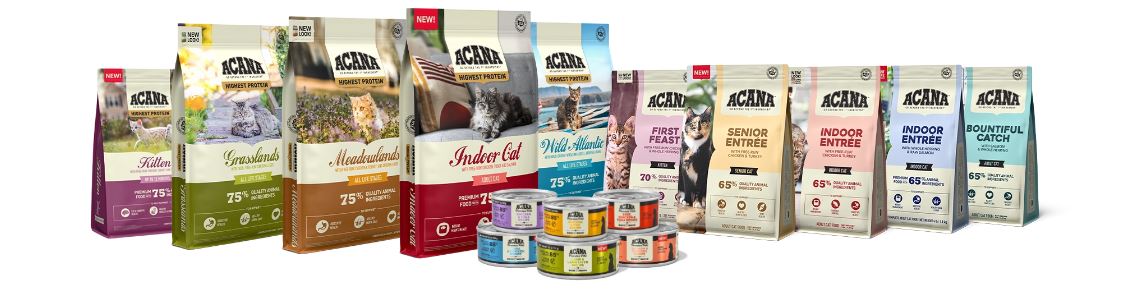
When I read this I demanded that The Human submit an application immediately. Can you imagine how many cat toys, treats and a fancy new cat tower $10K could buy? Yes, it’s true, ACANA pet foods is going to pay $10,000 to one lucky cat lover for cuddling with kittens. All you humans have to do is reply to a questionnaire.
In addition to the $10K prize, ACANA cat food will arrange for the winner to spend four hours cuddling with cats at Best Friends Animal Society this June. (Best Friends is one of the BEST places and is one of the leading national animal welfare organizations dedicated to ending the killing of cats and dogs in animal shelters). All this is to bring attention to “kitten season” that happens in May through November every year. Kitten season results in an influx of kittens in shelters, often overwhelming the shelter resources.
ACANA wants to educate the public about the kitten problem and to promote adoption. As many of you know Oliver, Lily and I were adopted from our local shelter. ACANA also wants to encourage people to help out at their local shelters.
Let’s spread the word about kitten season and let’s work to empty the shelters so that every cat in our communities has a forever home!
‘Walking my cat on a lead changed my life’

Cats on leashes is becoming a phenomenon and their photos and stories are filling up the web. BBC spoke to three owners of “adventure cats”, who have roamed the British countryside with their feline companions and to discover why they take their felines on outdoor adventures.
“He’s fearless, nothing fazes him” said Jade de Monyé. She adventures with Figaro, a Maine Coon cross Ragdoll. She was Inspired by world-travelling adventure cat Suki, Ms de Monyé, decided to harness train Figaro when he was a kitten.. Figaro took to the harness immediately. “I’ve never seen a cat that’s so happy to just be out – he’s always got the little happy high tail, his eyes are never big and scary,” she said. “I’ll open the car door with his lead on and it’s up to him if he wants to get out. I never push him into anything.” She also phones public venues ahead to check whether she can bring Figaro and avoids places with dogs off leash.
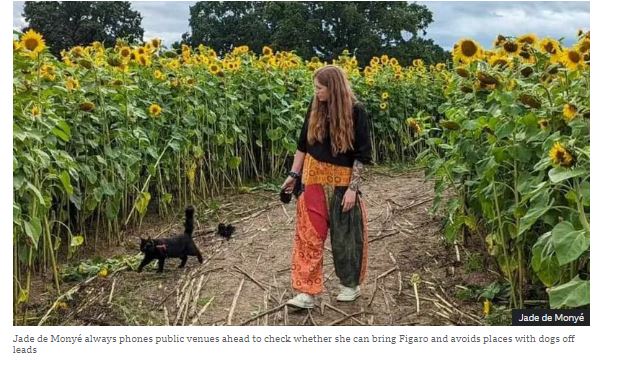
Diagnosed with multiple sclerosis in 2019, Ms de Monyé said taking Figaro on walks had “changed her life”. “On my days off I’d just shut myself away and feel sorry for myself,” she said. “He almost forces me to get out of the house.” “It’s not like walking a dog,” she said. “It’s going where the cat wants to go. He does like to sit a lot at the water’s edge and just watch all the birds. “You can 100% train a cat, it’s just a lot harder,” she added.
Anna Dukes Sydney and her cat Roland travel around town in a stroller nicknamed the “meow-cedes Benz” She takes her Sphynx and Blue Point Siamese, Roland and Sydney on trips in her camper van. The cats have explored campsites and beaches across the UK, although they prefer to avoid seawater. “There are signs saying no dogs on the beach, but it doesn’t say anything about cats,” Ms Dukes said. “I’m always mindful if they’re on the lead as I’ve been told, no matter what, cats can escape if they want to.” Cautious about dogs and people with allergies, Ms Dukes stays outside pubs and cafes, with the cats in their “meow-cedes Benz” stroller.

Jordan Gregory, and Jess Young, consulted a vet before taking British Shorthair, Moss, out on a leash. “We didn’t want her to just stay indoors all the time,” Gregory near Chingford in a house with a garden, but they still take the “chilled out” feline out in a specialist backpack. “We don’t have a car and travel everywhere by train,” Mr Gregory said. “She’ll go to Waterloo in the bag. On the train we’ll take her out… and she’ll just sit on our laps.” Moss is always kept on a leash during her train travel. She has climbed a mountain in the Lake District and, although she “prefers not to be rained on”, also “loves being in a tent,” Mr Gregory said. “There are some people who don’t really get it or somehow take offence,” he added. “[But] I don’t think I’m subjecting her to some kind of cruelty.”

 Home | felineopines