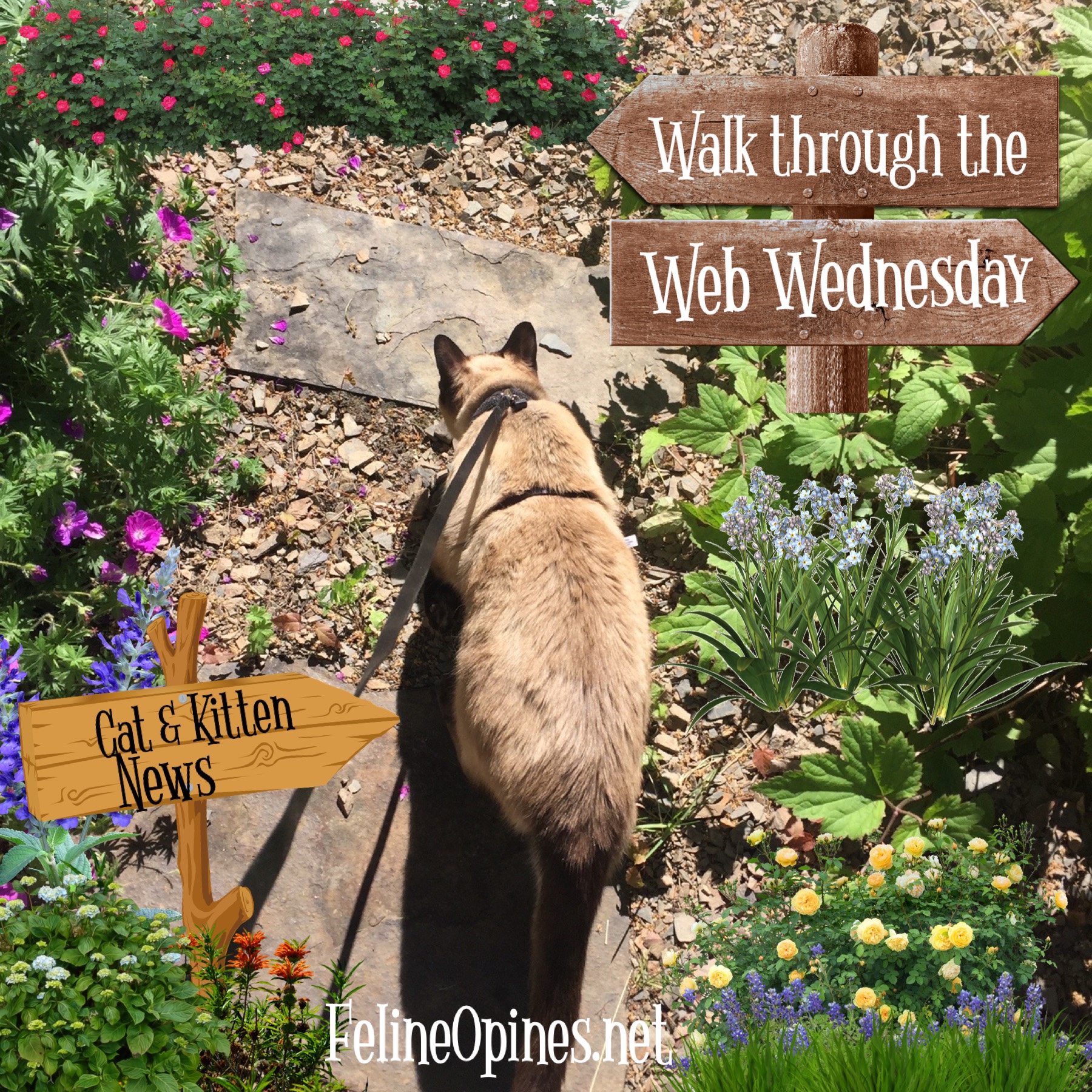
Happy Wednesday Furiends!
How are things in your neck of the woods? We’re hanging in there, our weather however, can’t decide if it’s late winter or spring. Still, since we’re indoor felines, the weather has little effect on us. Things are getting greener and The Human is opening the windows more so that’s good.
Oliver and I do a lot of play fighting and my whiskers are the constant casualty. Now, although it’s not unusual for felines to scuffle and for whiskers to be lost. Our whiskers help us navigate through our environment and are our most important sensory organs. As long as the follicles aren’t damaged, my whiskers do grow back but it takes time. Do any of my furiends out there have a feline sibling that shortens your whiskers?

Oliver likes to celebrate holidays and his visual contribution this week is his celebration of Hot Air Balloon Day (which is today)

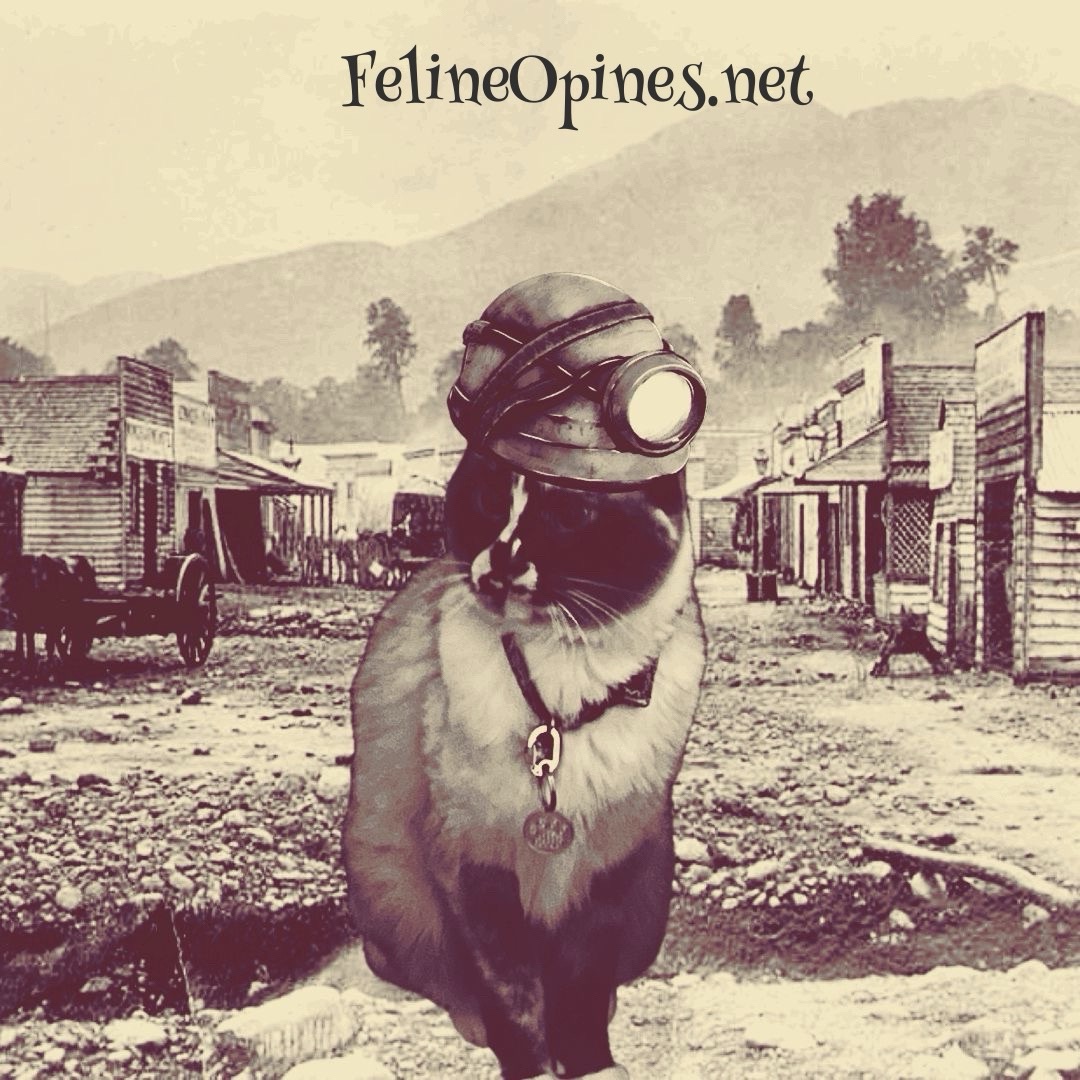
And finally, Miss Lily loved the story of cats in mining towns so much she asked our Purrsonal Assistant to make an image placing her in the past in the days of the cats in mines.
Here are this week’s stories and our video of the week, we hope you enjoy!

New ‘Salty Licorice’ Cat Coat Pattern Linked to Genetic Mutation, Study Finds

A group of scientists at the University of Helsinki in Finland discovered a genetic mutation that creates the recently discovered “salty licorice” coloring found in some cats.
According to the scientists’ study of these felines, published in the Journal of Animal Genetics in May. This coat pattern is similar to tuxedo coats, but the “salty licorice” felines differ with dark markings on their faces and dots and an increasing amount of white towards the back portion of the body. Their tails tend to be primarily white. The pattern was first observed among the Finnish domestic cat population in 2007.
The researchers found that the pattern is linked to a variant of the KIT proto-oncogene (KIT) gene, which is “associated with an absence of melanocytes in the skin and hair follicles” and commonly causes the white coat appearance in various domestic animal species.
If any of my furiends are from Finland, I’d love to know if you’ve met one of these unusual felines.
Cats in mining camps

Well of course this article caught my eye as we are Idaho felines. In this article from the Idaho Press on Rick Just’s History Corner, I learned that in the 1860s, in Placerville and other mining camps in Idaho, cats were prized for their ability to keep rodents at bay. The article’s author found a 1934 edition of the Idaho that talked about miners’ cabins being often overrun with field mice and chipmunks.
An entrepreneurial fellow from Oregon named Mooney sold pest control cats in the mining camps. Most of them were gray tabbies with no claim fancy pedigree, yet despite that fact, each sold for $10 which would be more than $300 today.
Mr. Mooney stayed overnight with the Moores of Placerville and gave a pair of kittens to their daughter Lizzie. In later years, Lizzie (then Mrs. Sisk) told of litter after litter of kittens that came along, fetching $2.50 for each tiny cat. For many years after, Placerville was known as the home of large gray cats who kept themselves healthy and large due to an endless supply of mice.
Houtong Cat Village: Taiwan’s Cat-Themed Coal Mining Village

I was so intrigued by the mining kitties story, I sent our Purrsonal Assistant off to find out more about cats in mining villages. She came across an article by Nick Kembel on a website called “Taiwan Obsessed” about his visit to Houtong Cat Village. The photos her are all Nick’s.
Houtong was once a thriving coal mining town and today is home to hundreds of cats. The history of the mining in Houtong is preserved in a park. It’s interesting that the word “Houtong” means monkey as there used to be a cave with monkeys nearby. At its peak, the town had more than 6,000 residents. After the coal mining industry declined in the 1990s most left, and only a few hundred people still live there today.
Your first introduction to the town will probably when you walk through the Cat Bridge. It was built in 2012 and its design pays homage to the old mining tunnels. Since the bridge is covered, it offers shelter to the local felines and you will probably encounter felines napping there.
Several hours in town can be spent checking out the ruins of the coal plant, browse the souvenir shops, drink a cat foam latte and meet a bunch of new feline furiends.
The cat connection began in 2008 when a local resident and cat lover started encouraging locals to take in stray cats. The idea really took off, putting Houtong back on the map as Taiwan’s premier cat village.
The 200+ cats that live in Houtong today are mostly strays that have been sterilized and those cats are identified with the standard TNR procedure of a clipped ear. The cats mostly seem to co-exist, with each claiming its own territory and snoozing spots within the three-lane village built on a hill looking over the train station.
You can’t make your way through the village without stopping to pet the cats sleeping and relaxing along the way.

The local shops offer a plethora of cat themed souvenirs and food items.
The ‘Feline States of America’: How Cats Helped Shape the US

And the search for cats in history continued and our Purrsonal assistant found this article by Joy Powers of NPR in Milwaukee. It doesn’t deal with cats in mining towns but it is about the history of cats in the U.S. She interviewed cat historian Paul Koudounaris (who knew there were cat historians?) who said (about cats), “They were domesticated, they were raised to the highest of the highs and they were plunged down to the lowest of the lows and then very, very slowly by the end of the 19th century, they finally built themselves up to be companions again,”
Koudounaris said that many cats came to the Americas by ship with early colonists. They were known as ship cats, they were used to get rid of rodents and protect the boat’s food supply. These cats were one-way passengers and got off the boats at the same time the humans did.
Although cats continued to face persecution in Europe at the time, some early colonists recognized the benefit of the feline’s hunting skills to handle pest controls. In fact, cats were some of the first animals employed by the U.S. Army.
“The United States Army had hired cats long before they had hired dogs,” he explains. “The United States Army had hired cats in the 19th century, again, to protect the commissaries.”
Even though cats played an important role in early U.S. history, it took a few centuries for them to be considered companion animals instead of working animals. Koudounaris says the transition happened slowly, spurred by their popularity in the West (particularly among cowboys who would use cats to watch their rations). Creative folks, like Mark Twain, started bringing cats indoors and their popularity as house pets grew.
Koudounaris is currently writing a book profiling some of America’s most famous cats, including some of the more well-known ship cats like Kiddo, a cat onboard the airship America, the first dirigible aircraft that tried to cross the Atlantic. Unfortunately the dirigible crashed but thankfully Kiddo survived and he went on a national tour in 1911, making $2,000 a week. Our Human wants to know what we could do to make $2,000.00 a week!
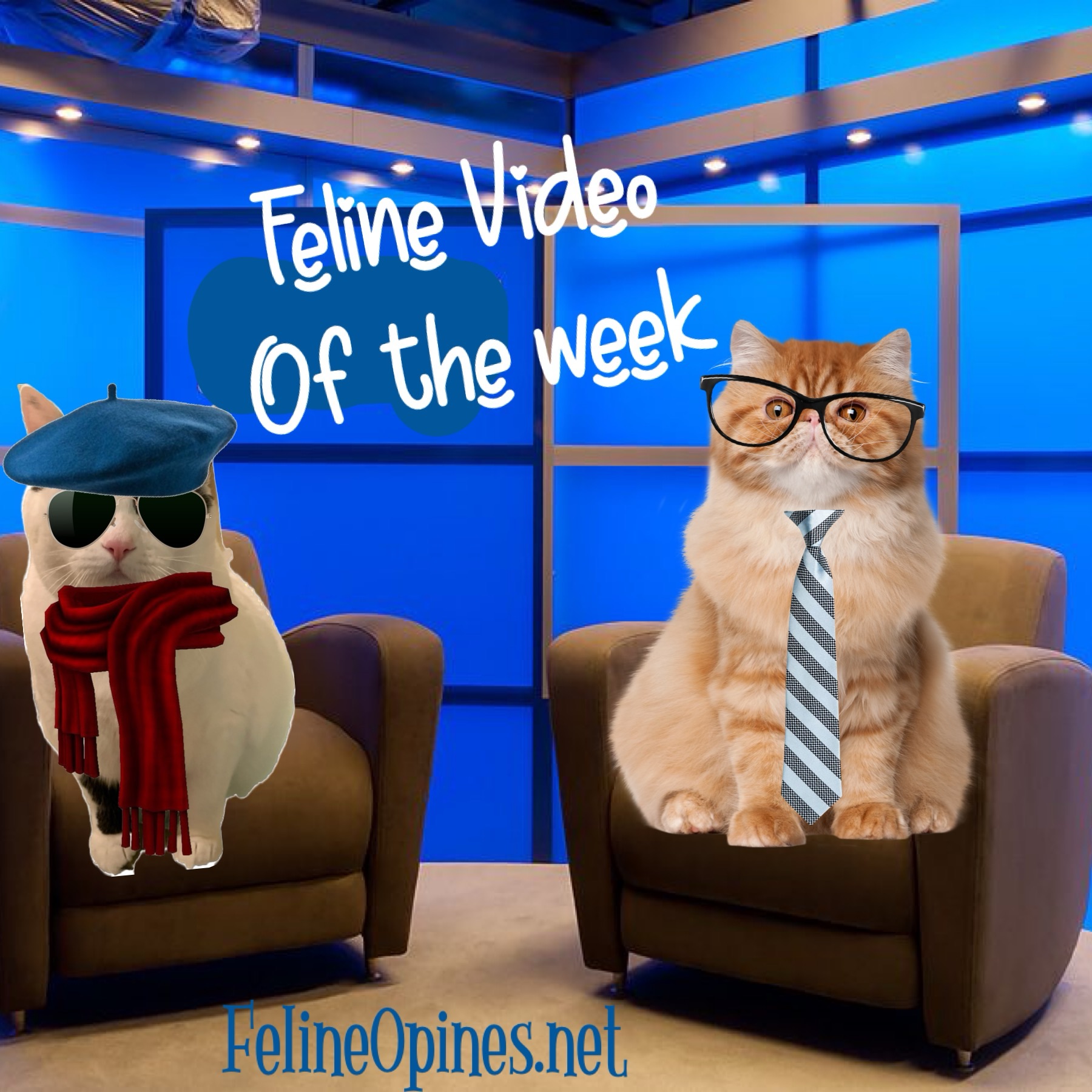
This one will make you say “Awwwwwww”





 Home | felineopines