
Happy Fall My Furiends,
The colors are changing, the rain is raining and the weather is cozy in our neck of the woods (and we hope in your neck of the woods too). We’ve been fairly boring this past week but have been enjoying the fire and snuggling with The Human. The Human did buy us some new catnip paper bags and we quite enjoy them. Lily likes them too but every time The Human tries to get a picture of her in the bag, she scampers away.


Ah, the beloved catnip bag!
Lily, likes to visit the pantry area at 12:30, 4:30 and 8:00pm looking for treats. Oliver and I like to hang around her because she is the “treat master”.

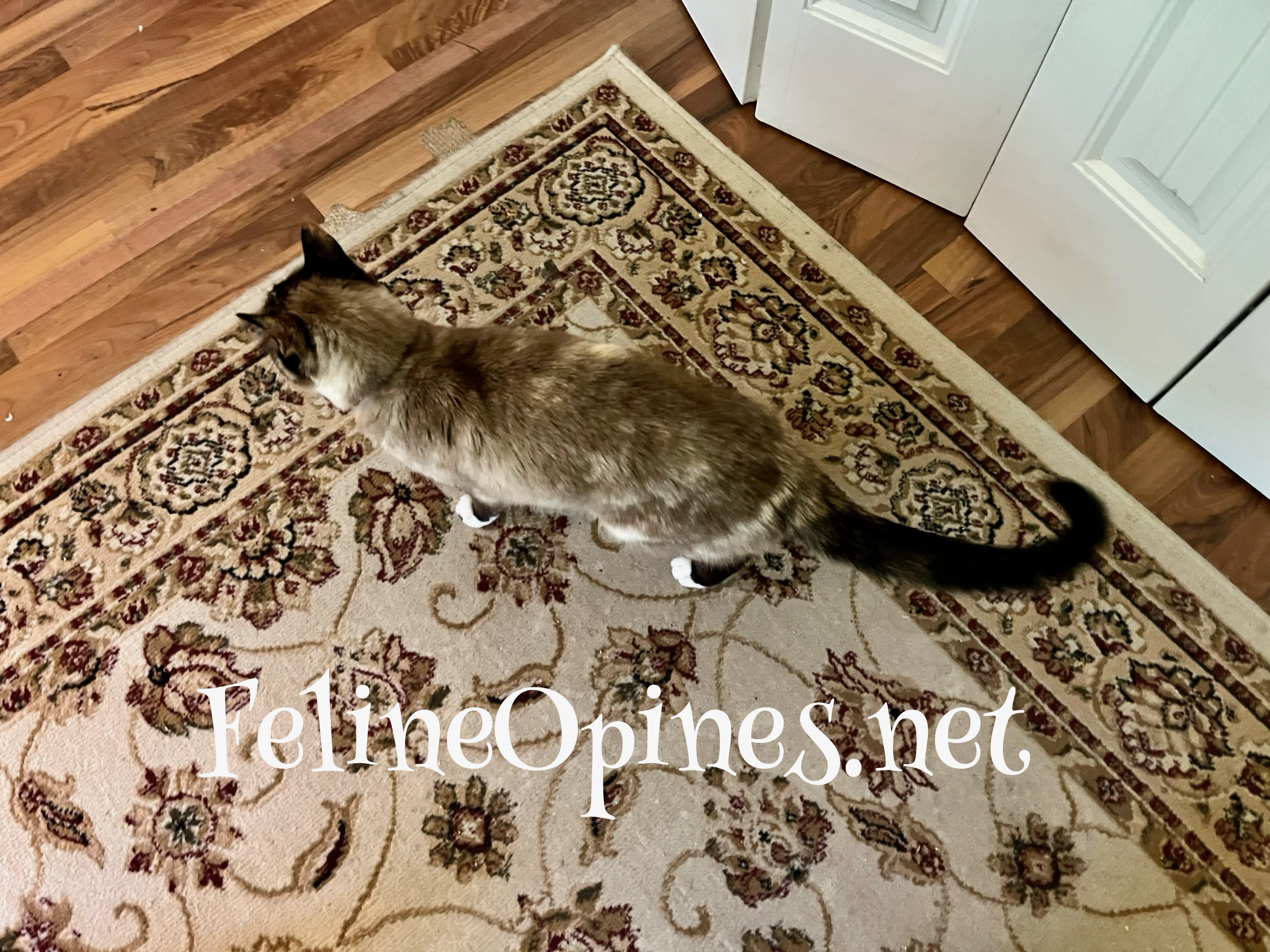
And then there’s the strange arrival of a four-legged family member at The Human’s brother’s house. We have no idea what this creature is nor do any of us have the desire to meet her!
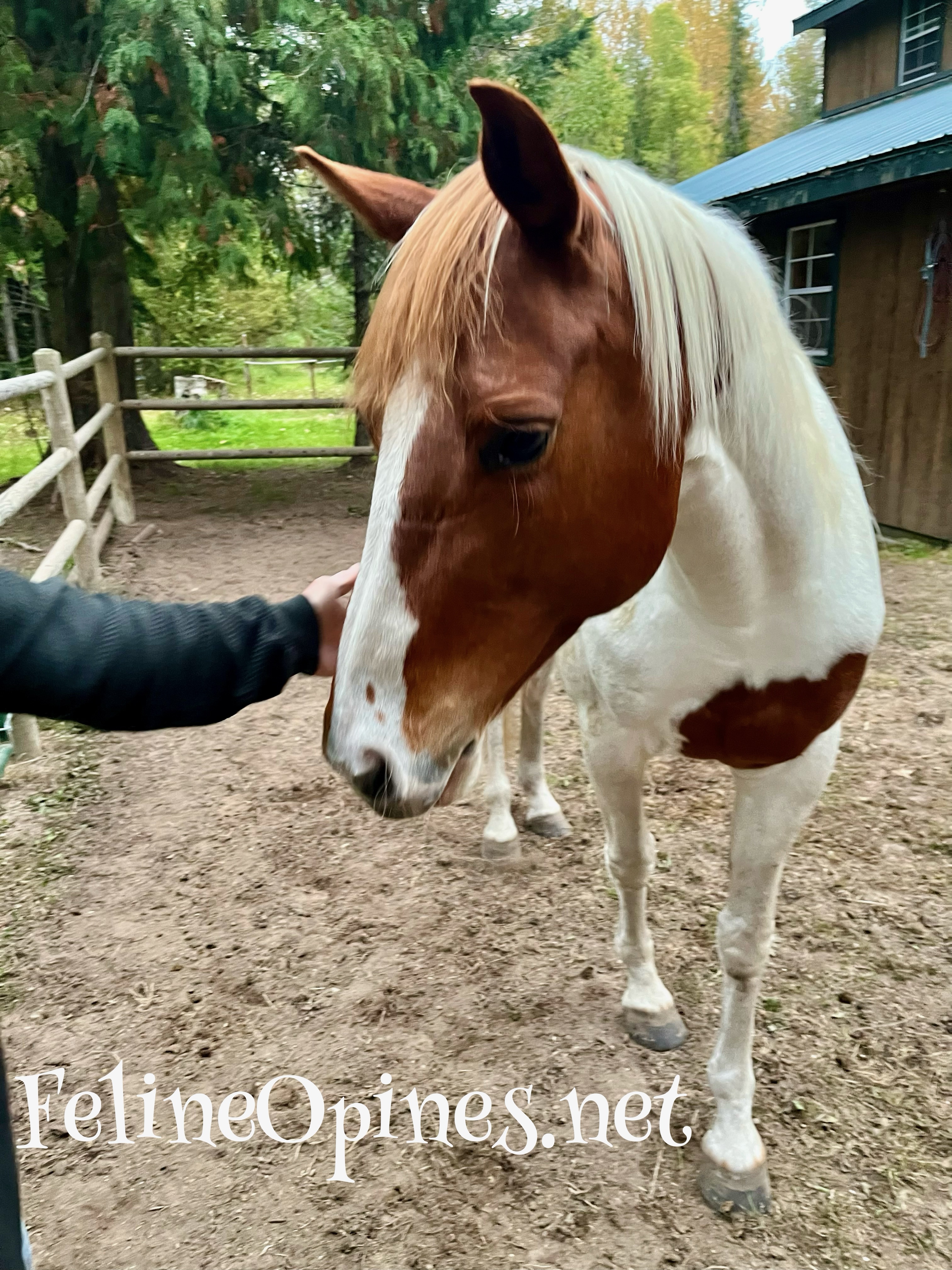
Oh meowza, I hope The Human is not planning on bringing one of these four legged creatures to our house!
Let’s get on with this week’s news.

How this US-based veterinarian returned to Greece to help her ‘stray cat friends

Anna Katogirtis grew on the remote island of Karpathos, Greece. She struggled to make friends and found that she found friendship and comfort from the thousands of stray cats that roamed the island. She says that the of Karpathos showed her “a kinder version of our world,” despite the unkindness that she often experienced at school, and helped to make her childhood special.
“At the time, taking care of stray cats was the one thing that was giving me hope and just a better view of the world,” Katogiritis tells CNN Travel. “Receiving kindness from anything other than people I guess.”
She received a degree in Molecular Biology and Biotechnology at the University of Crete, and was then offered a place at the Virginia-Maryland College of Veterinary Medicine and moved to Virginia, where she met her now husband.
Despite all the places her position took her, she never forgot the stray cats of Karpathos.
Despite the fact that island has acquired at least two vets since she left, and a local animal welfare group was established in 2000, the stray problem continues.
In 2018, Katogiritis started working on plans for her non-profit animal rescue and education organization Animal Welfare Karpathos, founded in August 2020, bringing on board members and volunteers from the local group.
After experiencing some setbacks with funding, Katogiritis opted to fund the pilot program herself, purchasing the medical equipment and medications, as well as covering some of the expenses of the three volunteer veterinary students who agreed to fly from the US to Greece with her.
Katogiritis began the program in 2021. During the first year, Katogiritis and a team of volunteers went from village to village with their supplies and equipment, setting up mobile clinics and spaying or neutering stray cats. She estimates that they treated around 300 to 320 cats during a three-week period.
“We could have done a lot more,” Katogiritis says. “But what we focused on the most was reaching out to the community and inspiring them to take care of strays.
She spent much of her time educating the people about caring for strays and her efforts began to be successful.
Some of the tourists who visit the island have gone on to donate to the program, while a number of local hotels have offered up free rooms to the volunteers.
In 2022, Katogiritis, who was five months pregnant at the time, went back to the island, which has a population of just over 6,000, to repeat the program, and she returned once again last year.
She holds programs for the children of the island, hoping to teach the next generation about how to care for strays.
Katogiritis has been documenting her progress on her Instagram account. Aside from the spay and neutering program, Animal Welfare Karpathos has also been helping to find families for strays, with members and volunteers fostering some of the cats that are desperately in need of medical attention.
The organization also facilitates animal adoptions. In order to adopt one of the strays, those interested must undergo an application process that includes an interview and the signing of a formal agreement.
Katogiritis explains that while there are no adoption fees, applicants are required to cover the travel costs of the animals, as well as the crate used to transport the animal.
“The community of adopters is connected through our Facebook group (Animal Welfare Karpathos) where they will often share photos and videos of our beloved rescues,” she says, adding that Animal Welfare Karpathos has found homes for over 300 pets in the past three years.
“It is truly wonderful to be able to see cats and dogs who were often near death, enjoying life and receiving so much love.”
Over 700 animals have been spayed or neutered through the Animal Welfare Karpathos programs and plans are being made repeat the program again in April 2024.
Although she knows that there’s still a long way to go, Katogiritis is hopeful for the future.
At present, her aim is to be able to control the stray cat populations on the island through multiple programs, as well as convince the younger generation that “they need to care, they need to step up and take some positive action for the animals.”
Katogiritis, who founded non-profit organization Veterinary Global Aid last year with the aim of providing free care to animals in need around the globe, says her long-term goal “is to not be needed anymore.”
Family brings home the wrong dog from daycare until their cats saved the day
The Human has friends who have golden retrievers and this feline says they all pretty much look alike.
This is why we weren’t surprised when one family dropped off their golden pooch at daycare and to be groomed, and they returned with the wrong dog.
When the swapped dog arrived home, nothing seemed odd to the owners. But the family felines, well that was a different story.
The humans noticed that their cats started behaving strangely towards their canine sibling. The cats started attacking the dog, perhaps wanting an answer from the interloper as to what they had done with their canine sister. Cat slaps and a house full of strange people didn’t dampen the imposter’s spirit though, in fact, that’s what helped reveal the switcharoo.
This dog kept handing out face kisses and had no interest in seeing her favorite neighbor. This was not the behavior of the dog in residence so the owners decided to hightail it to the vet’s office to scan the dog’s microchip. And they realized they had the wrong dog.
“We just never even thought that that would happen, and of course we thought we would know right? Like we’re her parents, we would know something was wrong, we would know right off the bat that it wasn’t Emmy,”
Thank heavens the felines were in charge, as usual and alerted these clueless humans to the mistake!
The cat is out of the bag: Walking isn’t just for dogs!
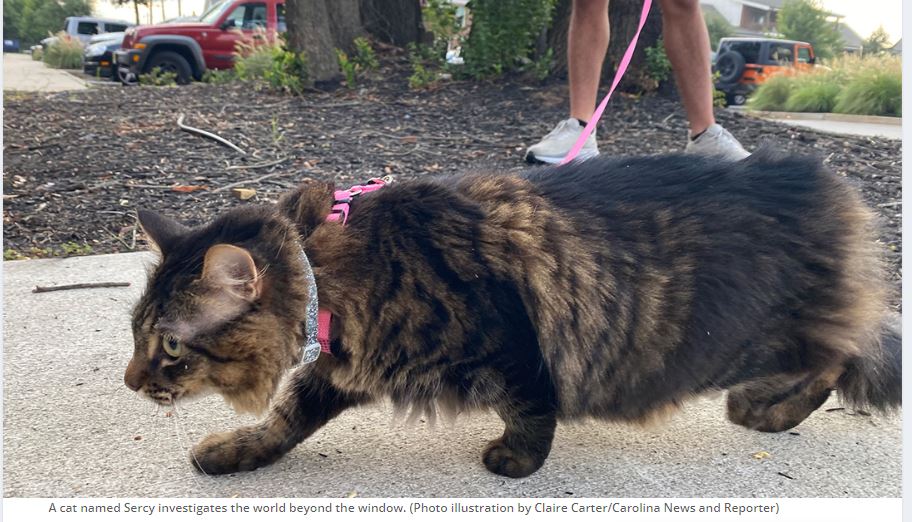
As you can tell from my “Walk Through The Web” logo, I am a feline who enjoys the occasional stroll around the garden or the neighborhood on a leash. The cat in this story, Mason, cries by the back door until his human takes him for a walk.
His human said, “I live in a very small house, and (walking) gives him a way to get his energy out,” Cat walking might seem unorthodox. But it’s not uncommon, and owners do it as a way to bond with their cats, said Cat Clinic veterinarian Mary Carter.
Taking a feline friend out in the world on a leash or inside a backpack allows them to experience the world in a safe way, Carter said.
“Some cats really want to roam,” Carter said. “Sometimes you can have that bonding with them – kind of like the same thing as bonding with a dog.”
Coynor, Mason’s human started walking him to let him explore, as he seemed unhappy with a life stuck inside.
“He suffers from pretty bad cabin fever,” Coyner said. “He would just be miserable, and I tried (walking) to give him another outlet. And he loved it.”
For some cats, putting on the harness and walking is thrilling. But for others, it’s a scary event.
Columbia resident and cat owner Grace Elliott said she once attempted to walk her two cats, Ollie and Doofus.
“Doofus was terrified,” Elliott said. “He would get on the ground and crawl and wouldn’t stand up all the way.”
Ollie did the same thing. Clearly, walking is not for every feline.
Carter said the most important task when starting to walk a cat is making sure they are familiar and comfortable with the harness. Start with a collar they’re OK with, Carter said. Then, put treats around an open harness on the ground.
“Then, kind of work your way up to just putting it on their legs, and then (work) your way up to clipping” the harness on, she said.
Careful exposure to all the factors your cat will experience on a walk, such as the sound of passing cars, is key to making your cat safe and happy on their stroll.
Carter said owners who want to walk their cat should be sure all vaccinations are up to date, the same as you would for a dog.
Feather and laser toys don’t compare to the experience some cats get on a walk.
Mason gets to see the world now through more than just a window on his walks.
“He just wants to run and sniff and see and do things he can’t do inside,” Coynor said. “Don’t knock it ’til you try it!”
Far North animal rescue charity launches new cat companion program pairing adult cats with elderly

A new ‘Companion Cats’ program in the Far North is teaming up older unwanted cats with elderly residents who can’t afford them.
Coast to Coast Cat Rescue, a charity dedicated to rescuing and rehoming felines, is about to launch the program, offering cats on a long-term foster basis to senior residents in the wider Bay of Islands area.
Volunteer Barbara Nicholas, who has been fostering cats for seven years, said having an animal around “gives you something to look after and love”.
“Everyone wants kittens, so there’s a lot of adult cats in the rescue.
“There are older people out there who would love a pet, but they can’t afford to feed it or pay the vet bills, or even [buy] kitty litter.
“The rescue is trying to get the adult cats and people together. It’s a win-win situation. The cats get a home for a while, and the people get companionship for as long as they need it.”
Through local business sponsorship, the charity covers all costs associated with the companion cat so seniors don’t have any financial worries.
Food, kitty litter, flea and worm treatments and medical care are provided, and the cat can be returned at any time.
Nicholas currently has seven cats at her home in Kerikeri, including four that she’s fostering.
She’s now helping out with the program and is a volunteer liaison between the elderly and the charity helping to get food, kitty litter and whatever else they need.
Coast to Coast Cat Rescue trust chairwoman Sam Stewart said adult cats were usually slower to be adopted than kittens and the charity had about 60 in its care at any one time.
“We talk to many seniors while carrying out our work, and a common theme we’ve heard is that they would love a cat as a companion, but are on a limited income or they are worried about what would happen to their cat when they pass away.
“Many adult cats are ideally suited as companions for senior adults, as they often just want a lap to sit on and affection.”
Stewart said animals positively contribute to the mental and physical health of older adults.
Owning a cat gives people a sense of purpose, helps them socialize and is a source of unconditional love.
Looking after a cat can also reduce symptoms of depression and anxiety, Stewart said.
“Scientific evidence has shown that a cat’s purr can calm your nervous system and lower your blood pressure.
“Physically, there have been improvements in blood pressure and heart rate from having a companion animal.”
For Nicholas, they are also great to talk to.
“They’re non-judgemental; you can be as silly as you like and they don’t judge you for it.
“I’m 76 and I’m still buzzing around and doing lots, so there must be something in it.”
Contact 022 613 2317 or info@coasttocoastcatrescue.org.nz if you’d like an adult cat to care for, or if you’re a local business or individual who can help with sponsorship.
Two paws up for this fantastic program that benefits humans and felines!
Tampa Bay’s trust fund cats captured hearts. How are they doing now?

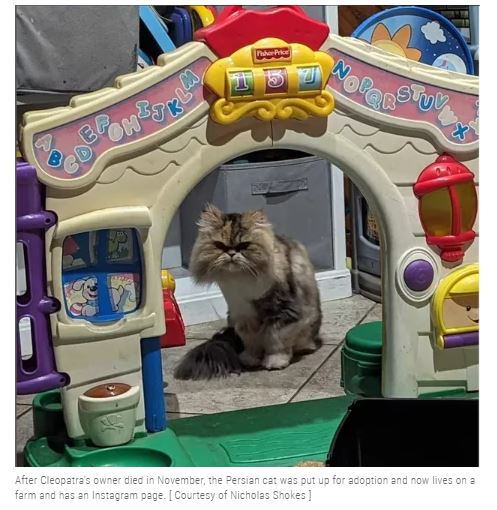
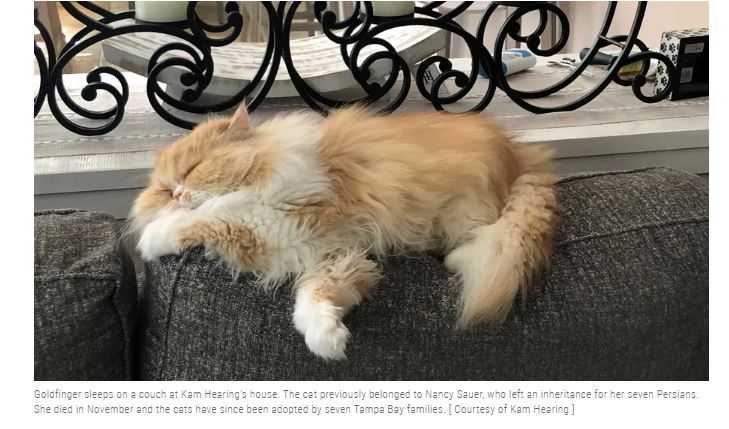

A few months ago I reported on the feline family of seven Persian cats in Tampa Bay whose human stipulated in her will that they were supposed to live in her house until they died. This was financed by a trust fund. And the cats did live in the house from November of 84 when she died until May.
Then a probate judge decided that was not in the best interest of the animals, the cats were put up for adoption in June. The Humane Society of Tampa Bay was overwhelmed with emails and calls when media from around the world followed the reporting of the Tampa Bay Times that each cat came with an inheritance. The cats former home is about to be sold but the felines have adjusted to new homes and the Humane Society receives regular updates on the trust fund kitties. They are living their best lives, one on a farm and one an Instagram star.
Wanting to ensure her cats — Cleopatra, Goldfinger, Leo, Midnight, Napoleon, Snowball and Squeaky — stayed together after she died, Sauer set up a trust fund with an undisclosed amount of money to pay for the house bills, food, grooming, veterinarian expenses and a caretaker. The house was not to go on sale until all the cats died.
But a Hillsborough County probate judge decided that, while the Persians could keep the inheritance, it was best if they found new homes with the help of the Humane Society.
Plenty of people are angry that Sauer’s final wish was not granted and that the Persians were not adopted as a group, Silk said.
But the facts support the decision, she said. The cats were not roaming the 4,000-square-foot mansion and living in luxury. “We were in the house the first week of May,” Silk said. “We were told by the caretakers that they had been in the crates for at least six or seven months prior to that. One of her veterinarians informed us that the cats did not like each other and often fought and presented with scabs and wounds from fighting.”
She believes the fighting is why the cats were in crates but does not know for certain. Once taken to the Humane Society, where they lived together in a room, they largely kept to themselves.
“They had little interaction,” said Humane Society volunteer Pam Bremmer, who adopted Napoleon. “They were very independent of each other … like they were never close.”
When the story of the wealthy cats went international, Silk said people didn’t understand the situation. “Some misread how it worked. They thought that they would get an inheritance if they adopted the cats.”
The money is for the cats only and accepted expenses are for food, grooming, toys and veterinary bills. The Humane Society oversees the funds and their new owners submit receipts and are reimbursed within 30 days. “Copies of these transactions are sent to the judge quarterly … to make sure that everyone is being reimbursed,” Silk said. “There is a lot of oversight.”
More than 150 people initially reached out for information on adopting the cats. “I had a lady from Spain who emailed me for over a week,” Silk said. “She offered to send a plane to pick them all up.”
About half that many filled out applications after Silk explained how the trust fund worked. “A lot of people just wanted money,” Silk said. “We weeded them out.”
Silk preferred applicants who previously owned Persians or other long-haired cats because that meant they had grooming experience. And they favored those who owned a house. “An apartment means they might be moving from place to place at a later time,” Silk said. “I wanted stability.”
Applications were cut down to around 25, and Silk then called each as part of a vetting process that included a veterinarian reference.
“They were thorough,” said Nicholas Shokes, who adopted Cleopatra. “It was like a job interview.”
And even though the cats are not living together, they are all living around Tampa Bay.
 Home | felineopines