
Hello There Furiends,
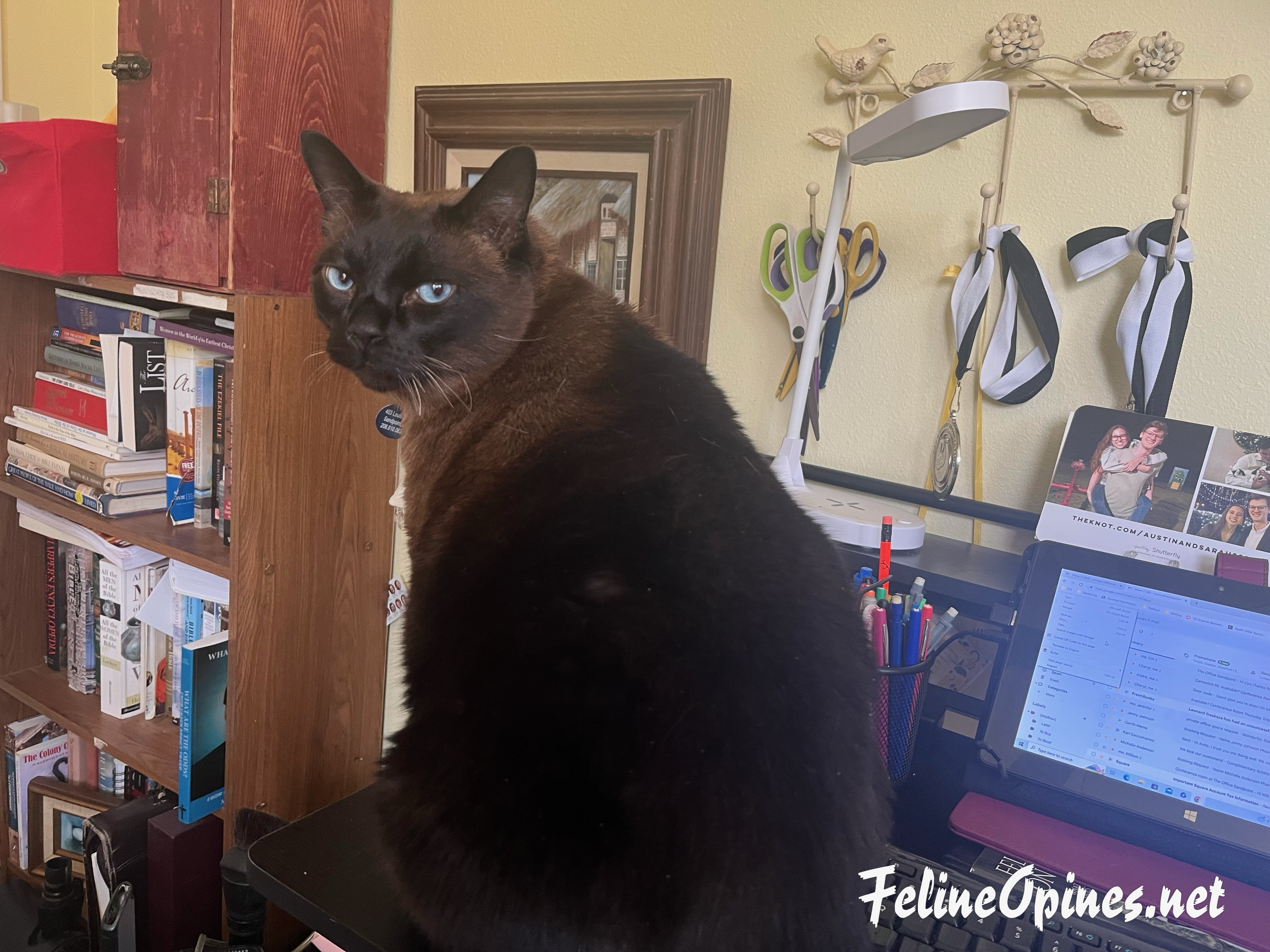
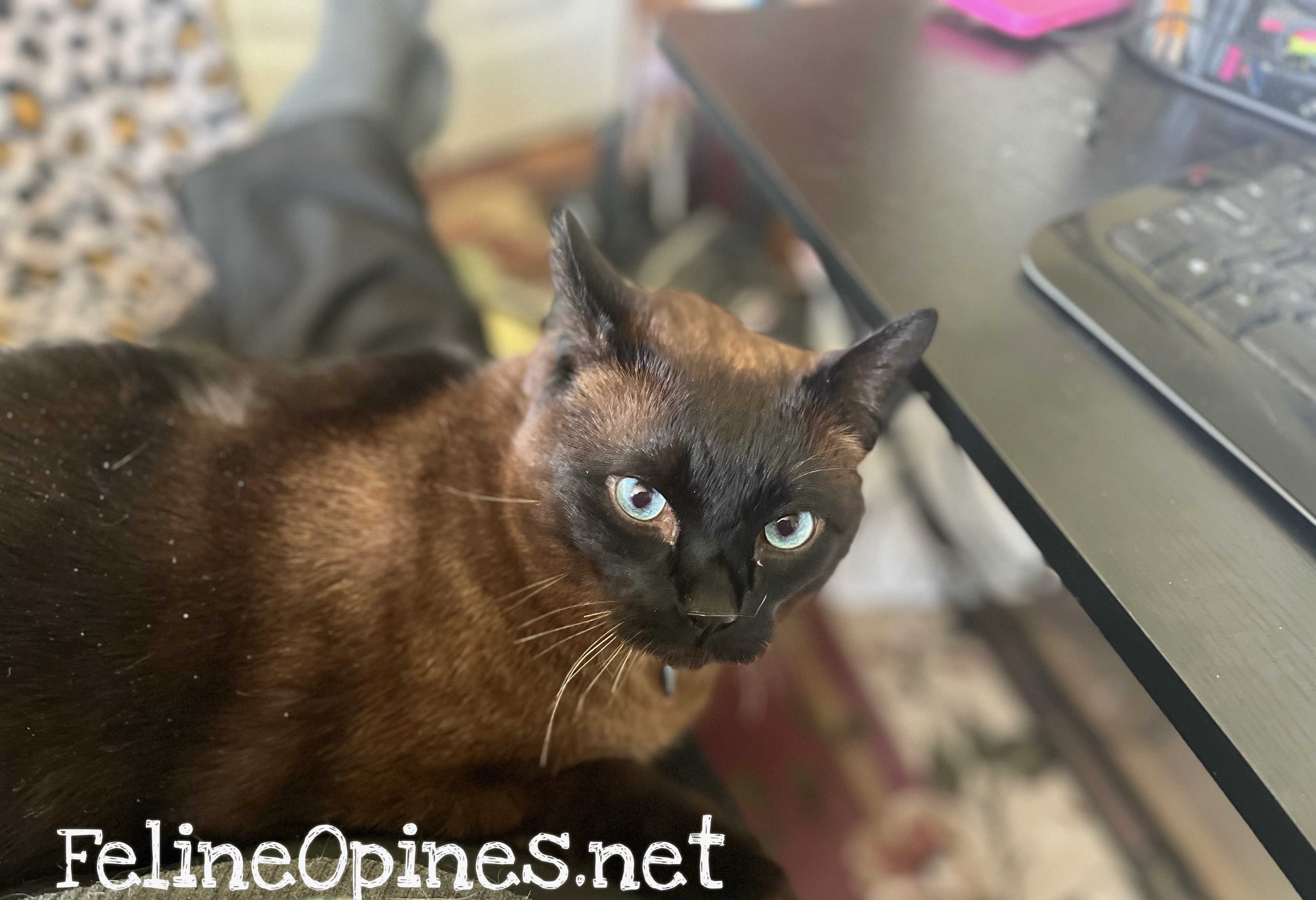
Great news from our neck of the woods – The Human is now working from her home office, although she still takes off for things she calls “meetings” too frequently for our taste. Of course the most important part of this change is how The Tribe has adjusted. As you can see from the photos below, she has made sure there is accommodation for the three of us so that we can snoopervise in comfort.
I purrfur to move around the office so that I can snoopervise from various positions and, of course, there are my nap times that have to be accomodated.

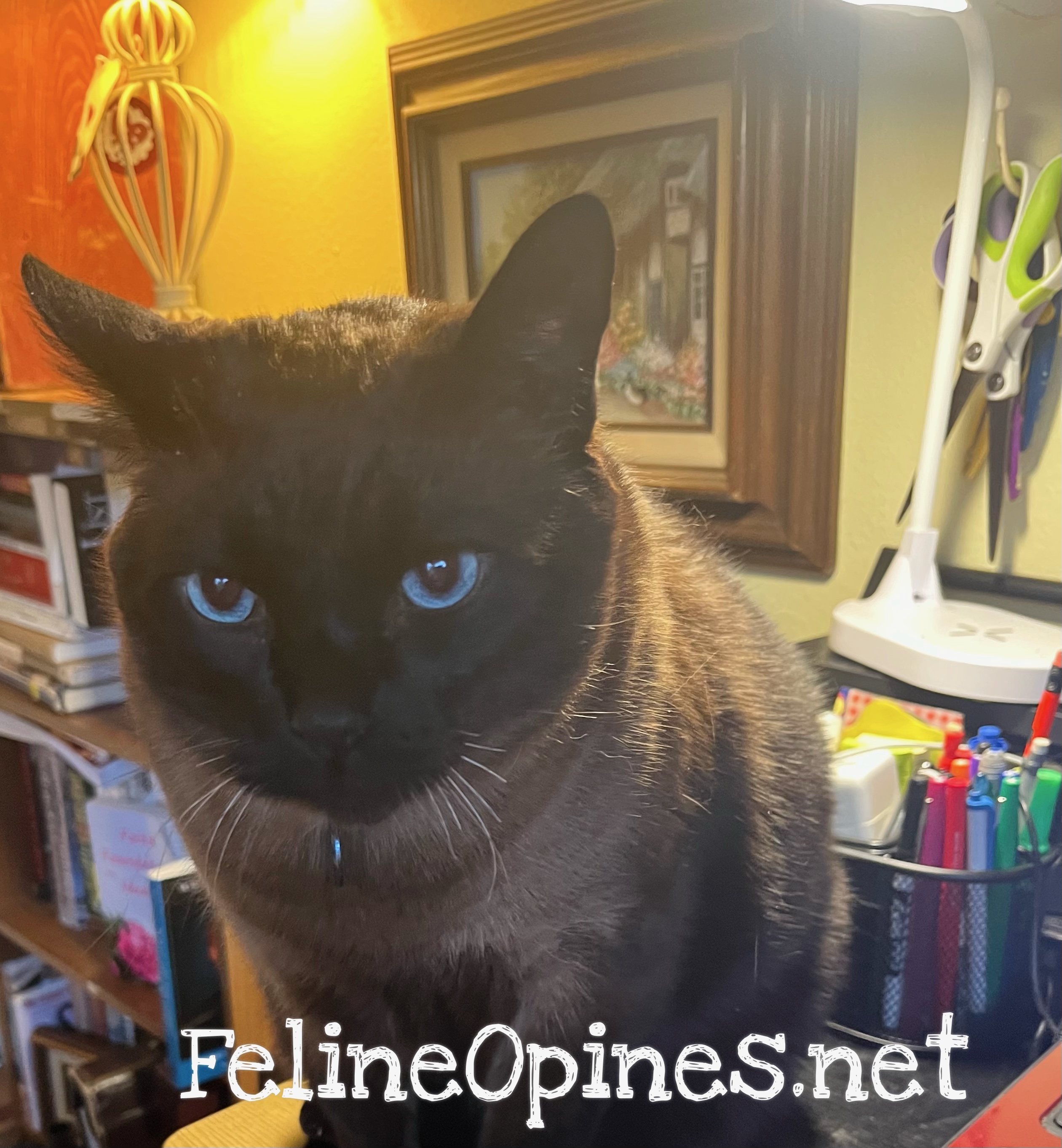
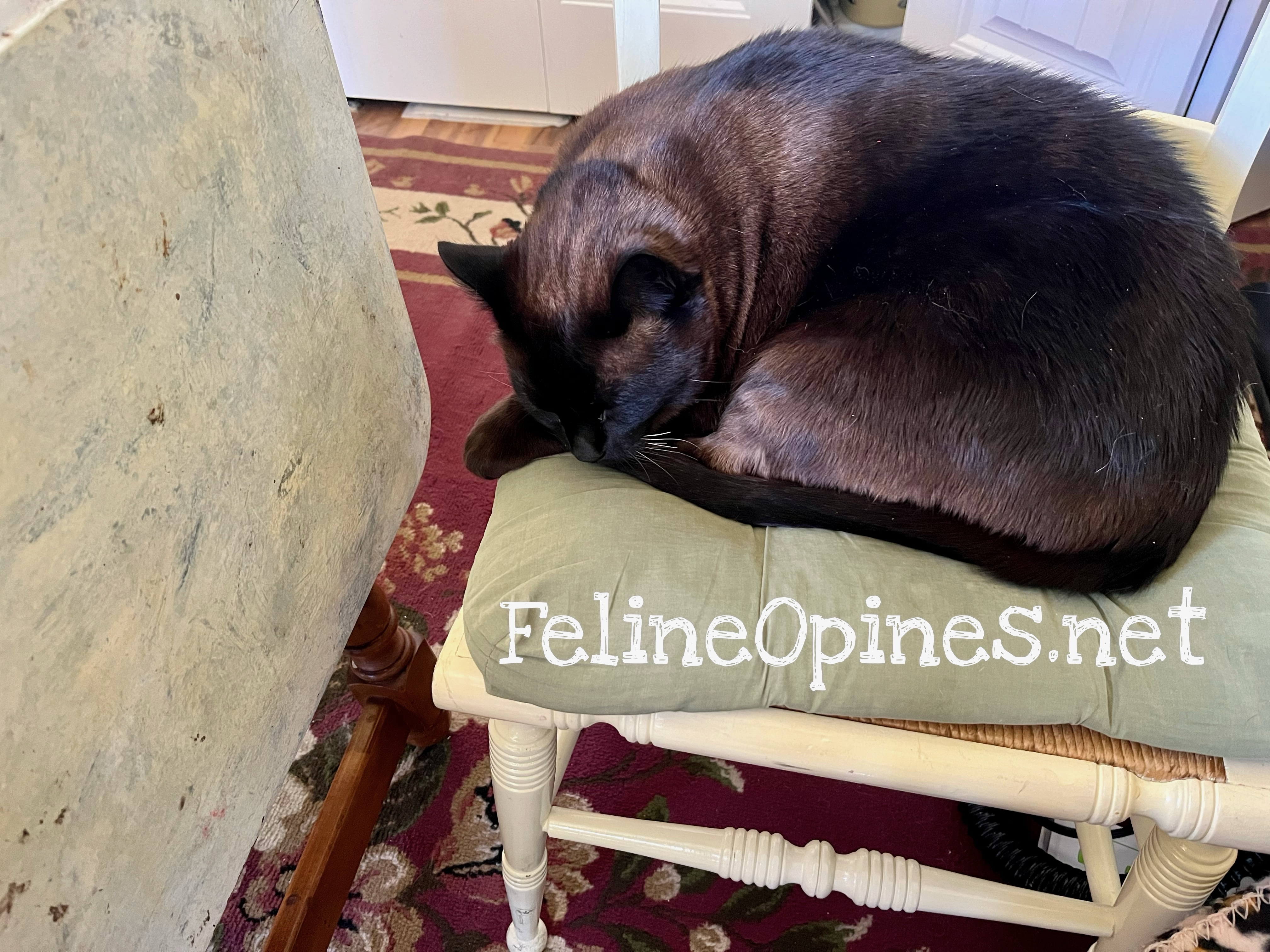
Scheduled nap times are critical and we have instructed The Human to be especially respectful of that schedule.

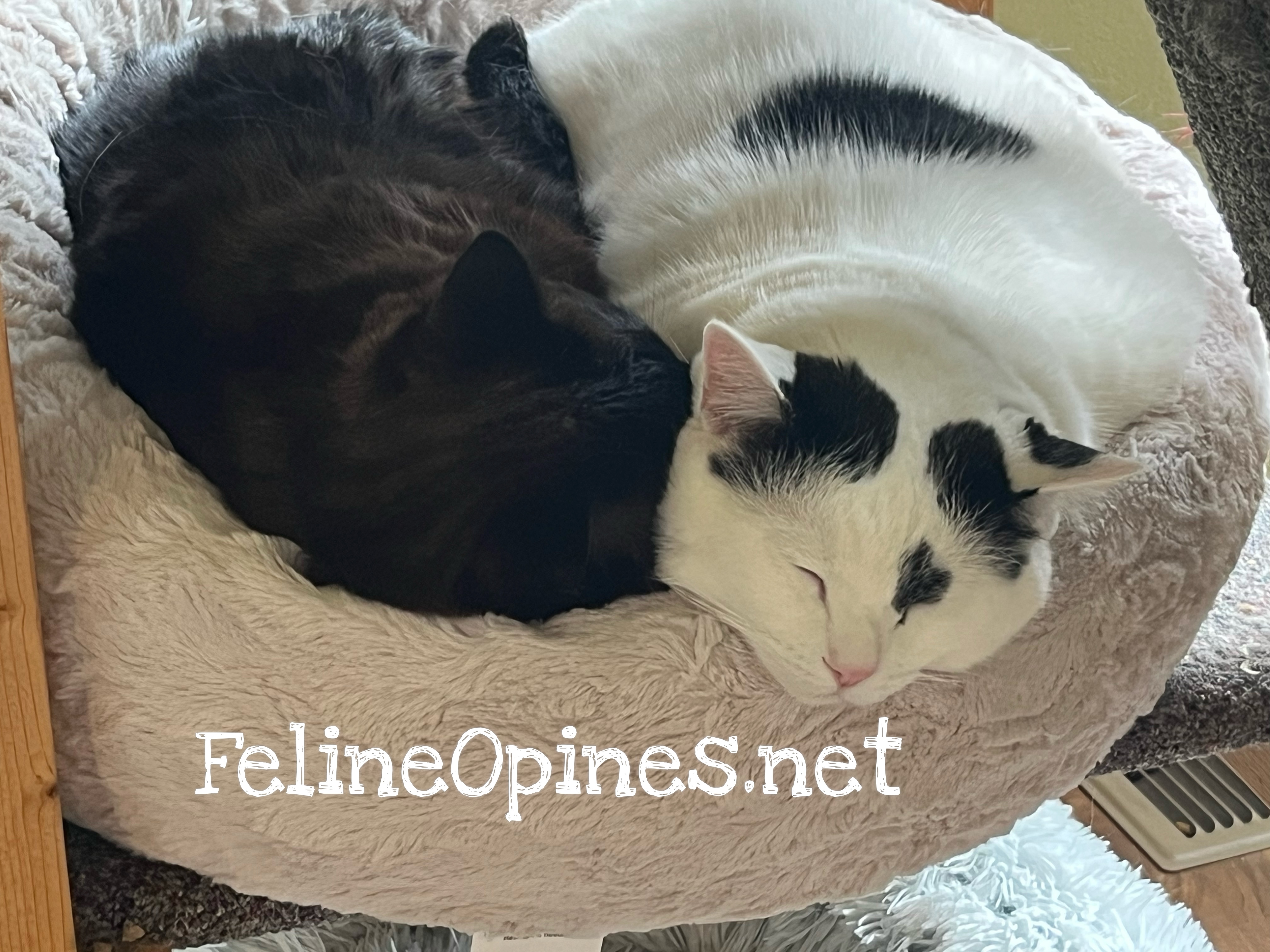


All in all, if you ask The Human, I’m sure she would say that it’s much easier to work from her home office, much more comfortable and there are fewer interruptions.

So that’s the news here, hope your humans are working as efficiently and comfortably as ours is!

Mom Cat Has Very Relatable Reaction As Kitten’s Dad Appears—’Child Support’

This Instagram video seems to show a mamma cat confronting her “baby daddy”. It’s entertained the web so much that it’s gotten 15.5 million views!
In the video shared by @milasbabies, a black and white tom arrives and paws at the window. It looks like he wants in. Purrhaps that’s because the cute little feline kitten, Mario is the mirror image of the male cat outside.
“I’m pretty sure this is the talking tom that got my cat pregnant,” @milasbabies wrote in the video’s captions.
Mamma cat seems to want nothing to do with him as she greets him with a hiss. The mother’s hostility seems to have no effect on Daddy until Momma runs at the window and he runs away.
You humans talk about “baby daddy drama” and now it seems we felines are experiencing it too.
The story of 12 mythological cats
We felines have been written, sung and spoken about throughout history and I find mythical cats fascinating. The article names 12 cats noted in folklore and mythology.
1.Bakeneko
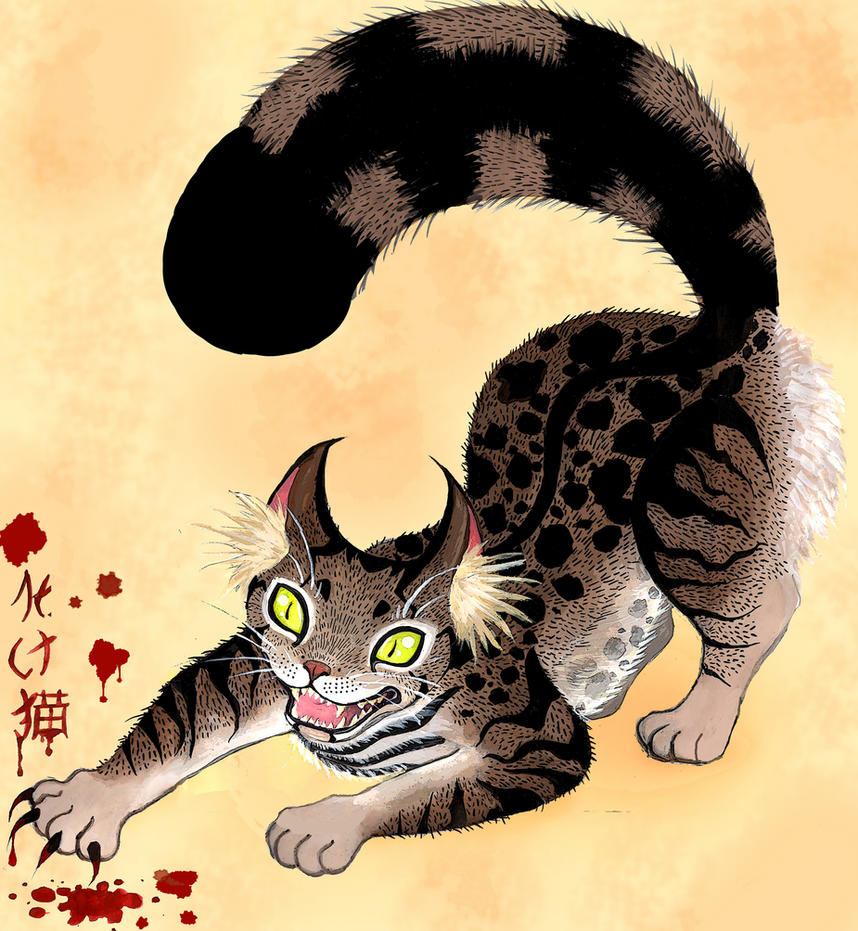
Bakeneko is a monster cat from a Japanese legend that became a yokai (a class of supernatural entities in Japan) and gained supernatural powers. It is said that when cats live to a ripe, old age they will begin developing supernatural powers too and will and fully transform into yokai.
Bakenekos start off resembling regular house cats but then evolve to walking on only their hind legs. As they age, they grow much larger and their powers intensify. They are described as reaching the size of full-grown adult humans. Another myth, Nekomata, is very similar to the Bakeneko but has two tails and is said to live in the mountains.
2. Bastet

Bastet is a feline deity and the Egyptian goddess of the home, women’s secrets, cats, fertility, and childbirth. She was thought to be a bringer of good health and protected the home from evil spirits and disease, especially those affecting women and children.
3. Cactus Cat

The Cactus Cat is a mythical creature from the American Southwest. Cactus cat is described as resembling a bobcat with thorn-like fur, a branched tail, and sharp bones protruding from its front legs. This mythological cat is said to have been sighted in the Southwestern desert areas of the United States including states like California, Nevada, and New Mexico. Some sightings have even been reported in Colorado.
4.Cat-sith
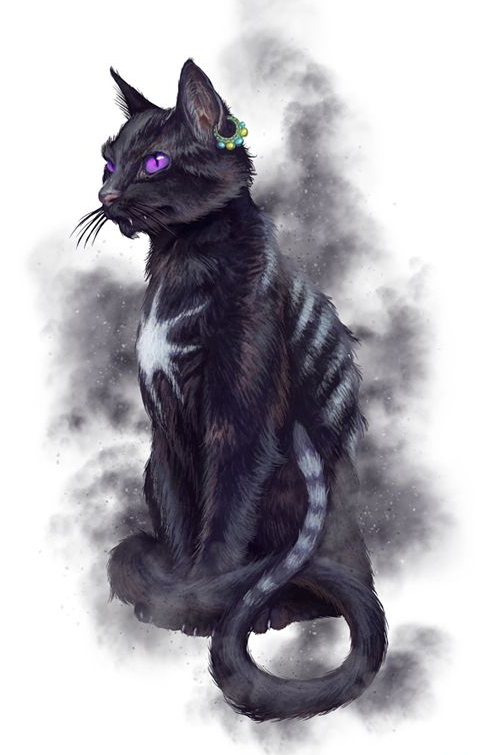
Cat-siths are legendary felines from Celtic mythology that are said to be the size of dogs with black fur and a white spot on their chests. It is said these creatures walk on four legs and act like animals when in the presence of humans but then they shift to bipedal walking when humans aren’t around. Some are even described as wearing clothes.
In most of the myths surrounding cat-siths, they are indistinguishable from regular cats until they are caught standing upright.
5.Cath Palug
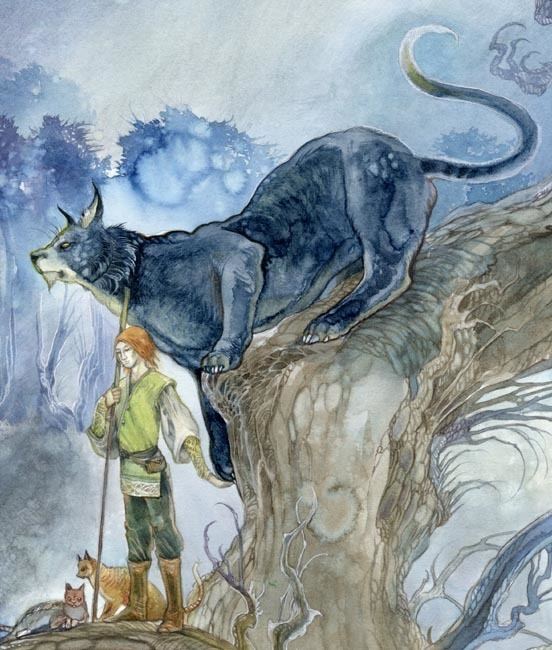
Cath Palug was a monstrous cat from both French and Welsh mythology. This cat was said to inhabit the Isle of Anglesey where it ate a number of humans who attempted to slay it. Cath Palug was said to have been slain by King Arthur after wreaking havoc across the land.
6.Cha Kla

Cha Kla is a legend from Thailand, described as a cat with blood-red eyes and completely black fur that runs from back to front. Cha Kla is described as nocturnal and so fearful of humans that it will immediately hide in its hole in the ground if it encounters a human. It is said that if a person were to see it or touch it, they would die. Sorcerers were said to use Cha Kla to defeat their enemies.
7.Dawon

Dawon is from Hindu mythology and is also known as Gdon. Dawon is a fierce tigress given to the goddess Durga for combat. Durga would ride Dawon into battle yielding 10 weapons in each of her 10 arms. Dawon would also take part in battle using her teeth and claws. Those two would be formidable combatants!
8.Hombre Gato
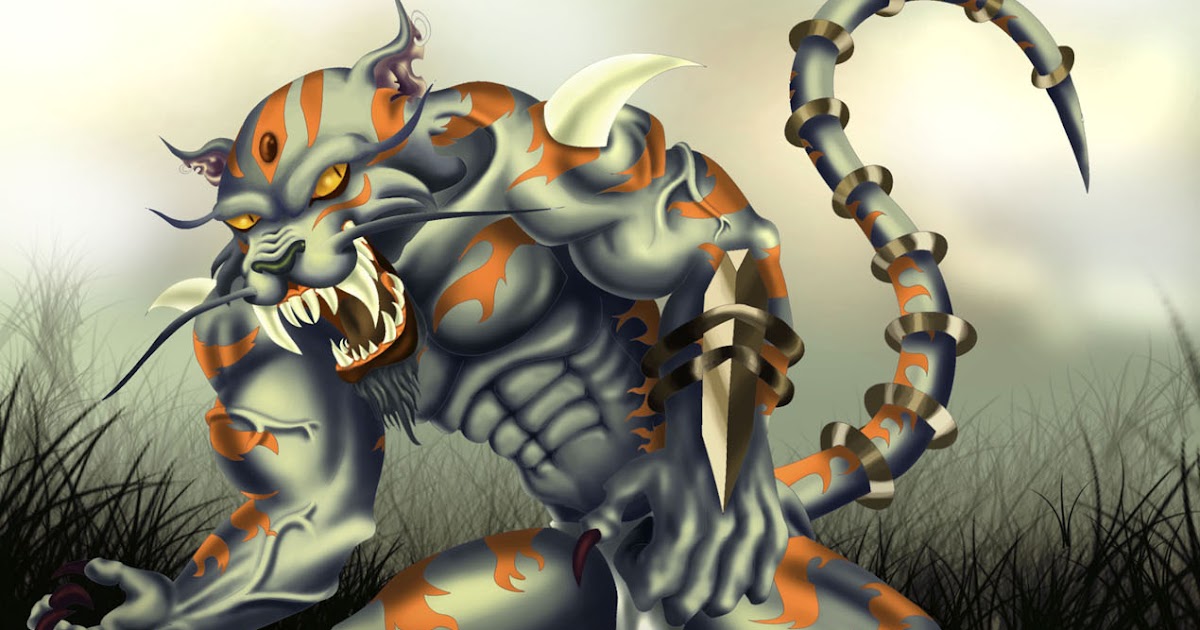
The Hombre Gato, also referred to as Catman, is a legendary creature from Argentina that has the features of both cat and human.
Hombre Gato was thought to only come out at night to prey on humans and animals and became such a widespread legend that it has been captured in Hispanic literature through short stories.
9.Mafdet

Mafdet is a deity from the First Dynasty of Egypt. She was known as the Goddess of judgment, justice, and execution. She is said to be the protector of Ra, the Egyptian sun god.
Mafdet’s depiction in ancient paintings is much like a Savannah Cat or Cheetah. It was said she was able to protect against the bites of scorpions and snakes.
10. Matagot or mandagot

A matagot, also known as mandagot, is a legend from southern France. Matagots are said to be spirits that take an animal form, mostly presenting as a black cat. Matagots have also been described as taking on the appearance of rats, foxes, dogs, and even cows. Matagots are generally seen as evil spirits, but some are believed to bring wealth into a household if it remains well fed.
11.Sekhmet

Sekhmet is the Egyptian Goddess of war and destruction. She is said to have been born from the fire of the Sun God Ra’s eyes. The ancient Egyptians built at least 700 monuments to worship Sekhmet. In some tales, she is considered an alternate form of Bastet, and in others, she is referred to as Bastet’s sister.
12.Wampus Cat/ Cherokee Death Cat

Death Cat. In some regions, the Wampus Cat is a frightening and evil feline, while in others it’s viewed as more comical. In Cherokee mythology, this monster cat is the embodiment of a female cursed by the tribe’s elders that were punished for hiding under the pelt of a wild cat and bearing witness to a sacred ceremony she had no business attending. Some southeastern Native American tribes believed the Wampus Cat to be a shapeshifter. It was said that Wampus Cat went on a livestock killing spree during the 1920s and 1930s, and reports of the creature stretched across the southeastern states into the 1960s.
Karl Lagerfeld’s cat Choupette scores an invite to the 2023 Met Gala


I have reported on Choupette, the late Karl Lagerfeld’s beloved cat, and now Choupette, has been formally invited to the Met Gala. Lah di dah!
Lucas Berullier, Choupette’s agent and owner of My Pet Agency, which specializes in pet influencers, announced the invite from Paris. (This cat has an agent?? Meowza, what am I doing wrong!!)
“It’s an event in honor of the legacy of Karl, and Choupette is obviously a central part of the legacy,” Berullier addd.
The theme of this year’s Costume Institute exhibition is Karl Lagerfeld: A Line of Beauty. It will celebrate the iconic German designer, who worked for Chanel, Fendi, Balmain and myriad other fashion houses before his death in 2019.
Born a Leo on August 15, 2011, the blue-cream tortie Birman was originally owned by French model Baptiste Giabiconi. He received the kitten on his birthday from friends and named her for the “common nickname in French for cute girls,” according to the New York Times.
That year, Giabiconi asked Lagerfeld to cat-sit around the holidays. The designer was initially reluctant but quickly fell in love.
“It became clear to me that Choupette brought Karl great joy,” Giabiconi told the Times. So he decided to let Lagerfeld keep the kitten.
The rest is fashion history.
The pretty kitty went viral in early 2012 after V Magazine’s editor-in-chief, Stephen Gan, tweeted out a photo of Choupette, introducing her as Lagerfeld’s “new kitty.”
In 2014, Choupette secured her own makeup line by Shu Uemura, and the fancy feline went on to rake in over $2 million doing a campaign for a German car.
News outlets called the cat “the most famous feline in the world.” She was always by Lagerfeld’s side in a custom $3,000 Louis Vuitton handbag.
“Choupette was a phenomenon. Karl Lagerfeld wasn’t really perceived as a warm and fuzzy person, so it made it incredibly ironic that he basically fell in love with Choupette and she did become his furry muse which kind of humanized him which was sort of lovely,” Kathlin Argiro, a fashion designer professor at the Fashion Institute of Technology, told The Post.
In 2018, Lagerfeld told French magazine Numero that he had named the cat as one of the heirs to his estate. Lagerfeld died in February 2019 at age 85, it was rumored that he left his fortune to Choupette. The exact details of Lagerfeld’s estate as it related to the cat are not known.
In the years since Lagerfeld’s death, Choupette has been ably looked after by his former housekeeper, Françoise Caçote. The cat continues to work on occasion, doing campaigns for the Karl Lagerfeld brand, luxury pet line LucyBalu and L’Oréal.
She also has a philanthropic side and gives back through her new charity organization the Choupette Fund, which aids stray cats.
It seems that although Choupette lost her loving human, she’s still living mener la grande vie.
Can you spot the cat? One sneaky feline found the perfect place to hide within the walls of this New York City apartment

Evidently there is a Twitter group called #findthecat and Journalist Kate Hinds, of New York City, made Twitter followers go crazy trying to find her elusive feline.
Her cat blends into the apartment scenery very well. After you’ve stared a while and still can’t find the elusive feline, here are some hints.
Hint #1: Someone has a green thumb!
Still need another hint?
Hint #2: Cats can always be found basking in sunlight.
Cats are biologically programmed to always find the warms spots in their home and as winter breaks its cold curse, many felines are jumping at any chance to lay in the sunshine.
Still haven’t found it?
Hint #3: If your cat isn’t messing with your plants, do you even have a cat?
Eating plants actually aids digestion in felines and help move fur balls through the tract.
However not all plants are safe for cats to consume, some to avoid are tulips, daffodils, and lilies.
Given up yet? We don’t blame you! Okay, here is the map to find the cat.
If you take a real close look toward the windowsill on the right, hidden among the dense collection of plants, you can see the gray fur on the cats back.
The forgotten history of cats in the navy

Naval cats have had the names Tom the Terror, Wockle, Bounce, and Dirty Face. They traveled thousands of miles on warships with some of the saltiest sailors. They were valued members of the crew, and were often issued custom miniature uniforms and their own tiny hammocks. Many never set a paw on dry land during their entire lives. They were the cats that served in the world’s navies.
Cats have been on ships for almost as long as humans have been going to sea, and sailors have been largely responsible for spreading cats across the globe. Ancient Egyptian tomb paintings depict cats hunting from boats sailing down the Nile, while Phoenicians recognized the value of controlling the rodent population on their ships as they traded throughout the Mediterranean.
Rats and mice were a major problem on ships because they ruined the crew’s food, chewed through equipment, and spread disease. Cats were a cheap and effective solution to any vermin infestation. The U.S. government, in an effort to protect documents from nesting rats, began to purchase clowders of cats in the 19th century, eventually supplying them to the U.S. Navy. In the United Kingdom, one of the earliest and largest cat rescue programs occurred during the First World War, when thousands of strays were rounded up in cities and given to the military. The cats supplied to the Royal Navy even received a weekly “victualing allowance” of 1 shilling and 6 pence to pay for treats from the ship’s canteen.
Early sailors believed that cats could control the weather with their tails. When feline tails twitched in a certain manner they thought it meant the cats were angry and preparing to unleash a violent storm that would soon fall over the ship. Later sailors realized that cats twitched their tales when they were agitated by a sudden drop in air pressure, indicating that the ship was heading into unfavorable weather. Crews began to monitor all the mannerism of their ship’s cats and viewed any unusual behavior as a storm warning. The felines were, in a sense, little furry barometers.
Cats were also a source of superstitions: Seamen preparing to sail considered it good luck when a cat chose to board their vessel. However, they feared disaster if they had a longtime ratter that decided to jump ship just prior to setting sail. Even worse, sailors thought their fate was sealed if they saw two cats fighting on the pier: It meant that an angel and devil had already started to battle for the souls of the crew.
Though cats are known for their aversion to water, they acclimated quite well to life on the sea. Unlike the “limeys” of the Royal Navy, who famously had to drink citrus juice to prevent scurvy, cats make their own vitamin C and can survive on a diet consisting of fish and mammals without needing to eat fruits and vegetables. And when rodents were in short supply, cats had different methods for catching fish for themselves. The easiest prey were the ones that simply washed up on the deck. Some cats overcame their dislike of water to become skilled divers that could snatch fish from the ocean. The cats that never got comfortable with swimming still managed to hunt by deftly knocking down fish leaping over the ship’s bow. Because cats got most of the moisture they needed from eating the fish, they did not require a lot of potable water like human sailors. In addition, cats have an excellent internal filtration system that allows them to drink a bit of sea water if necessary.

Feline companions were also important for boosting morale among homesick sailors on long voyages, providing the crew with much-needed affection. Since cats were considered mascots to be shared by all the sailors, they also helped to create bonds among the crew.
Some sailors claimed they learned to “speak cat” and were able to get their mascots to perform feats such as standing at attention, saluting, walking tight ropes, and ringing bells. This especially contributed to the U.S. Navy’s goodwill efforts in foreign ports when locals were invited for ship tours that included a brief show featuring performing cats.
Larger navy ships could have as many as two dozen cats that established their own territories. The one that was smart enough to claim a ship’s galley usually became the fattest (that would be our Oliver if he ever decides to go to sea). Other mousers stayed in the bowels of the ship where they would not be as bothered by all the activity on the deck and the sounds of the guns. The friendliest felines were happy to stay in the berthing area where they received plenty of attention from sailors and could sleep in hammocks that reduced the swaying of the ship.
Following the end of the Second World War, the special position that cats held on navy ships began a rapid decline. Due to improvements in fumigation and pest control, cats became outmoded in their primary job to rid ships of vermin. Ship captains who were not cat lovers started to categorize felines as an unnecessary distraction. How rude!!
A bigger problem for cats in the U.S. Navy was that they became a political and legal liability in the immediate post-WWII era. The defense budget was slashed and the Navy was downsized dramatically, alarming admirals who believed that they were being cut to the bone and left without a fleet sufficient enough to protect the nation’s interests against the rising threat of communism. Members of Congress who were advocating deep defense cuts ridiculed the admirals by revealing that one ship had used resources for a three-man committee to plan a funeral for their mascot cat. It was cheap shot because the costs of keeping cats to maintain morale was nominal (and often paid by the crews themselves), but it embarrassed the admirals by giving the public the impression that the Navy was spending money frivolously.
More than anything, it was new and stricter international quarantine laws that ended the tradition of the ship’s cat. Prior to the 1950s, many nations gave ship’s cats special status that made them exempt from quarantine laws, allowing them to roam free in foreign ports where perhaps the worst consequence was a scrap with a local tom. The laws enacted by most countries after the war forbade cats from leaving a ship before going through a lengthy quarantine period. If local officials caught a cat sneaking off a ship, the captain could be heavily fined or even placed under arrest.
Current U.S. Navy policy does not explicitly ban cats on ships, but the special permission that sailors now need to bring a feline friend on board is almost never granted. Most navies of the world have adopted a similar policy—except for Russia.





 Home | felineopines