Happy Wednesday Furiends,
I hope you enjoyed the long Fourth of July holiday as much as we did, we had quite a celebration.

The Human went to watch the loud distressing fire bombs at our human aunt and uncle’s house and we were quite content to stay home and snooze under the overhead fans in quiet peace.


The Human has been going crazy around the house, organizing and changing things up and this type of activity naturally needs to have snoopervision. Oliver and I were happy to oblige.

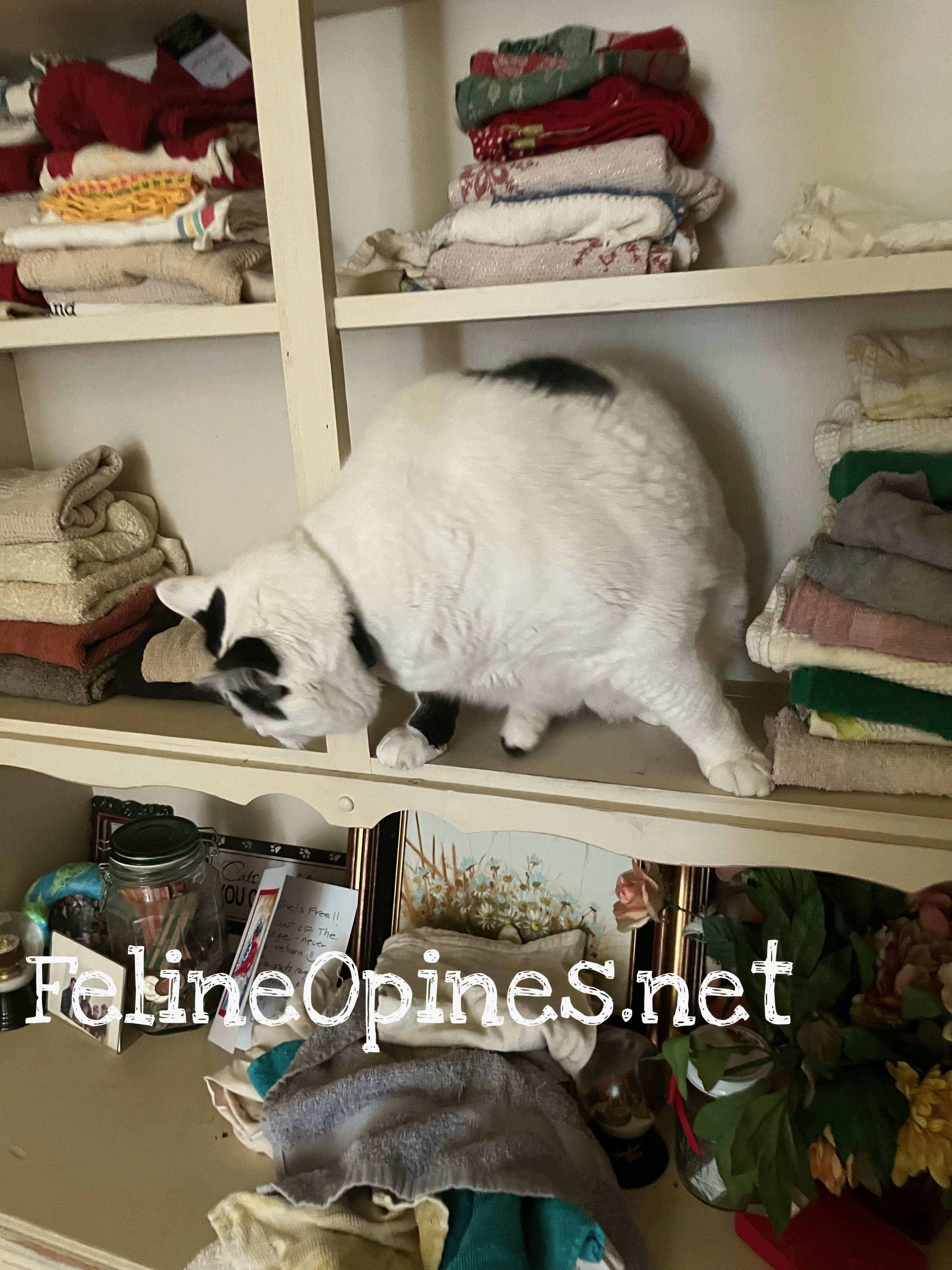

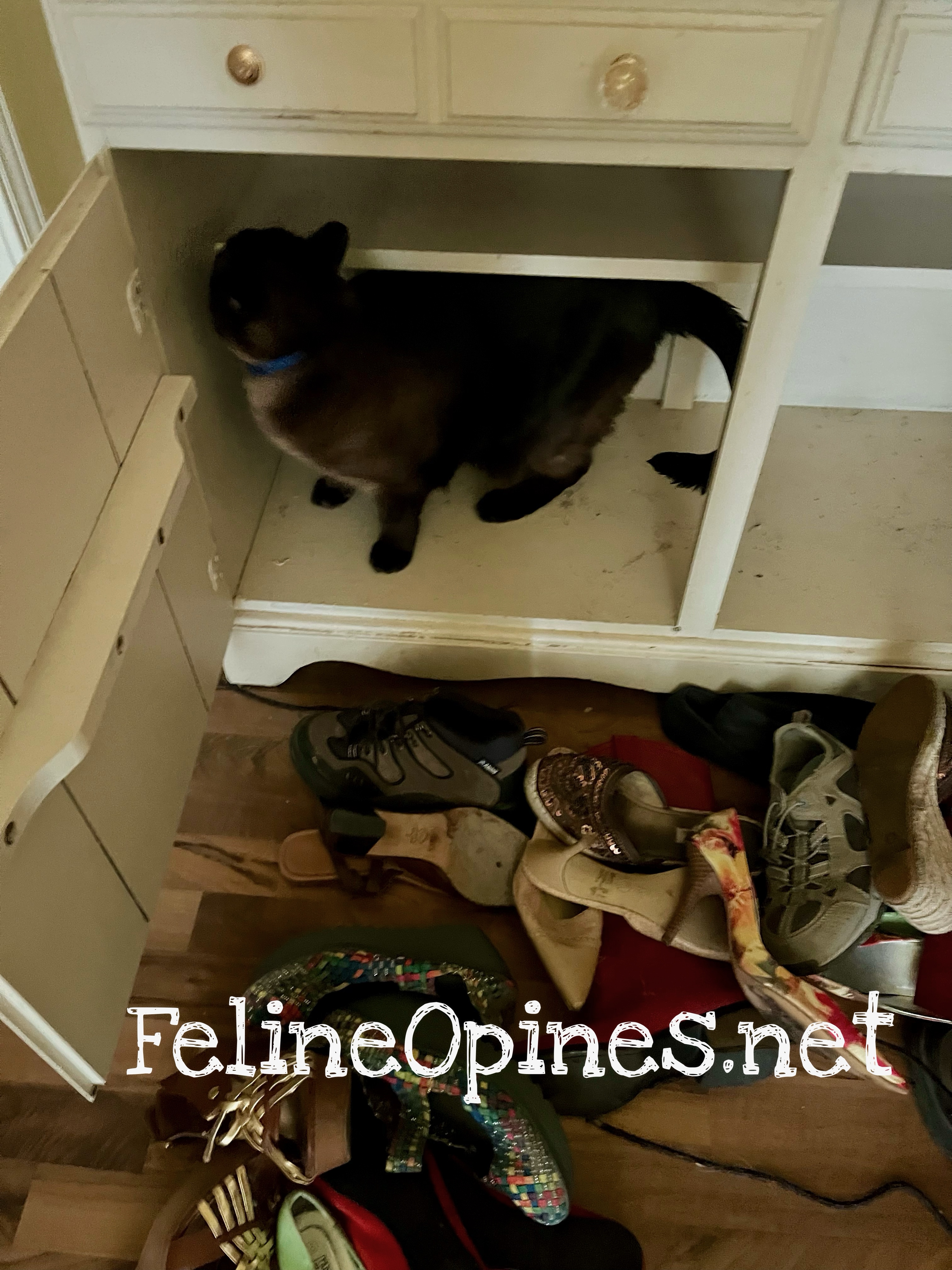
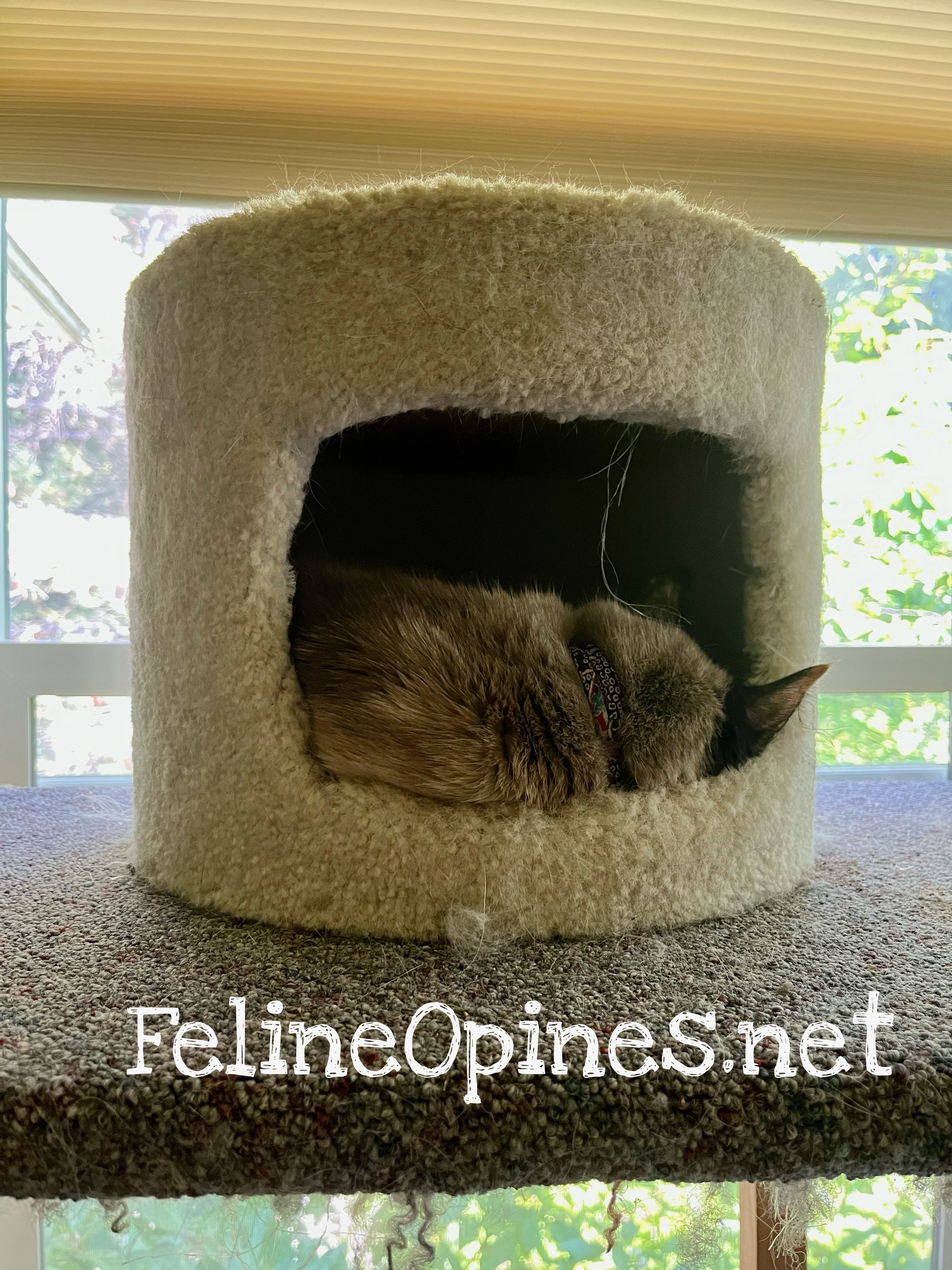
As you can see, we felines have been working hard, well two of us felines. Lily preferred to stay in her hiding place at the top of the cat condo in the office.
I hope you had a great week and they you’ll enjoy my news stories.

Japanese app aims to help detect pain in cats
Anyone who lives with cats knows that figuring out if we are in pain or don’t feel good is difficult because we are masters at hiding when we’re sick. This comes from our ancestors who knew showing weakness in the wild could be dangerous. Evidently that gene is still in us domesticated kitties.
The good cat-loving folks in Japan are working on helping humans know when we are feeling under the weather. A tech firm and a university in Tokyo have teamed up to produce an app that uses thousands of cat photos that they say can tell you when your feline is in pain.
Since its release last month, “Cat Pain Detector” has racked up 43,000 users, mostly in Japan but also in Europe and South America, said Go Sakioka, head of developer Carelogy.
The app is part of a growing array of tech for pet owners concerned for their furry friends’ well-being, including similar mood and pain trackers made in Canada and Israel.
Carelogy teamed up with Nihon University’s College of Bioresource Sciences to gather 6,000 cat photos. The studied the position of the ears, noses, whiskers and eyelids in the photos. They then used a scoring system designed by the University of Montreal to measure minute differences between healthy cats and those suffering pain due to hard-to-spot illnesses.
The app developers then fed the information into an AI detection system, which has further refined its skills thanks to around 600,000 photos uploaded by users, Sakioka said. He says that the app has an accuracy level of more than 90%.
“Cat Pain Detector” is already being used by some vets in Japan, but “the AI system still needs to be more precise before it’s used as a standardized tool,” Sakioka said.
How to get house cats to exercise
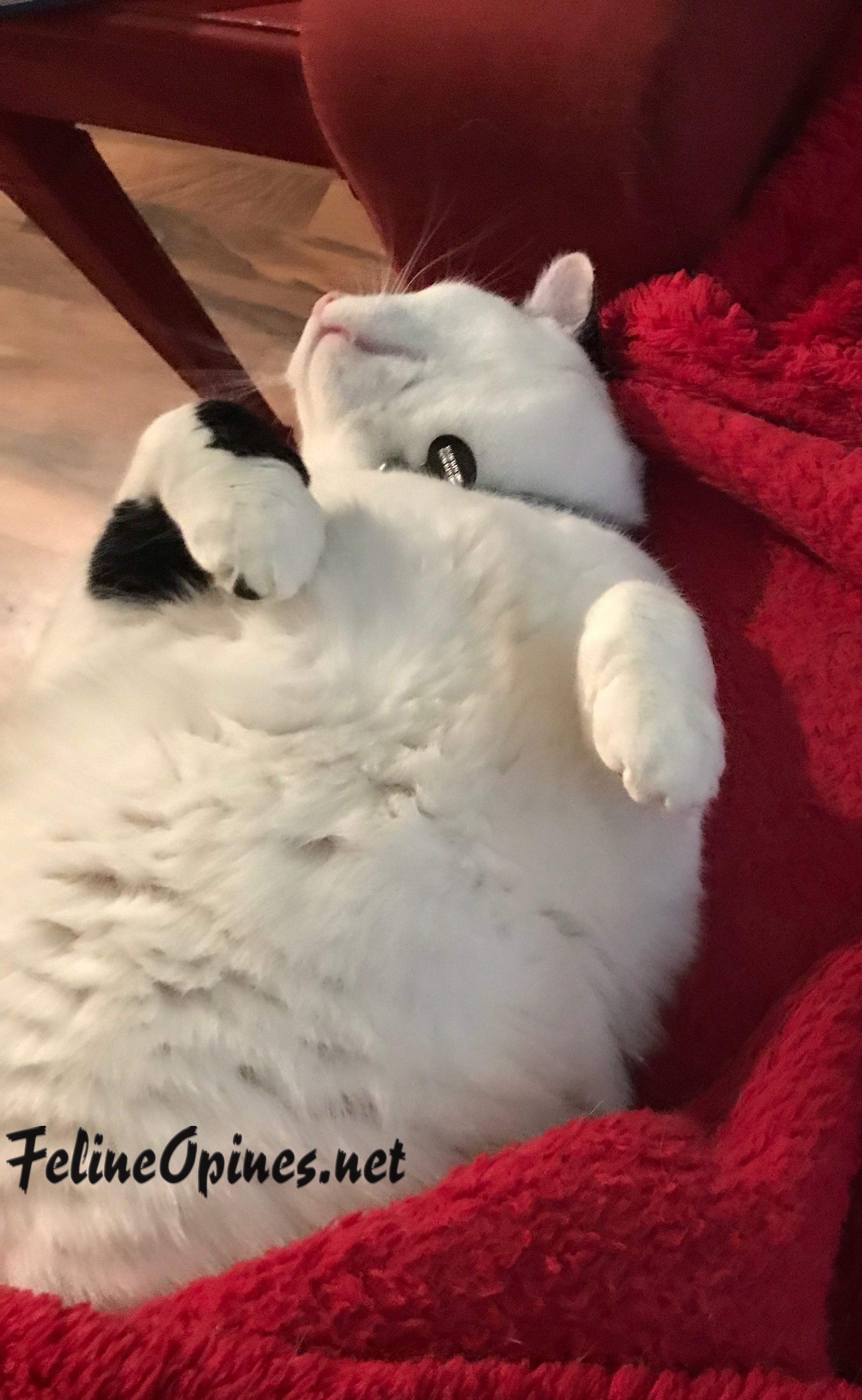
Oliver is sick and tired of the words “diet”, “health” and “exercise” but The Human is absolutely obsessive about getting Ollie and I healthier (translation= weighing less than 21 pounds).
The Human has been doing some research on exercises for us, so far we have approved of nothing she has presented. She has picked up a few pointers which were noted in the linked article and which I will now share with you. I will state however, that all my feline furiends should ignore any of the suggestions below.
- Determine which toys cats like best. Some pre-exercise observation can help lay a strong foundation for feline fitness sessions. Identify which toys we seem to like best and then use those toys during exercise sessions to entice participation. Use one or two toys each session and swap them every few days so cats do not grow bored with their fitness routines.
- Incentivize physical activity. Cats (especially CHONKY cats like Oliver and I) are more likely to engage in exercise when sessions end with a reward. PetMD notes some post-exercise praise and a few healthy treats can encourage cats to participate willingly in exercise sessions.
- Don’t overdo it. Play sessions intended to get cats to exercise can last between 10 and 15 minutes each. PetMD recommends limiting sessions to two or three per day for older cats, while as many as 10 sessions per day can be effective for younger cats.
Try a laser pointer. We like to play with these and even have one that is electric and turns on an off at random. We rarely pay attention to it anymore.
You can get double the results for the time you put in if you also work on some training. In response to some of you humans who may be snickering right now, yes, I realize that you don’t really train a cat but you can redirect behavior and create situations that the cat will actually respond and do things (or stop doing things) that have been habits. The Human recently downloaded the app CATBOSS and she will be using it on us. We’ll see how that goes and I will update you as we make progress.
Photographer Breaks ‘Stoic’ Cat Stereotypes by Snapping Pics of Them ‘Crazy’ on Catnip
Oh my whiskers. If you’ve ever watched your cat enjoying the “nip” you know how hilarious their behavior and expressions can be. Photographer Andrew Marttila has spent the last six years capturing those crazy moments.
Martilla discovered the joy of photographing cats under the influence of catnip when he was playing around with one of his cameras. On a whim, he gave a bit of catnip to his 13-year-old Bengal cat, Haroun, “to see what his reaction is and try to capture whatever happens.”
“I had no idea what I would get. And the result was something really, really incredible and strange and sparked the interest of a lot of people around the world,” Marttila says. The images launched a series of photographs about cats high on catnip that has been turned into a book, and an annual calendar and more.
Marttila says he loves showing cats’ funny, silly sides. “I think there’s a misunderstanding that cats are aloof or very stoic, and it’s only in recent years that the silliness of cats has started to become more prevalent and prominent in pop culture,” he shares. “And I love exploring that side. I love showing cats sort of just enjoying themselves. I like just showing them funny and out of the norm.”
The flash photography allows him to “freeze these little moments” that “the human eye is not able to see,” he adds. “It’s a different window into their lived experience, especially when they’re high. You’re able to get an insight into just how crazy they do get on catnip.”
The artist loves showing people what their cats really look like in a way they’ve never noticed. “Aside from it just being so different and funny, I love seeing the expression of the guardians when they see just how crazy their cat looks,” he says.
When he arrives at a photo shoot, he usually brings five varieties of catnip with him. “I’ll put catnip on a table or on the ground and have the lighting set up to accommodate where I think they will have their little freak out moment and then sort of just let them do their thing. And as they are going wild, I snap photos.”
Marttila says about 70 percent of cats respond to catnip — and every cat reacts very differently. “You never know what you’re going to get,” he shares. “I think it’s the sort of the surprise factor, especially when I’m taking the photos, even I don’t know what I’ve gotten until I go back and review the images because it happened so quickly.” The Human knows this to be true as we’ve had members of our tribe that turn into really “mean drunks” when they have catnip and the rest of us are more goofy.
For anyone worried the practice may be inhumane, Marttila — who also runs the Orphan Kitten Club rescue in San Diego with wife Hannah Shaw — assuages those fears. “One comment that I get a lot when these pictures are on bigger publications is, ‘This is damaging to the cats. Why are we creating drug addicts in our cats?’ And it’s ignorance. It’s really not understanding what catnip does. And it is a very fast acting type of chemical. It is completely natural. There’s no chance of them becoming dependent on catnip,” he says.
Marttila also encourages people to try it at home. “I highly recommend giving a little bit or a lot of it to your cat just to see what their reaction is. You can follow Andrew Marttila on Instagram. The Human likes to spread catnip on sheets of newspaper so that we can just roll in it and enjoy. How do you like your nip?
Cat owners called on for UK’s first feline blood bank

Human blood banks have existed in the UK since 1937 and dogs have been participating in blood donations for years. Now, finally, there is a blood bank for felines. As regulations and logistics have combined to make it difficult for veterinarians to find blood for sick cats who need blood transfusions, they have to search for blood donors when the need is critical. This can cause delays, blood donations from unsuitable donors (with diseases). Cat blood groups are different than human blood groups and even a teaspoon of the wrong blood could be fatal.
“The current situation has been very problematic as far as cats dying because there’s not appropriate blood available,” said a veterinary professional. Although the Royal Veterinary College stores feline blood, that blood is only for animals being treated or referred to the college as it is a transfusion service rather than a blood bank.
In an attempt to rectify the feline blood donation a Portuguese organization called Banco de Sangue Animal (BSA) is hoping to set up the UK’s first feline blood bank to provide a resource for veterinary practices around the country – and it wants cat owners to sign up their furry companions.
“We’ve run a couple of sessions [for blood donation] just to see how it goes. And that’s been going well, but we need more owners and more cats,” said Samantha Taylor, a specialist in feline medicine, who is working with BSA on the project.
According to new criteria for feline blood banking set out in updated guidance by the Veterinary Medicines Directorate (VMD) last year, among other requirements, cats donating to a blood bank must be at least 5kg in weight, undergo a cardiac assessment before donation and have their blood pressure checked. Only 10% of the cat’s total blood volume can be taken – a more conservative volume than in general practice.
It is not permitted for animals to be sedated when donating blood for storage in the UK. While dogs can be trained to give blood while awake with relative ease, cats can be harder to handle.
“You may find it harder to find suitable [feline] donors than you would with dogs. But that’s just the nature of cats and we should respect that,” said Charlotte Russo, head of transfusion medicine nurse at the RVC, adding the requirement means it is crucial to find cats with the right temperament for being a blood donor. Well that would definitely rule out Lily, aka Princess Stabby Toes.
The BSA has animal blood banks in Portugal, Spain and Belgium, and has learned how to collect donations safely and efficiently with minimal stress to donor cats, so Taylor said the organization was a natural choice for UK vets to partner with to set up a UK-wide feline blood bank.
“The BSA has undergone a very strict and long process of approval,” she said. The organization was recently granted non-food animal blood bank authorization (NFABBA) by the VMD, and the team is working to build up a network of cats who, can donate blood.
Dr Jenny Helm, a trustee of the charity Pet Blood Bank UK, which mainly provides canine blood to veterinary practices, said there was a significant need for a feline blood bank in the UK, particularly as other products that previously bridged the gap – such as a haemoglobin-based blood substitute – were no longer available.
“[The BSA bank] will benefit so many cats across the country that will be able to access blood products at any time of day just like dogs can, just like people can,” she said. UK felines can register to determine suitability at uk.animalbb.org
Mystery of Lost Cat Found 9,000 Miles From Home Finally Solved

Oh how I love a good feline mystery and this one is excellent. This is a mystery of a lost cat who was found wandering 9,000 miles from its home in Australia .
Melvin the cat was found in Renfrewshire, Scotland, before he was picked up by the Scottish Society for the Prevention of Cruelty to Animals (SPCA). A local resident had been feeding the cat twice a day since Christmastime. However, they started to notice he was not looking well, the Scottish SPCA said in a press release.
After picking the cat up and giving him veterinary attention, the Scottish SPCA checked his microchip, only to find he was registered to an address all the way in Australia.
Laura McIntyre, Scottish SPCA chief inspector, said that one of the first things the charity does, when taking in a lost pet, is to check for a microchip.
“As you can imagine, the team were slightly confused when Melvin’s details came back registered to an address in Australia,” McIntyre said.
After some investigating, it turned out that Melvin belonged to a Scottish couple, Jacqueline and Matt Dick, who had lived in Australia for 14 years. They had recently made the move back home, spending $8,000 to transport Melvin, and their dog, to Scotland. However, Melvin went missing shortly after they settled into a new home, just eight weeks after moving, in August 2022.
Thank goodness the mystery of Melvin’s disappearance was solved and he is back at home with his humans.
“We were devastated when Melvin went missing. We did everything we could think of to try and find him, but by winter we feared the worst,” Jacqueline Dick said in a press release from the Scottish SPCA. “We were over the moon when we received the call that he’d been found by the Scottish SPCA.
“The first night we got him home he didn’t leave my side and was purring really loudly. I was in floods of tears as I never thought I’d see him again,” she added. “We just want to say a big thank you to everyone who looked out for him while he was missing and helped get him back home where he belongs.”
This isn’t the first adventure Melvin has had. During his time in Australia, he was caught up in a fight with a dingo, a type of wild dog. Luckily, he survived the ordeal, using up only one of his nine lives.
Oh how I love a happy ending and again, I will repeat my favorite phrase….THINK LOST NOT STRAY!
 Home | felineopines